Mourinho’s New Era at Real Madrid: Tactical Overhaul and Key Signings
Real Madrid, reset. After a second straight season without a major trophy and an eight-point gap to champions Barcelona, the club has torn up the script: José Mourinho in, Álvaro Arbeloa out, and a transfer window that has reshaped almost every line of the team.
Marc Cucurella, Bernardo Silva, Ibrahima Konaté, Denzel Dumfries, Carlos Espí and record signing Yan Diomande have arrived to support a new tactical blueprint. The Real Madrid that walks out at Espanyol on Aug. 22 will not look — or play — like the side that lost 2-0 at Camp Nou in May and watched their last chance of silverware disappear in a Clásico.
Mourinho’s new Madrid: 4-2-3-1 and a star-studded spine
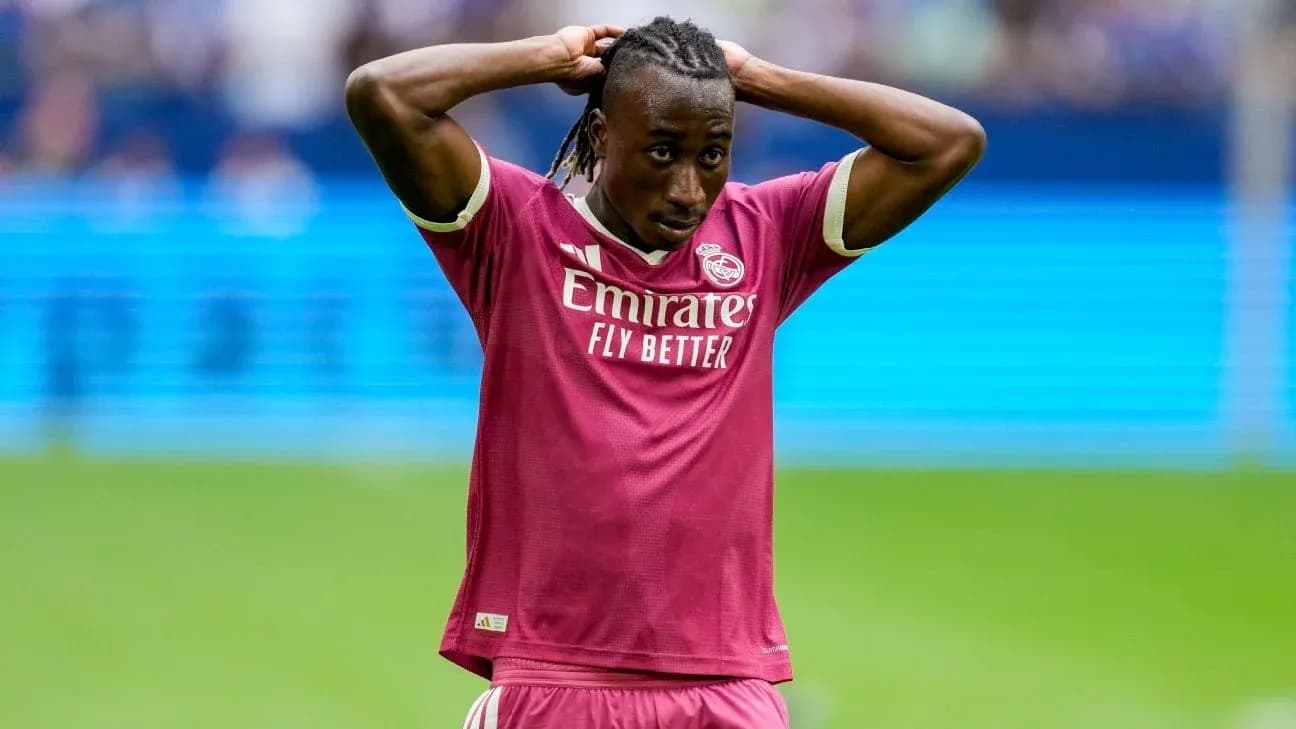
Preseason has revealed Mourinho’s plan: a 4-2-3-1 with a double pivot and Jude Bellingham as the central attacking midfielder. It’s a clear break from the club’s long-standing 4-3-3, and it’s been underlined by the money spent. More than €125 million has gone on Diomande alone, a winger whose arrival signals a structural shift in both attack and midfield.
Some roles are locked in. Kylian Mbappé through the middle. Bellingham just behind him. Vinícius Júnior, fresh from signing a new long-term deal, on the left. That trio forms the spine of Mourinho’s attack.
The real debate starts on the right.
Right flank dilemma: Diomande or control?
Mourinho’s biggest early call is whether to unleash Diomande from the start or sacrifice a pure winger for an extra midfielder to steady the structure on that side.
If he goes all-in on pace and directness, Diomande starts on the right. That choice would give Madrid a terrifying front four: Diomande, Bellingham, Vinícius and Mbappé. It also has a knock-on effect behind him. Dumfries, a natural raiding full-back, would benefit from Diomande’s high starting position, with the Ivorian’s attacking instincts demanding more defensive support from the Dutchman.
That version of Madrid would be vertical, aggressive, and ruthless in transition.
But Mourinho has another card to play. If he wants more control and balance, the right “winger” becomes a midfielder. In that setup, Bernardo Silva and Arda Güler battle for the spot, drifting inside to help with possession and pressing. The consequence is brutal but simple: Diomande, the most expensive signing in the club’s history, starts on the bench.
How quickly the 19-year-old adapts — to the dressing room, to the pressure, to Mourinho’s demands — will go a long way to deciding how often that happens.
There is a third path. Federico Valverde could again be pushed to the right, a role he has filled before with energy and discipline. For now, though, Mourinho seems intent on keeping his new captain where he is most natural and influential: central midfield.
Double pivot: Valverde’s solidity or Silva’s imagination?
The shape of that midfield is the other major puzzle.
In Mourinho’s double pivot, Aurélien Tchouaméni is the anchor. After the failed pursuit of Rodri, the France international stands as the only true positional holding midfielder in the squad. He is almost certain to be a constant in the XI.
Next to him, the options are very different in style. Valverde, Silva, Güler and academy product Thiago Pitarch offer four distinct profiles.
If Mourinho prioritises solidity, Valverde is the obvious partner. His range, work rate and tactical discipline give Madrid a more robust core, especially in games where the opposition can threaten in transition. A Tchouaméni–Valverde axis would allow Bellingham, Vinícius and Mbappé to attack with fewer defensive worries.
When Madrid expect to dominate the ball, the equation changes. Silva becomes the natural alternative. His ability to drop deep, receive under pressure and progress play with short combinations or longer diagonals gives Madrid a calmer, more controlled build-up. That, in turn, could justify using Diomande on the right and accepting a more attacking balance overall.
Güler sits somewhere between those two ideas. Officially pencilled in as Bellingham’s backup in the No. 10 role, the Türkiye international has already shown he can operate deeper. Xabi Alonso used him there last season, and Mourinho has that option in his pocket if he wants a more adventurous, technically loaded midfield three within the 4-2-3-1 structure.
Then there is Pitarch. He is not a headline name, but Mourinho values the academy midfielder’s dynamism and stamina, qualities that impressed under Arbeloa. He may not start the season as first choice, yet he looks well placed to enter the rotation once the calendar tightens and the physical demands rise.
A new-look back line: Cucurella in, competition at centre-back
Behind them, the defence is also undergoing a clear reset.
On the left, Cucurella arrives to start. His intensity and reliability make him an automatic pick, with Álvaro Carreras providing cover. Ferland Mendy, so often sidelined by injury, is pushed into a secondary role and faces a fight for minutes.
At centre-back, the picture is more fluid. Dean Huijsen and Antonio Rüdiger are expected to begin the season as starters, but the plan is bigger than that. The signing of Konaté and the return of Éder Militão are designed to lift Madrid’s defensive ceiling over the course of the campaign, creating fierce competition for places in the middle. Raúl Asencio, who featured more prominently last season, will inevitably slip down the hierarchy.
On the opposite flank, Dumfries offers an entirely different profile to Madrid’s recent right-backs: aggressive, direct, and constantly looking to overlap. His partnership with whoever starts ahead of him — Diomande, Silva, Güler or even Valverde — will shape how bold Mourinho can be down that side.
A very different Madrid steps into LaLiga
Most of LaLiga kicked off their 2026-27 campaigns at the weekend. Madrid wait until Saturday, Aug. 22, away at Espanyol. It’s only one game, but it already feels like a reveal.
Will Mourinho trust his record signing from day one? Will he lean into control with Silva, or back Valverde’s steel next to Tchouaméni? And how quickly will that rebuilt back line settle?
For a club that has just lived through two seasons without a major trophy, those answers will define far more than just an opening day.