Mourinho's Challenge: Managing Three Superstars at Real Madrid
José Mourinho knows exactly where the problem lies. Not in the dressing room politics, not in the transfer market near-misses, but in the front line that every coach in Europe would love to have and most would quietly fear having to organise.
Kylian Mbappé. Vinícius Júnior. Jude Bellingham.
Three superstars. One starting XI.
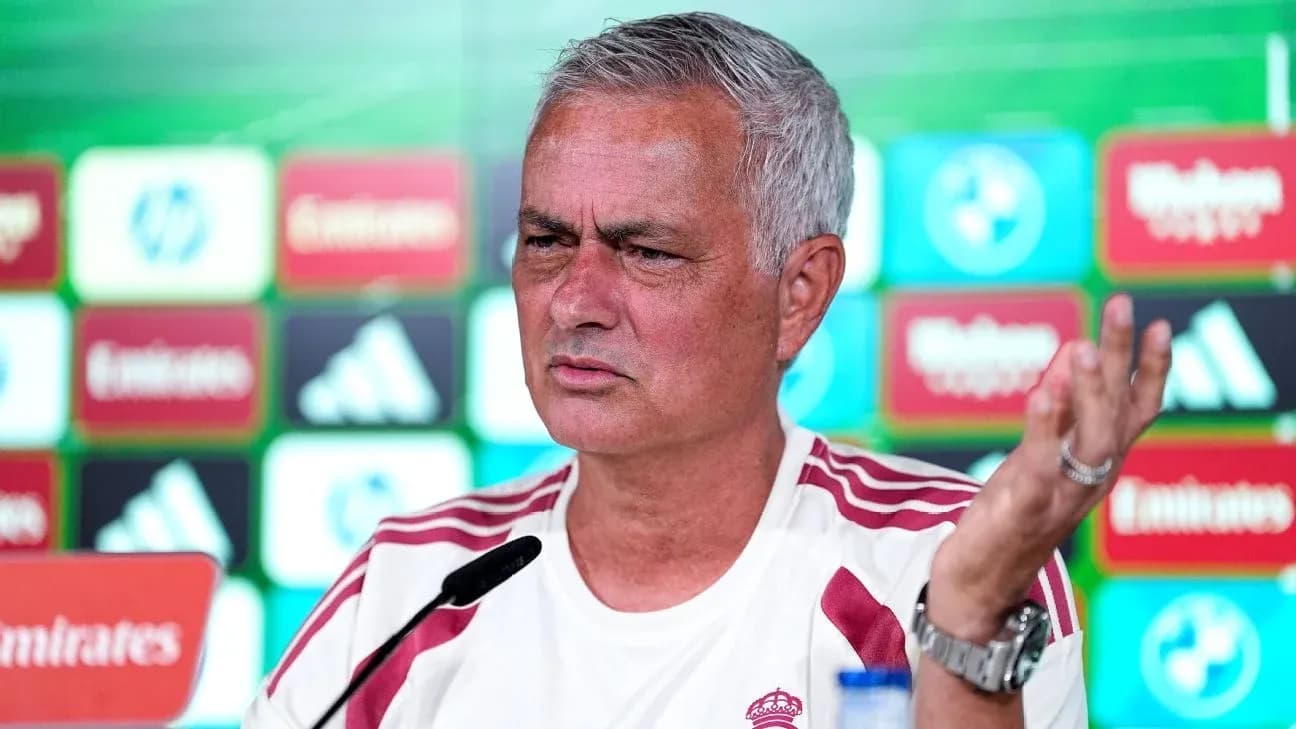
“A difficult task,” Mourinho admitted on Friday, but he stopped dead at the suggestion they might be “incompatible” as Real Madrid prepare to open their LaLiga campaign away to Espanyol on Saturday.
Mourinho’s puzzle: three stars, one structure
Mourinho returns to competitive action at Madrid with the club two seasons removed from their last major trophy and Barcelona celebrating back-to-back titles. Expectations are not high. They are absolute.
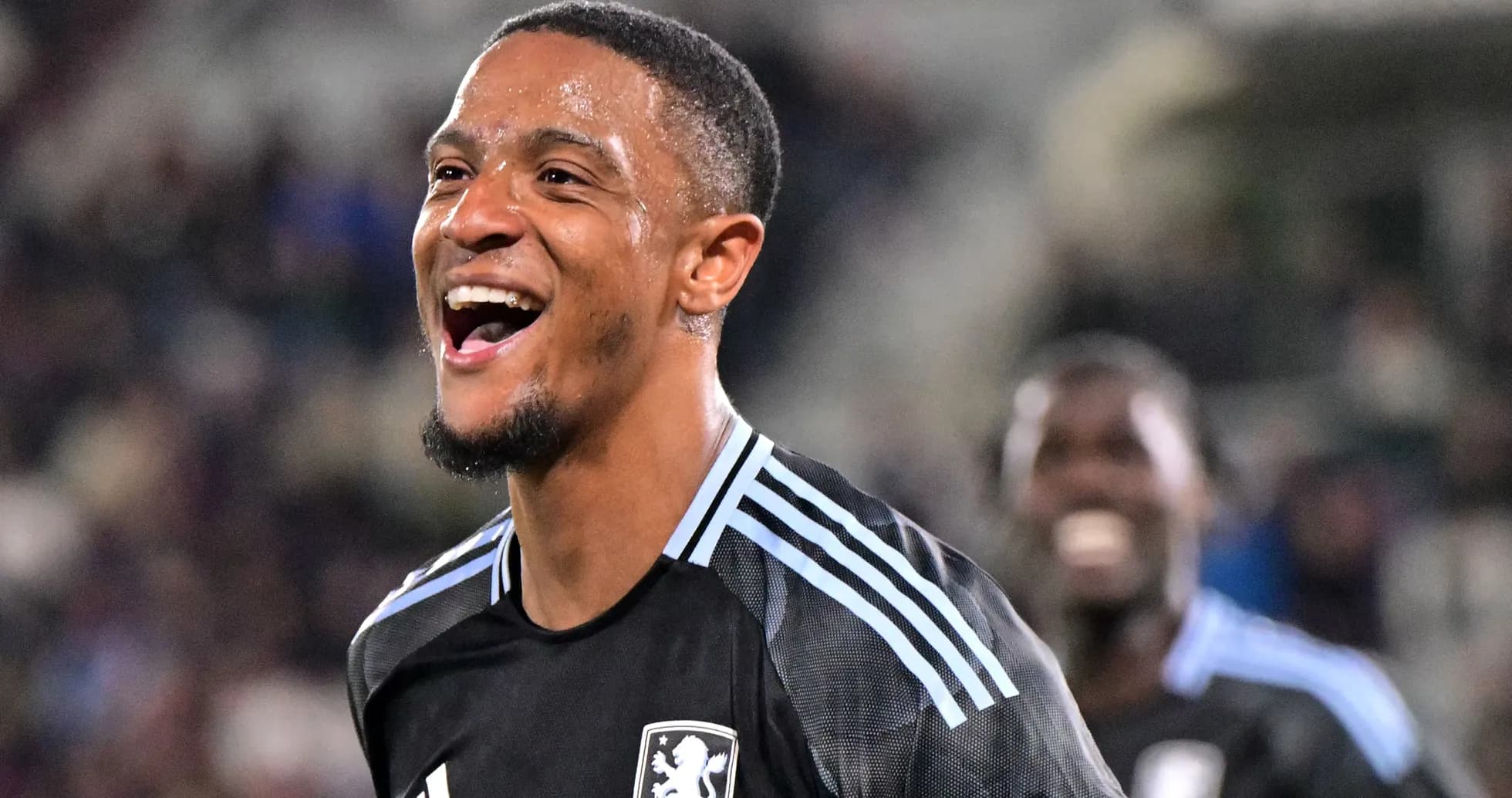
He now has to mould a new-look attack built around Mbappé, Vinícius Jr. and Bellingham, plus record signing Yan Diomande, after Vinícius chose to stay and sign a new deal.
“They're incredible players,” Mourinho said at his first pre-match news conference since rejoining the club this summer. The admiration is clear; the tactical headache just as obvious.
He laid out the challenge with unusual openness. Carlo Ancelotti “found the perfect role for Vini with Brazil,” Didier Deschamps did the same for Mbappé with France, and Thomas Tuchel unlocked Bellingham at the World Cup. Getting one star into his sweet spot is one thing. Doing it for all three at the same time is another.
“The tactical structure could be more difficult,” Mourinho admitted. “But it's harder to find the perfect role for all three. I have a lot of confidence that we'll do well when all three play together. I don't think they're incompatible at all.”
That last line matters. He knows the narrative that is waiting if results stutter: too many egos, not enough balance. He moved to shut it down before a ball has been kicked.
No passengers up front
Madrid’s forward line has been accused in recent seasons of switching off without the ball, of not tracking back, of leaving others to do the ugly work. Mourinho, predictably, has no interest in indulging that.
“We need to be a team, work hard, and not negotiate things that are non-negotiable,” he said. “Commitment has to be present in every minute of every game.”
It is classic Mourinho language, but the context is new. Mbappé, Vinícius and Bellingham are not built to sit in a low block and grind out 1-0 wins. They want the ball, the space, the stage. Mourinho’s job is to convince them that relentless work off the ball is part of that stage, not a step off it.
Reset in midfield after last season’s clash
The Portuguese coach did not just inherit a tactical puzzle. He walked into a dressing room that had been scarred by a serious confrontation last season between Aurélien Tchouaméni and Federico Valverde, a row that ended with Valverde in hospital.
“I arrived with a lot of information,” Mourinho said when asked about the pair. Then he drew a line under the past. “But I decided to start from zero.”
He has monitored their relationship closely since taking over.
“From the day Tchouaméni arrived, I've been keeping an eye on it, and I've felt no need to talk about it. I've seen that everything is normal. Seeing how they've interacted, you couldn't imagine what happened.”
For a coach who thrives on controlling the emotional temperature of his squads, the message was clear: the feud is over, the slate is clean, the midfield is his to shape.
No Rodri, no excuses
Madrid’s summer also included a high-profile miss. Spain captain Rodri, long admired by the club, chose Barcelona instead. Mourinho has already admitted he spoke to the midfielder about a possible move, but he refused to frame Rodri’s decision as a blow that weakens Madrid’s core.
“I don't think we have a deficit [in midfield],” he insisted. “[Rodri] would have been the icing on the cake... But when you have Tchouaméni, [Eduardo] Camavinga, Valverde, Bernardo [Silva], Arda [Güler] — because with time he can play there — we won't have problems.”
That list underlines why the coach sounds relaxed. Depth is not the issue. Distribution of roles is. Tchouaméni and Camavinga bring control and range, Valverde provides legs and verticality, Bernardo Silva offers craft between the lines, and Güler is being quietly earmarked for a long-term midfield role.
Rodri might have been the final flourish. Mourinho is determined he will not become the excuse.
Adrenaline, not anxiety
This is Mourinho’s second spell in charge of Real Madrid, after his first tenure from 2010 to 2013, a period defined by intense rivalry with Barcelona and a trophy haul that still divides opinion inside the club.
Now he returns to a different squad, a different LaLiga landscape, but the same demand: win.
“I wouldn't say pressure. I'd say adrenaline,” he said. “It's positive... In the end, it's about results. Ending the season without trophies at Real Madrid isn't a successful season.”
No one at Madrid needs reminding of that. Two years without a major title is already stretching the club’s tolerance. Barcelona’s recent dominance has only sharpened the edge.
So Mourinho walks into Espanyol with Mbappé, Vinícius and Bellingham at his disposal, a midfield stacked with options, and a fanbase waiting to see whether this version of his Madrid can be as ruthless as the last — only this time with more stars to fit into the same unforgiving standard.