Morocco's World Cup Bid: Prime Minister Cautions Lekjaa on 2030 Final
The race to host the 2030 World Cup final has spilled out of boardrooms and into Morocco’s domestic politics.
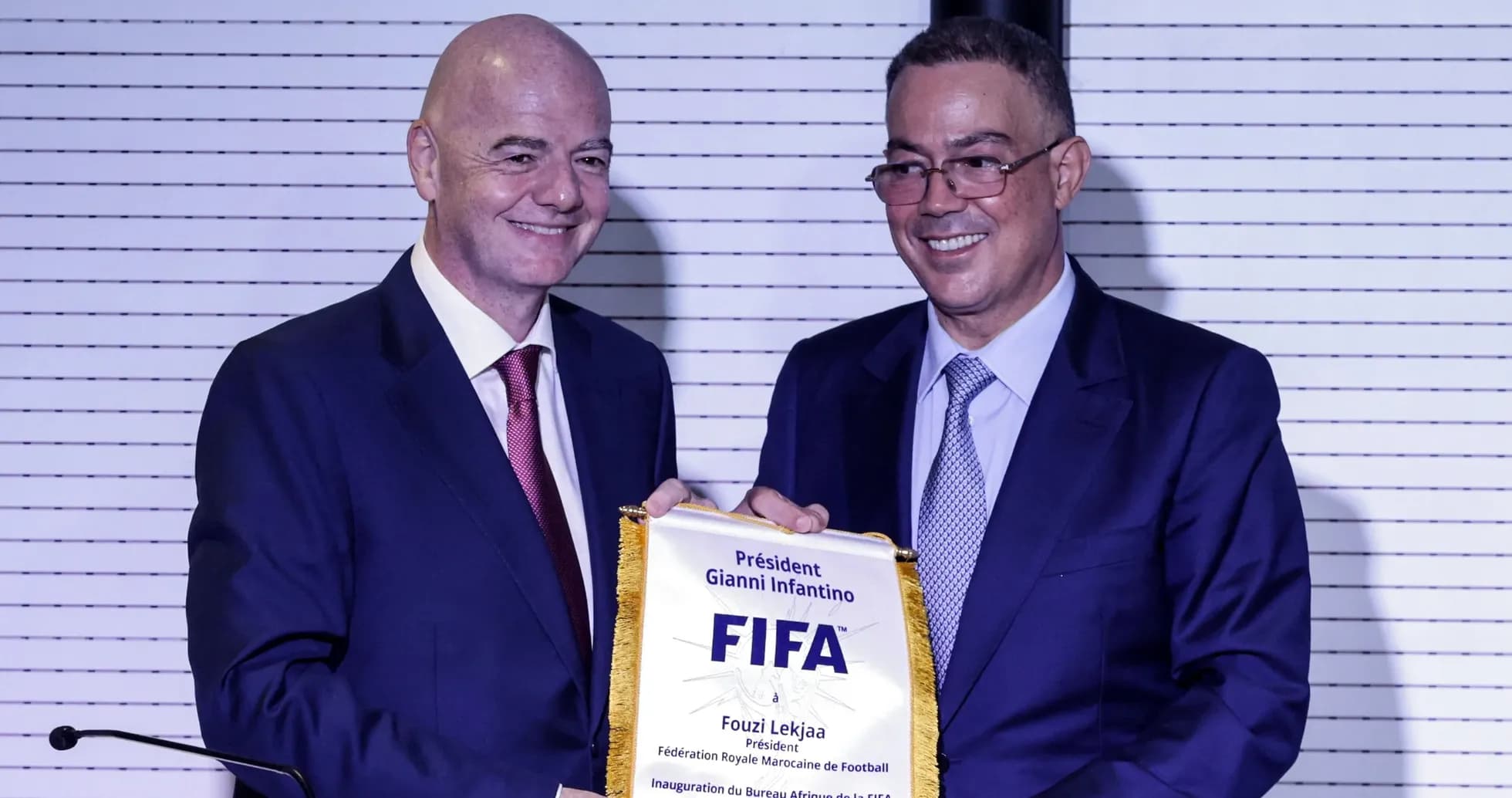
Prime Minister Aziz Akhannouch has publicly rebuked Fouzi Lekjaa, the powerful president of the Royal Moroccan Football Federation (RMFF), ordering him to stop making bold promises about Casablanca staging the showpiece match before anything has been agreed with co-hosts Spain and Portugal.
The warning was sharp. And it was delivered in front of a crowd.
“There should be some respect, brothers”
Tension flared after Lekjaa, speaking at a political party event, declared that Morocco’s new mega-stadium in Casablanca would have the “honour” of hosting the 2030 World Cup final. For a country that has chased the tournament for decades, it was the kind of line designed to electrify a room.
It also cut across diplomatic lines.
With FIFA yet to confirm where the final will be played, Akhannouch stepped in. At a rally, he called out Lekjaa directly, making it clear that such promises risked unsettling Morocco’s Iberian partners.
“Do not offer to host the big final game in Morocco while we still have not discussed the matter with our allies, Spain and Portugal,” the Prime Minister said. “There should be some respect, brothers. Stop using electoral promises to pull the rug out from under us. These are huge matters. Deciding where the final will be held is a major issue.”
The message was unmistakable: political grandstanding would not dictate a decision with international ramifications.
A centenary World Cup, and a divided vision
The 2030 World Cup, marking 100 years since the first tournament, will be shared by Morocco, Spain and Portugal, with opening matches also staged in South America in a nod to the competition’s origins.
Where the final lands has become the symbolic prize.
FIFA has kept its cards close to its chest, saying only that “a decision will be made in due course.” Behind that bland line lies a fierce contest between two very different bids for prestige: Morocco’s ambitious rise and Spain’s established power.
Morocco is pushing to bring the final back to Africa for the first time since Johannesburg in 2010. Hosting the last game would crown its long pursuit of football’s biggest stage and showcase its transformation as a sporting hub.
Spain, though, believes history, infrastructure and recent success make its case overwhelming.
Spain turns up the volume
Rafael Louzan, president of the Spanish football federation (RFEF), has not been shy about where he thinks the final should be played.
“Even though no decision has been taken, I believe Spain is the place because it cannot be any other way,” he told Cadena SER radio. He pointed to Spain’s status as current world champions and its proven ability to stage major events. “I believe Spain’s organisational capacity for major events is beyond question and that is why reality dictates that the grand final cannot and must not be held anywhere other than in Spain.”
Spain’s argument leans heavily on what already exists. The revamped Santiago Bernabeu in Madrid, with its retractable pitch and modernised bowl, stands as a ready-made World Cup stage. Barcelona’s Spotify Camp Nou is being expanded and modernised. The country has hosted major finals and tournaments for decades.
From the RFEF’s perspective, the final feels like a natural extension of that track record, not a leap of faith.
Morocco’s giant statement in concrete and steel
Morocco is answering with ambition.
The country has launched the construction of a vast 115,000-seat stadium, designed to be the largest football-specific venue on the planet once completed. It is intended not just as a national project, but as a direct rival to Europe’s most storied grounds.
In Moroccan eyes, a World Cup final in Casablanca would be more than a match. It would be a statement that Africa can host football’s grandest night at the very highest level, with facilities to match any in Europe.
But the scale of that dream has to be balanced with the realities of a three-nation bid. That is where Akhannouch’s intervention lands: not against the idea of the final in Morocco, but against unilateral declarations that could damage trust with Spain and Portugal.
FIFA’s clock is ticking – slowly
There is no immediate deadline. The 2026 World Cup final venue in the United States was only confirmed in early 2024, when New Jersey’s MetLife Stadium got the nod. By that measure, the 2030 decision could still be some way off.
That breathing space suits FIFA. It also gives each host time to strengthen its case on and off the pitch.
For now, Morocco’s government appears determined to cool the rhetoric, manage public expectations and avoid turning a joint World Cup into a diplomatic fault line. The stadium in Casablanca will rise either way. Spain’s Bernabeu and Camp Nou will be ready either way.
The question is simple, and increasingly charged: when the centenary World Cup reaches its climax in 2030, will the world turn its eyes to Madrid—or to Casablanca?