
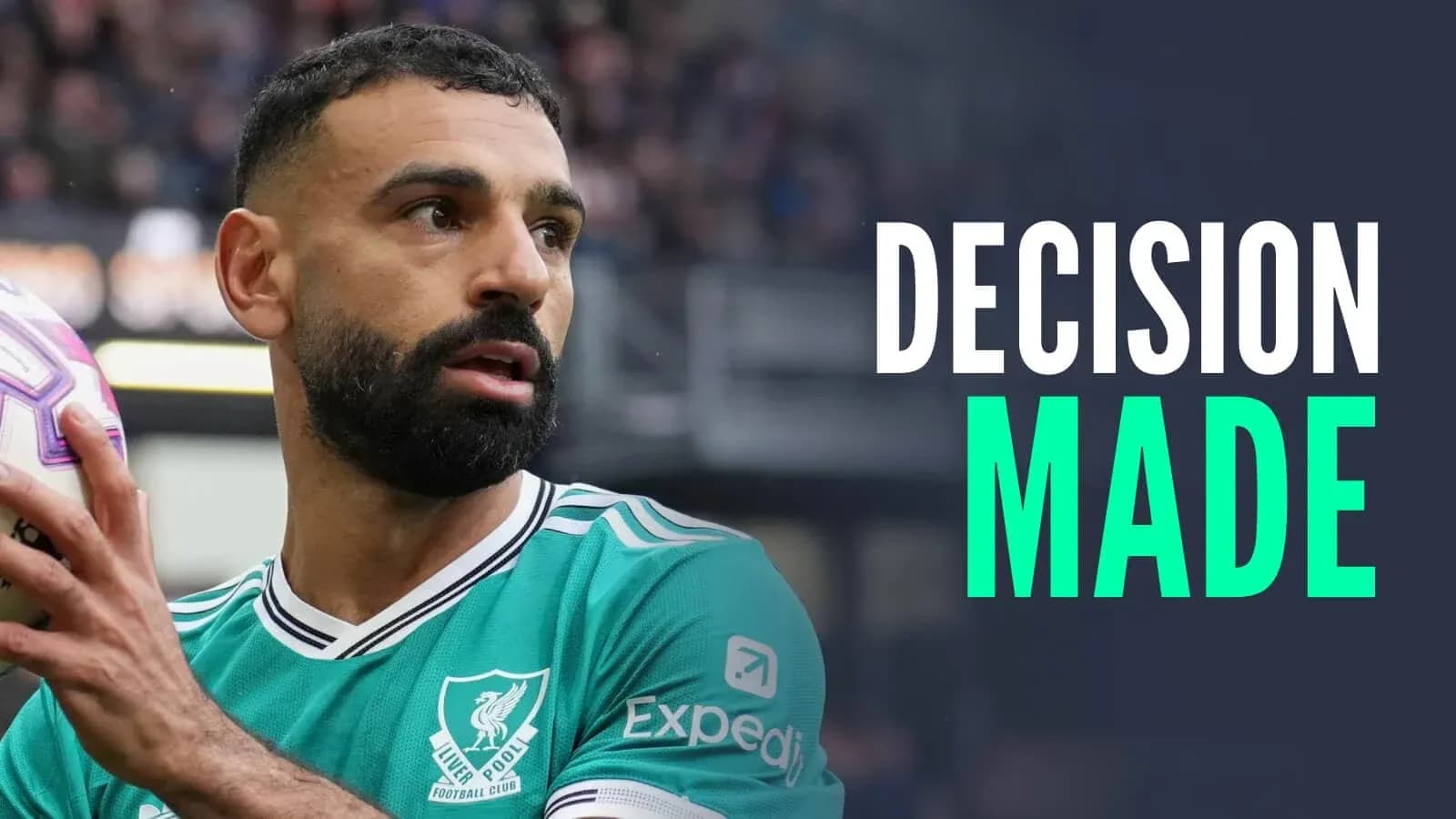
Mohamed Salah's Transfer Conditions to Saudi Arabia
Mohamed Salah has given the nod to a move to Saudi Arabia – but on his terms, and they are anything but small.
The Liverpool legend, whose departure from Anfield was confirmed weeks ago, has “granted approval” to a transfer to the Saudi Pro League, according to reports from Saudi outlet Marebpress. Yet any deal will only happen if three major conditions are met, underlining both his market power and his determination to control the final stretch of his career.
Salah’s Saudi stance: three non-negotiables
Salah, 33, has already received a proposal from one of the Saudi clubs, but the offer fell short of a previous package he had on the table before renewing with Liverpool. That, for a player of his stature, simply isn’t enough.
The report states that Salah wants an annual salary and financial benefits that match his status and global marketing value. This is not a routine pay day. Any Saudi deal is expected to rank among the biggest contracts in sport, with TEAMtalk previously reporting that it would likely be tied to an ambassadorial role to promote football in the country.
He also wants security. Salah is demanding a contract of two or three years, long enough to give him stability in what could be the decisive chapter of his elite career.
Then comes the sporting side. The Egyptian is not prepared to disappear into a sideshow. His third condition is clear: he will only join a club with a serious football project, one capable of competing for major titles rather than simply making up the numbers. Trophies, not just headlines.
Until those boxes are ticked, the most prolific forward of Liverpool’s modern era remains a free agent in footballing terms, if not in emotion.
A brutal season and a broken relationship
Salah’s exit comes one year before the end of his £400,000-a-week deal and after a season that dragged Liverpool into turmoil on and off the pitch.
The club had to confront the tragic death of Diogo Jota, a loss that rocked the dressing room. Performances collapsed. Liverpool limped to fifth place, and the campaign ultimately cost Arne Slot his job.
Behind the scenes, Salah’s relationship with Slot deteriorated badly. That, according to those close to him, proved decisive. Dejan Lovren, his former teammate and close friend, has gone as far as to say that if Slot had been removed earlier, Salah would not have chosen to walk away this summer.
Instead, the curtain has fallen on a nine-year spell on Merseyside that reshaped Liverpool’s modern identity. The club is already moving on, with Yan Diomande identified as the primary target to help fill the void on the right. But the arguments over how and why Salah left are only intensifying.
Lovren vs Carragher: the war of words
Into that storm stepped Lovren, who has launched a fierce defence of Salah and a direct attack on Jamie Carragher.
Speaking to Winwin, Lovren did not hold back.
“The way they treated him this season is not harsh. It’s disgusting,” he said. “Why didn’t they talk about him like this for the past eight or nine years? Tell me… OK, one season, and then he’s the target again. There are so many other issues.”
Lovren believes some pundits have singled Salah out to boost their own profile.
“He’s being really heavily criticised. Some pundits do it just to attract attention, maybe because they haven’t succeeded in other areas of their lives, so now they need to perform well… especially Carragher, he says whatever he wants. I always said he should tell him this to his face, say all these things to Mo to his face.
“He’ll never say that. Because I know he never will, because he never said it to me. He’s talked badly about me too, but he never said that to me anyway. You know, he’s just performing on TV and he gets paid for it, so he needs to perform this way.”
This is not a mild disagreement. It is a direct accusation that one of Liverpool’s most prominent former players has turned Salah into a convenient TV storyline.
Blame laid at Slot’s door
Lovren then went further, pinning Salah’s departure on his fractured relationship with Slot rather than any wider club strategy.
“I don’t think it’s the management (that pushed Salah to leave). I think it’s just one person, and I think it’s just the manager. They didn’t have a good relationship. Let’s put it simply,” he said.
“With Klopp, he had a really good relationship. It wasn’t always perfect, but they knew each other very well, let’s say that too, and they trusted each other, they liked each other, and Mo gave everything on the pitch for Klopp, and Klopp gave him that trust. But (with Slot) it was the opposite. It’s that simple, and everyone knows it because when you look at the previous eight or nine seasons, he did really well.”
Lovren paints a picture of a dressing room where Salah no longer felt the same backing – not only from the manager, but from some teammates as well.
“There are other players who should also take responsibility and say, ‘yes, this is my fault’, but you know, some players never came forward,” he added. “There was mismanagement; internally, they didn’t handle it well. They didn’t handle it well. Even if you have some problems, you have to talk about it in the dressing room, and like I said, Mo never felt that support. He was always the front-page headline, ‘Ah, it’s Mohamed Salah, don’t be surprised.’ I mean… it’s a deep-seated issue.”
A giant at a crossroads
So Salah waits. Saudi Arabia is on the table. The money will be huge, the project sold as ambitious, the spotlight unrelenting. But he has drawn his line: respect his value, secure his future, and give him a team that plays for something real.
Liverpool, meanwhile, must replace not just a goalscorer, but a symbol. The debate over how it all ended will rage for years.
The next contract Salah signs will say as much about his priorities as it does about his price. Where he chooses to spend the twilight of his prime will echo far beyond Anfield.



