
Lionel Messi's Muscle Fatigue Sparks Concerns Ahead of World Cup
Lionel Messi’s latest scare arrived with no warning, just a raised hand and a quiet request to come off.
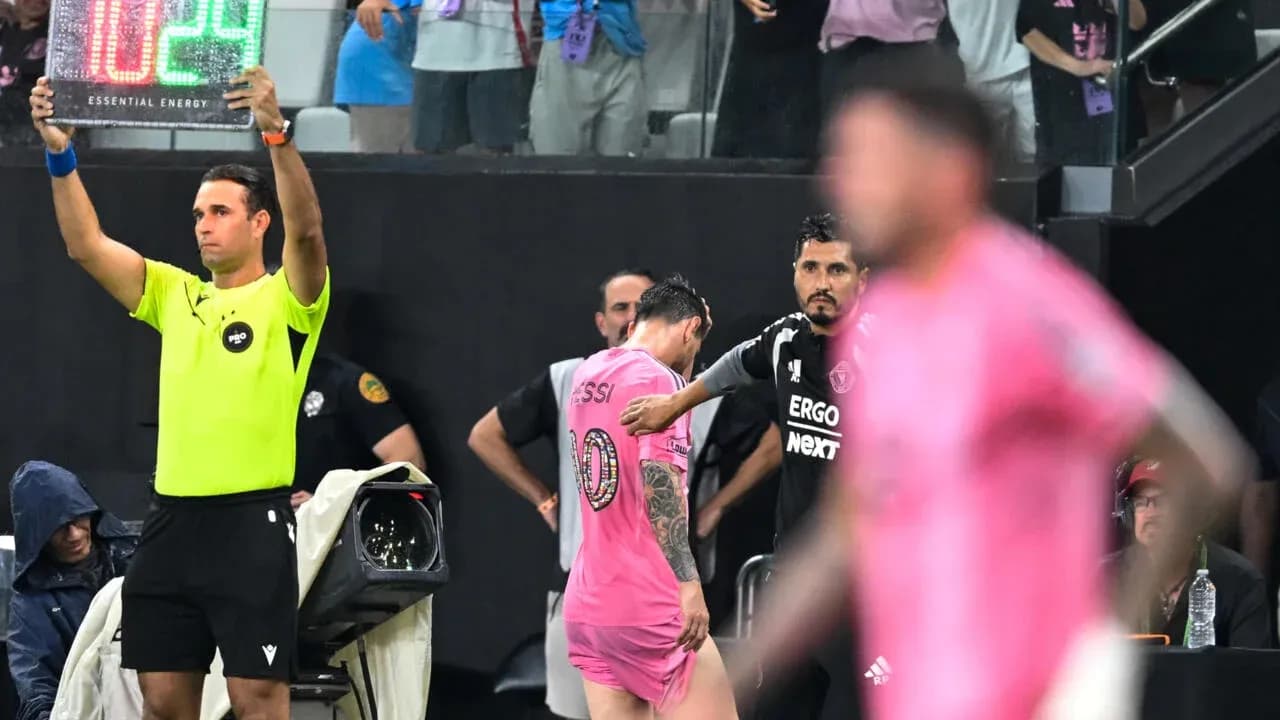
In the 73rd minute of Inter Miami’s wild 6-4 win over Philadelphia on Sunday, the 38-year-old walked to the touchline, head slightly bowed, and disappeared down the tunnel. No dramatic collapse, no stretcher. Just the kind of exit that sends a chill through two continents.
By Monday, the club had a name for it: muscle fatigue in his left hamstring. No tear announced, no clear timetable. Just a cautious diagnosis for the man Argentina still view as indispensable, even as he eyes a record-equalling sixth World Cup finals appearance.
Inter Miami’s statement was brief and deliberately vague: “The timeline for his return to physical activity will depend on his clinical and functional progress.” In other words, wait and see. For Argentina, that wait feels longer than the words suggest.
Scaloni watches, worries, and breathes out
Lionel Scaloni saw it all from afar. The national team coach, who is due to name his squad next week, followed the match on television from the federation’s headquarters in Argentina. He lived the same moment everyone else did: Messi slowing, signalling, leaving.
“Obviously we would have preferred that nothing had happened,” he told Argentinian channel DSports on Tuesday. The line carried more resignation than surprise. Messi has been managing his body for years; every minute is now calculated.
“Now one has to wait and see how it evolves and above all the new tests they are going to conduct in order to see if it confirms their original diagnosis,” Scaloni added.
The relief for him came in one small detail: Messi asked to come off. He did not push through it. He did not insist on staying on for the sake of the spectacle or the scoreline. For a coach staring at June and a World Cup defence, that decision matters almost as much as any scan result.
Inter Miami manager Guillermo Hoyos filled in the context after the match. Messi, he said, was tired, the pitch was heavy, and nobody wanted to gamble with his fitness. On a night when the goals flowed, the most important move was the one that took the No. 10 off the field.
A nation waits on a hamstring
Argentina’s calendar does not leave much room for doubt. The reigning world champions open their World Cup campaign on June 16 against Algeria in Kansas City. Six days later they face Austria on June 22, then close out Group J against Jordan on June 28.
Before that, two tune‑ups in the United States: Honduras on June 6, Iceland on June 9. Those friendlies were supposed to sharpen Scaloni’s squad, not turn into a medical countdown for the captain.
Messi has handled his workload carefully since arriving at Inter Miami in 2023. The club’s staff have regularly excused him from matches during congested spells, building in rest windows that would have been unthinkable earlier in his career. MLS has now paused for the World Cup, co-hosted by the United States, Mexico and Canada, which at least removes the grind of domestic travel from the equation.
Even so, every minor issue now feels magnified. This is not just about Inter Miami’s season. It is about a player who still acts as Argentina’s compass on the pitch, four years after lifting the trophy in Qatar.
Chasing history, again
Messi has not formally declared that he will play at this World Cup, but the expectation is overwhelming. One more tournament. One more run at history. A sixth finals appearance would pull him alongside his great Portuguese rival Cristiano Ronaldo and potentially Mexico’s Guillermo Ochoa.
For all three, the number is more than a statistic. It is a career stitched across eras, generations, and tactical revolutions. Yet only one of them carries the weight of defending a title this time.
At 38, Messi’s game has changed, but his importance has not. He no longer sprints relentlessly; he chooses his moments, drifts into pockets, dictates the rhythm. Argentina’s entire structure bends around that intelligence. Take him out, even temporarily, and everything has to be rewritten.
That is why a diagnosis of “muscle fatigue” in late May lands like a warning shot. Not a crisis, not yet, but a reminder that the margin for error is shrinking.
The scans in Miami will tell part of the story. The real question hangs over June: when Argentina walk out in Kansas City to begin the defence of their crown, will their captain stride out at full tilt, or will the first chapter of this World Cup already be about managing what his body can no longer give?



