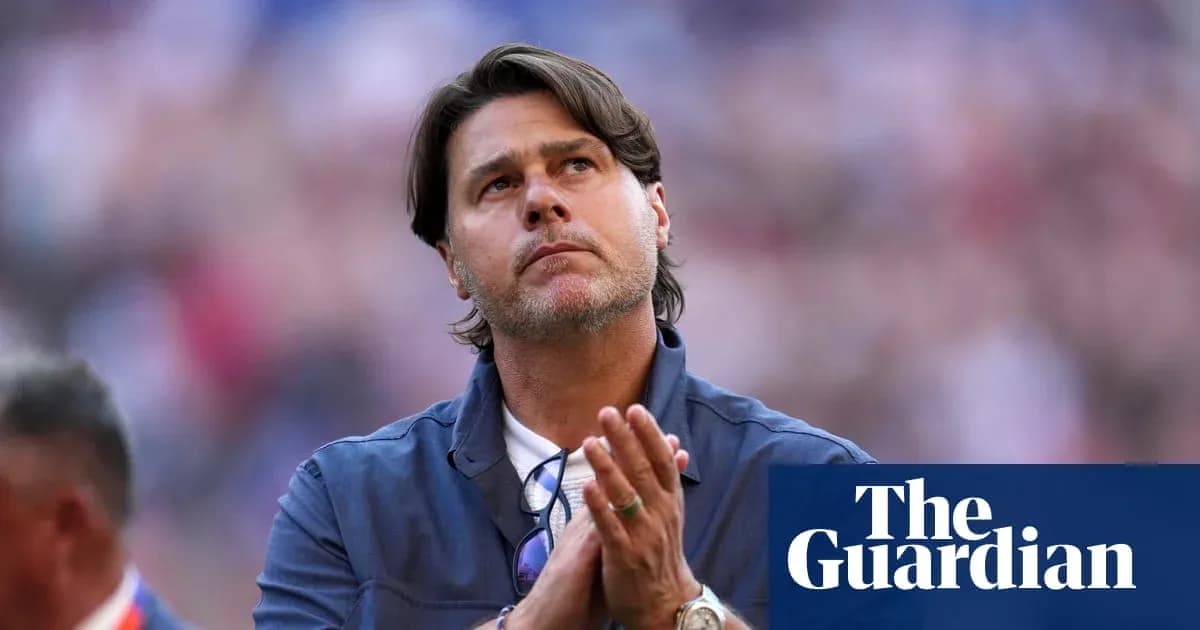
Mauricio Pochettino's Vision for US Soccer
Mauricio Pochettino is back on the training pitch, two months after the US men’s national team’s World Cup campaign ended with a thud. The disappointment in results hasn’t changed his remit. If anything, it has sharpened it.
When the former Tottenham and PSG manager took the US job in 2024, many inside and outside the federation saw him as a World Cup host-nation specialist: come in, maximize a home tournament, then move on. Instead, the relationship grew. By August, US Soccer had tied him down to a new deal that stretches into the next World Cup cycle.
The friendlies that await – Peru, Chile, Mexico and Canada in late September and early October – will offer the first glimpse of “Pochettino 2.0” with the USMNT. They are dress rehearsals, nothing more. The real assignment is heavier: qualify for the 2030 World Cup and, as Pochettino and the federation keep repeating, change the way the sport is built in the United States.
A coach, and now an architect
Pochettino has framed his decision to stay in sweeping terms. Remaining for another World Cup cycle, he said, is a chance to “have a lasting impact on the sport in the country that has welcomed us so warmly – and for that impact to extend beyond results on the field.”
US Soccer backed that up with structure, not just slogans. When the federation announced his renewal, it also revealed an expanded job description. Pochettino will play a central role in youth development strategy, coaching education, and advising on collaboration with the professional game. It is a broad mandate, far beyond picking lineups and managing camps.
Plenty of national-team coaches around the world weigh in on the wider direction of their programs. No US coach has ever been handed this kind of influence.
The timing is not accidental. US Soccer is in the middle of a major reshuffle, building out two new director roles to oversee the men’s and women’s senior and youth programs. Pochettino has already made it clear he wants to be involved in that process – with one important caveat.
“[I’ll help] but it can’t [just] be my guy,” he said with a laugh on Monday, speaking to a small group of reporters.
Then he turned to the bigger picture.
“This is the future of the USA,” Pochettino said. “We want to try to perform in the World Cup and to create something special with the fans. And now it’s about being a part of the legacy that the federation wants to create – becoming one of the most powerful countries in soccer. That is a dream, no? It’s amazing. If we can be part of that, we are so excited and so happy.”
The ambitions stretch beyond 2030. The US will compete at the Los Angeles Olympics in 2028, and it has been widely reported that the men’s team may also feature in Copa América that same summer. The calendar is crowded; the opportunity, enormous.
Balogun’s bitter deadline day
Not every storyline in this new cycle is grand strategy. Some are brutally personal.
For Folarin Balogun, this summer was supposed to be the moment. A breakout World Cup, a proven scoring record, and a transfer market hungry for goalscorers put the Monaco forward in line for a big move. Everton emerged as the most serious bidder.
Then deadline day hit him like a tackle from behind.
The Premier League club walked away late in the window, citing a potential fitness issue. Monaco disputed that. So did Balogun’s camp. The move collapsed anyway.
Balogun is hardly the first player to see his future vanish in the final hours of a window, but the timing and the narrative – post-World Cup, in his prime, at 25 – made the blow sting even more.
Pochettino didn’t duck the subject.
“Yes, it’s difficult because you cannot influence that decision,” he said. “You need to support what they are doing with the people making the decisions. In some special cases, like Flo’s, I will call in the next few days. I wanted to give him a little bit of space after that situation in Everton. I want to know from him what happened. But we are always offering our support, and that’s it. I think he’s an important player for us, he was an important player in the World Cup and I hope that he can find being in Monaco, or in another place, his best place to perform in the best way.”
The message is clear: the door to the national team remains wide open. The coach wants Balogun confident, settled, and scoring – wherever that happens.
The dual-national chessboard
Selection questions for the upcoming camp remain mostly unanswered. Pochettino kept his cards close when asked about the 26-man roster he’ll name later this month.
One name, though, is already off the board for now: Noahkai Banks.
The 19-year-old Augsburg center-back, eligible for both Germany and the United States, is still weighing his international future. He will not join the US this window. Banks has said he hopes to decide by “the next international break, or at the latest by the international break after next.” In Germany, reports have suggested that new national team head coach Jürgen Klopp has even scouted him in person.
The tug-of-war is familiar for US Soccer, but Pochettino stressed that the battle for these players cannot be fought only on tactics boards and depth charts.
“We are in contact with all the potential dual nationals,” he said. “I think it’s important for us, of course, because that is the human connection that is so important.”
He used Banks – “Noki,” as he called him – as the example.
“Even if they, like in that case, Noki, didn’t change his mind and is waiting still, no decision, and of course we cannot consider him for the next camp … But the organization is working with all the dual nationals and players with the possibility to make a decision. That human connection is important because if one day they feel that they can defend and they want to fight and to be part of our national team … Of course, if they deserve it, and we consider that they deserve to be involved, of course we are going to call [them up].”
For Pochettino, recruiting is not a side project. It is a central pillar of building the kind of deep, ruthless player pool he believes the US must have if it truly wants to “become one of the most powerful countries in soccer.”
The next few weeks will bring friendlies, travel, and a first look at how he intends to reset after the World Cup. The next few years will decide something far larger: whether this extended partnership between Pochettino and US Soccer can turn big talk about legacy and power into a new reality for the American game.