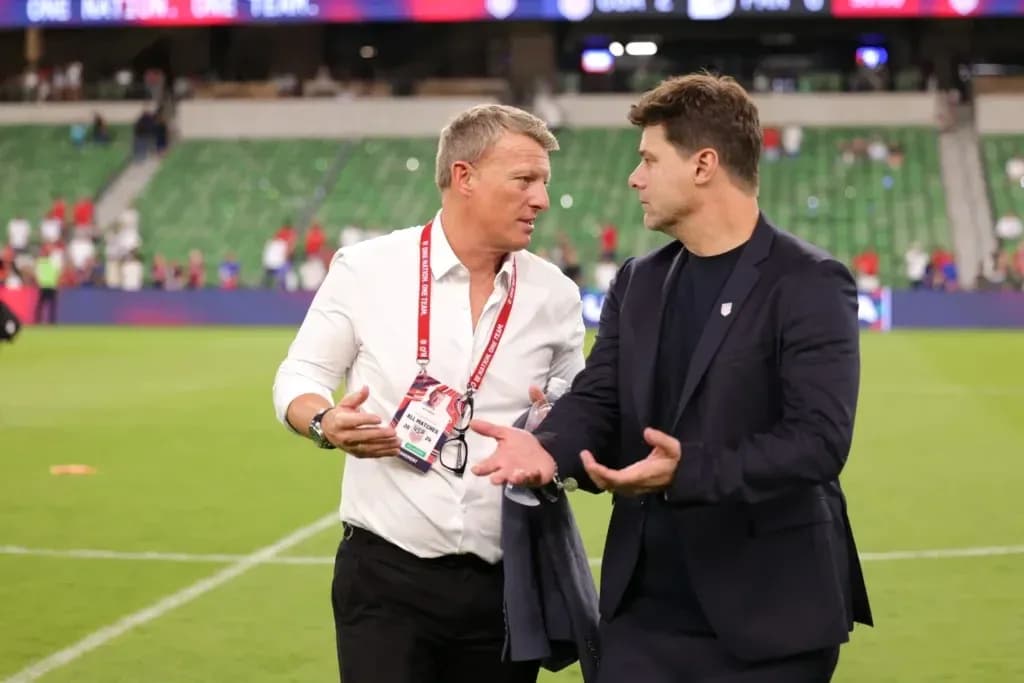
Matt Crocker Leaves U.S. Soccer for Saudi Arabia Role Ahead of World Cup
U.S. Soccer’s carefully laid World Cup plans were hit by a jolt on Monday, as sporting director Matt Crocker left his post with immediate effect to take a similar job with Saudi Arabia, multiple sources confirmed.
The timing is stark. The United States, co-hosting the 2026 FIFA World Cup with Canada and Mexico this summer, is less than two months away from its opening match against Paraguay in Los Angeles on June 12. The federation, though, insists the disruption is more cosmetic than structural.
Stepping into the gap, at least in the short term, is a committee of familiar faces. Assistant sporting director Oguchi Onyewu, head of women’s development Tracey Kevins and COO Dan Helfrich will collectively absorb Crocker’s responsibilities as the tournament approaches.
Helfrich, speaking Monday, dismissed any notion that preparations for the World Cup could be knocked off course.
"I anticipate zero impact on World Cup preparation as a result of Matt's decision," he said. "Mauricio and his staff have full control of the preparations for this summer's tournament, and we have full confidence in them. This transition in no way impacts those plans, which have been long-established."
From Southampton to center stage
Crocker’s tenure was brief but decisive.
Hired in April 2023 from then-English Premier League club Southampton to replace Earnie Stewart — who departed to run PSV Eindhoven — the Cardiff-born executive was tasked with reshaping the sporting structure of U.S. Soccer in a crucial cycle. He wasted little time.
He secured Emma Hayes for the U.S. women’s national team, a coup that instantly shifted the program’s trajectory. Hayes, long one of the most coveted coaches in the game, repaid that faith in emphatic fashion, guiding the U.S. women to a fifth Olympic gold medal at the 2024 Summer Olympics in Paris.
On the men’s side, Crocker landed Mauricio Pochettino in September 2024, bringing in a manager widely regarded among the elite after high-profile spells with Chelsea and Paris Saint-Germain. The Argentine now leads a U.S. men’s team under intense scrutiny as it prepares to perform on home soil.
Those two appointments alone defined Crocker’s impact: a federation that had often struggled to attract global heavyweights suddenly had two of the most respected coaches in the sport at the helm.
A search that starts at full speed
Crocker’s departure forces U.S. Soccer back into the market for a sporting director at a moment when continuity is at a premium. Helfrich insisted the process is already underway.
U.S. Soccer, he said, has begun "a thoughtful and comprehensive search for a successor" and will cast a wide net.
"I anticipate we will look both domestically and globally in that process," Helfrich noted.
Onyewu, who now steps into a more prominent interim role, is no stranger to the conversation. The former U.S. defender, a veteran of the 2006 and 2010 World Cups, was a serious candidate for the sporting director position before Crocker was hired three years ago. His experience inside the federation and in the locker room gives the interim structure at least some continuity as the search unfolds.
For now, the message from Soccer House is clear: the plans are in place, the coaches are in charge, and the World Cup countdown continues. The real question is what the next sporting director will inherit once the final whistle blows on home soil — and whether this sudden change at the top will echo beyond the summer.