
Marcus Rashford's Uncertain Future Ahead of World Cup
Marcus Rashford stands on the brink of a World Cup he is expected to start for England, yet has no real idea where he will be playing his club football when it is over. A forward preparing for Croatia in Dallas on 17 June, but with his domestic future parked in neutral. It is an odd limbo for a player who once looked destined to define an era at Manchester United.
The roots of this uncertainty stretch back to December 2024, when Ruben Amorim made the call that changed everything. The then United head coach cut Rashford from his first‑team plans, a brutal decision that triggered a carousel of loans. First Aston Villa, then Barcelona. Different leagues, different colours, the same question: where does Marcus Rashford actually belong?
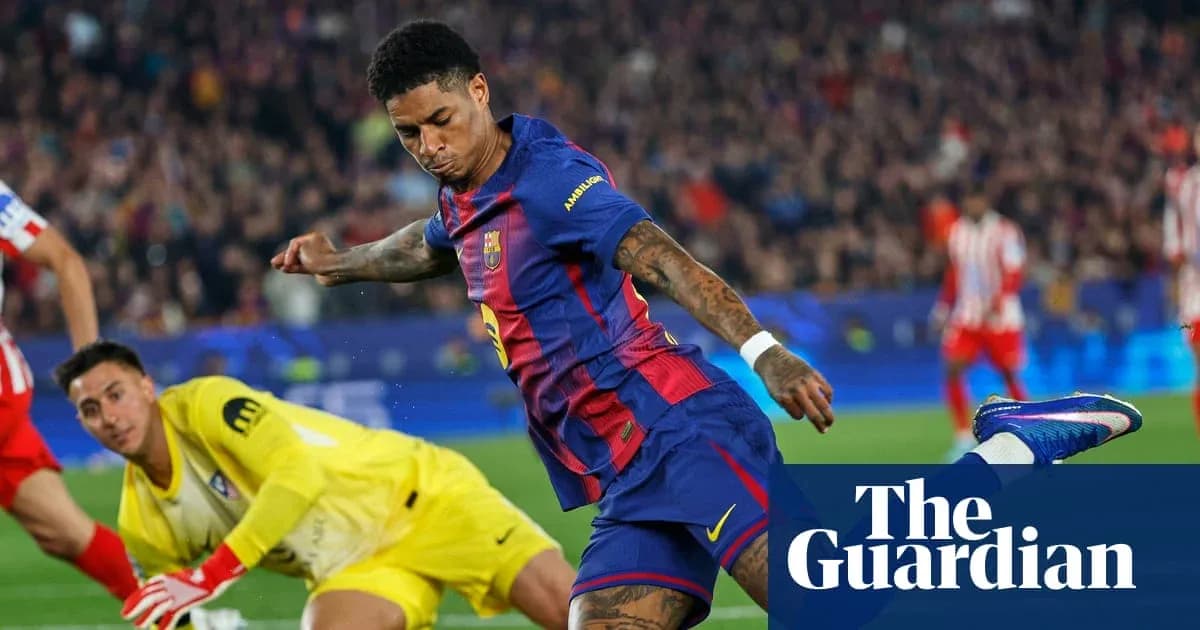
At Barcelona, he thought he had found an answer. A free-kick against Real Madrid in the clásico earlier this month, whipped in with the old swagger, proved pivotal in clinching La Liga. That is the sort of moment that usually writes a contract, not a goodbye note. Rashford, 28 now and no longer the academy kid, could be forgiven for thinking he had finally earned the right to stay put, perhaps even to build a life in Catalonia.
He has made no secret of his preference. Under Hansi Flick last season he produced a generally successful campaign and spoke with rare clarity after that clásico winner on 10 May. “I am not a magician but if I was, I would stay,” he said. “We will see.” That last line hangs over everything. Because Barcelona’s intentions are anything but clear.
The signing of Anthony Gordon from Newcastle for £69m last week only muddies the water. Another left-sided attacker, younger, with resale value, arriving on a long-term deal. It feels like a statement about where Barça see their future. If they want Rashford at all, the indication is it would again be on loan. Manchester United, by contrast, are pushing in the opposite direction: £26m or nothing, a permanent sale or another season of awkward compromise.
That price tag looks suspiciously low for a forward in his peak years. The explanation lies in the wage column. Rashford earns £17.5m a year and has two years left on his deal, signed to 2028. There is roughly £35m still to pay. United’s priority is to shift that burden off their books. Any club taking him on loan would be expected to shoulder all or most of those wages. A permanent move would almost certainly come with a pay rise attached. For a Barcelona board still wrestling with financial levers and salary caps, the numbers are heavy.
So the saga drifts on. Rashford wants clarity. United want value and relief. Barcelona, at present, do not look ready to commit.
What about a return to Old Trafford? On paper, the departure of Amorim and the arrival of Michael Carrick as permanent manager might open a door. In reality, it remains bolted. Rashford is still firmly out of favour with Sir Jim Ratcliffe, the minority owner who now shapes football policy, and with the senior figures around him, director of football Jason Wilcox and chief executive Omar Berrada. Persona non grata is not a status that tends to be reversed at United these days.
That pushes the search elsewhere. When his loan at Villa ended last summer, Rashford’s ambition was clear: a Champions League club, but not in London. If that stance has softened, Arsenal instantly move into view. Mikel Arteta would see the appeal. Rashford offers a higher ceiling than Leandro Trossard and Gabriel Martinelli on the left, and his ability to play as a No 9 adds another layer to a forward line already featuring Kai Havertz and Viktor Gyökeres. For a champion side constantly looking for marginal gains, he is a tempting upgrade.
The same logic applies at Liverpool. Cody Gakpo is the only senior left-sided specialist there and his output last season was, at best, solid rather than spectacular. Rashford’s profile fits the role. The obstacle is emotional rather than tactical: would his disillusionment with United run deep enough to cross one of English football’s fiercest divides and walk into Anfield in red that is the wrong shade?
Villa remain a realistic and attractive option. His spell under Unai Emery lit up their Champions League campaign, with Rashford thriving in a system that gave him space to attack and responsibility to deliver. The fit was obvious, the chemistry instant. The question is whether Villa can stretch their wage structure and transfer budget to accommodate both fee and salary.
Beyond England, the map narrows. Paris Saint‑Germain have admired Rashford in the past but now possess Khvicha Kvaratskhelia, a world-class operator patrolling that left flank. Bayern Munich have Luis Díaz established in the same role. Real Madrid have Vinícius Júnior, arguably the best in that position on the planet. At the top tier of European clubs, the left wing is a crowded, expensive neighbourhood.
So the calendar becomes part of the story. The transfer window opens on 15 June, two days before England’s World Cup opener, and the pace of events may be slow rather than explosive. Rashford’s situation is tangled in competing agendas: United’s financial strategy, Barcelona’s caution, the ambitions of Premier League rivals, the player’s own priorities. United can block any move they dislike. Rashford can refuse any destination that does not feel right. Every decision will be watched by clubs who admire his talent but worry about the cost.
The numbers from last season add another layer of ambiguity. Eight goals and nine assists in La Liga is a solid, not spectacular, return. Enough to help Barcelona retain the title, not enough to erase every doubt. It explains, in part, why they hesitate over a permanent deal. They see the match-winner who bent in that free-kick against Madrid. They also see the inconsistency that has shadowed his career.
And so Rashford remains what he has been for years: an enigma. Capable of catching fire for a month and scorching everything in front of him, then disappearing into the background. The World Cup could tilt everything. If he lights up England’s campaign in the United States, if he becomes the face of a deep run in the tournament, a £26m fee plus a top-end salary suddenly looks less like a problem and more like a bargain.
For now, he waits. Clubless in certainty, central to England, and walking a tightrope between redemption and reinvention.



