Marc Guehi's Bold Midfield Gamble for Manchester City
Enzo Maresca could have played it safe. First Premier League game in charge of Manchester City, Etihad watching, questions already swirling after a bruising Community Shield. The obvious move was to keep everything familiar, keep everyone in their lanes.
He did the opposite.
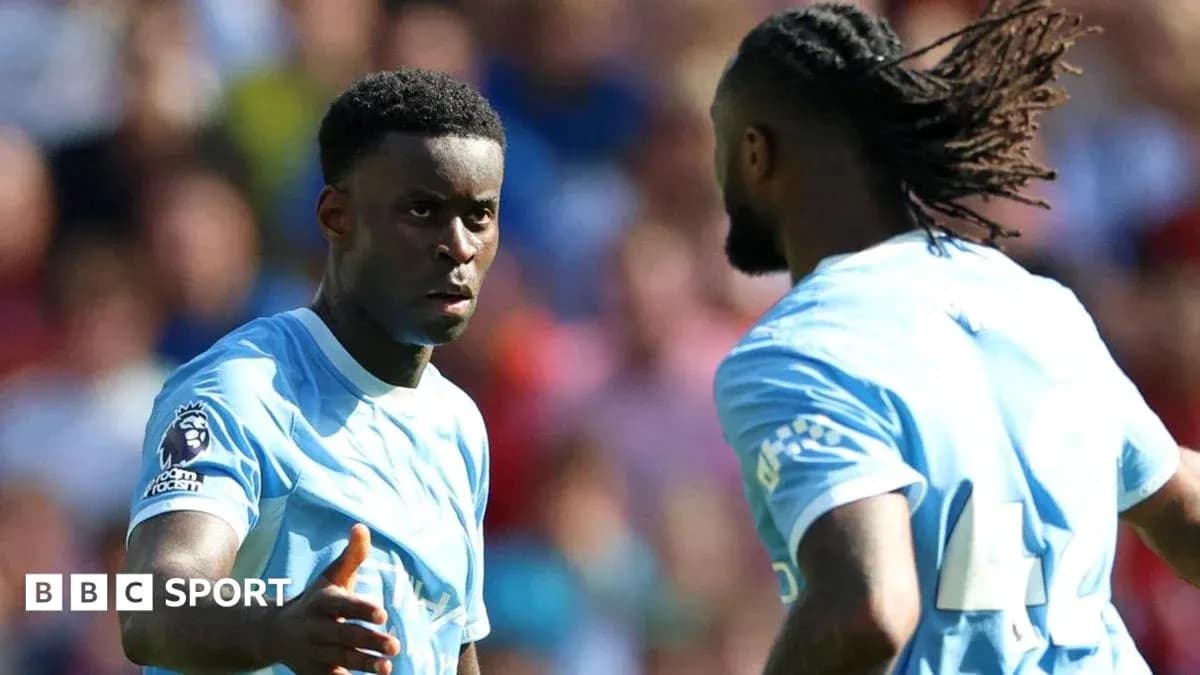
Marc Guehi, England centre-back, former Crystal Palace captain, lined up not at the heart of defence but in front of it, patrolling midfield as a makeshift pivot. Six defenders in the XI. A new manager. A fanbase on edge. It looked like a gamble that might blow up in his face.
For 84 minutes, it almost did.
City, still smarting from that 3-0 defeat by Arsenal at Wembley, laboured again. After Manchester United and Tottenham had taken the early-season heat for their opening-day collapses, the glare began to drift across town towards the Etihad. Back-to-back defeats to start the campaign loomed large. The champions looked blunt, short of rhythm, and short of ideas.
Then Guehi climbed, and everything changed.
The pressure finally told late on. From a set-piece, the stand-in midfielder attacked the ball like the centre-half he has always been. His towering header – the 10th Premier League goal of his career – dragged City level and ripped the mood inside the stadium away from anxiety and into belief.
Moments later, Josko Gvardiol applied the finish that completed the turnaround against Bournemouth, a cool strike that sealed an unlikely comeback and turned a tactical curiosity into a managerial statement.
What had looked like a quirk on the teamsheet suddenly felt like a plan.
The gamble in plain sight
The first hints came in the warm-up. While the back four went through their usual defensive drills with a City coach, Guehi drifted elsewhere, taking up positions and movements more suited to a screening midfielder than a centre-back.
By the time referee Jarred Gillett blew his whistle, the suspicion was confirmed. Guehi was the holding player, anchoring a side that had been picked with a defender’s profile but a midfielder’s responsibility.
It was bold. It was unexpected. And it worked.
This was not a defender hiding in midfield, taking two touches and passing five yards. Guehi imposed himself. He won all three of his tackles – no one on the pitch managed more – and completed 94.9% of his 59 passes. He won eight of his 11 duels. He disrupted, recycled, and then, when City needed it most, decided the game in the opposition box.
He admitted the role was new territory.
"It was just an idea the manager had, we worked on it in the week. We're trying different things, trying different solutions for the team," he told Sky Sports. "I'm glad today it paid off in the end."
To BBC Sport he added that he had not played in midfield too often, but enjoyed it because of the support around him: he felt comfortable enough, he said, to simply play and do what he could for the team.
Maresca, watching his experiment come to life, sounded vindicated.
"Marc Guehi has never played as a midfielder, today he was very good, so I am happy with the effort from the players," he told BBC Match of the Day. "Sometimes you visualise things. I know Marc from Palace and I always thought he could play as a midfielder because he is very good. So we tried it for a few days and I think he was quite good."
Quite good is an understatement. In one afternoon, Guehi turned from a potential talking point about being played out of position into the symbol of Maresca’s willingness to rip up the script.
No wonder, when asked where he might play next week, he joked: "Who knows? Maybe up front. We'll see."
A message, and a midfield in flux
The decision to start Guehi in midfield came with another notable call: Mateo Kovacic, a Champions League winner and one of the more established midfielders in the squad, began on the bench.
Was Maresca sending a message? If he was, it was not only to his players.
The Italian, who stepped into the space vacated by Pep Guardiola in the summer, has been clear about one thing since arriving: he wants more signings before the transfer window closes on 1 September. He has not dressed that up.
And the timing was striking. Just 50 minutes before kick-off, BBC Sport reported that City had agreed an £86m fee with Lille for Ayyoub Bouaddi. Maresca said afterwards he knew nothing of the deal yet, with no conversations held with the club’s decision-makers before the game, but the direction of travel is obvious.
Bouaddi, just 18, arrives with a huge price tag and an even heavier responsibility. City have lost Rodri, the 2024 Ballon d'Or winner, to Barcelona and seen Tijjani Reijnders depart for Saudi Arabia. The Moroccan teenager is being lined up to fill a chasm, not a gap.
He is expected to operate in the pivot alongside club-record signing Elliot Anderson, who made his Premier League debut for City here and lasted an hour. Anderson covered ground, broke up attacks, and showed flashes of the energy that persuaded City to invest so heavily in him.
On this evidence, though, he will not be alone in that zone for long.
Guehi’s display gave Maresca something else: a genuine alternative. The manager called him "a solution" in the middle of the park, and the numbers back that up. If Bouaddi needs time, if injuries bite, or if Maresca simply wants to change the texture of his midfield, he now knows he can drop Guehi into that role and trust him.
Former City goalkeeper Joe Hart, watching on, sensed a side still in transition but far from broken.
"I think City look OK," he said. "It's obviously interesting when they have had such settled world class players that they have almost mixed and matched.
"Anderson and Guehi is an interesting one in midfield but that won't be a long-term thing, especially with Bouaddi coming in. I think with people coming back late from the World Cup, Maresca is just trying out things in-season, in-game."
"That's just where Manchester City are at the moment, they've completely changed everything about themselves but they're still expected to win."
And that is the point. The expectations have not shifted, even if almost everything else has.
A new manager. A reshaped midfield. A teenage signing about to walk into the void left by one of the best holding players of his generation. A centre-back stepping into midfield and deciding games with his head and his passing.
Maresca did not keep his head down. He stuck it above the parapet, shuffled his pack, and trusted a defender to run his midfield.
On this evidence, City’s new era will not be quiet. The only question now is whether this first big gamble becomes the blueprint, or just the opening act.