Manchester United’s Transfer Strategy: The New Era of Control
Manchester United’s new transfer reality is starting to take shape, and not everyone likes what they see.
Under Sir Jim Ratcliffe’s control of football operations, the club has stepped away from the era of statement signings and eye-watering fees. The days of chasing the next £100million headline act are on hold. Paul Pogba’s £89m record from 2016 suddenly looks very safe.
United were never set up to drop that kind of money on a single player this summer. Too many areas need work. The midfield required a reset, other positions still need attention, and the budget was always going to be leaner than last year’s £225m outlay. Historically, United have splashed out when they’ve missed out on the Champions League, desperate to buy their way back in. This time, with a top-three finish secured last season, the strategy has changed: more control, less chaos.
That doesn’t mean fans are any calmer.
The left-back question that won’t go away
“When are United signing a left back?” It’s the blunt question many supporters are asking – and with good reason.
United should have pushed harder for Lewis Hall. Whether the Newcastle defender would have actually forced a move is unclear, but United never truly tested the situation. For a club trying to show it has rediscovered its edge, that felt like a missed chance.
They still want a left-back. That much is clear. But the price has to be right, and that caveat is driving almost every decision now. The recent arrival of Carlos Baleba underlined the new stance: United’s hierarchy are prepared to walk away from deals they don’t consider value, just as they did with Baleba last summer before finally landing him this year.
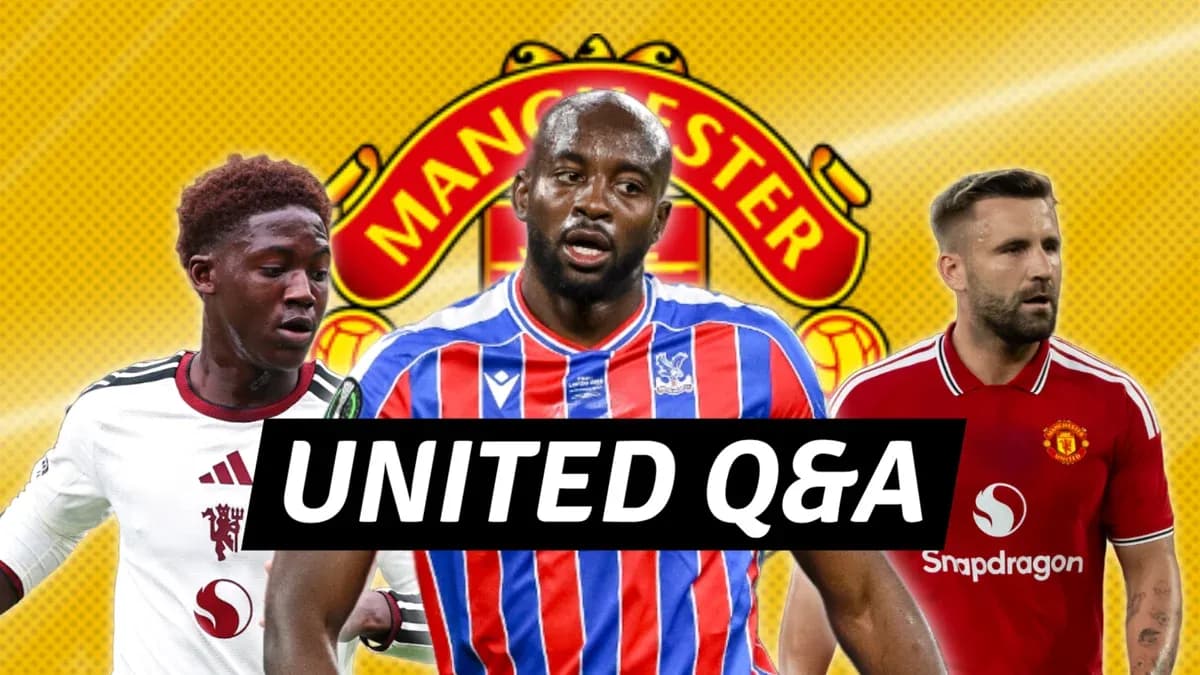
Even so, the lack of urgency at left-back is jarring. Luke Shaw stayed fit last season, but his injury history is well known and this campaign’s congested schedule only heightens the risk. Relying on him without proper cover is a gamble. Relying on Harry Amass, who is still miles away from the required level, would be reckless.
United’s summer won’t be “undone” if a left-back doesn’t arrive. But it would leave a glaring, entirely avoidable hole in the squad.
Mainoo, Baleba and the shape of United’s midfield
Another theme running through the fanbase: if Kobbie Mainoo is the present and future of United’s midfield, why bring in Carlos Baleba at all?
Some see it as blocking a pathway. The reality is different.
Mainoo and Baleba are not competing for the same idea of a midfielder. They offer contrasting profiles and, on paper, could form a strong partnership rather than a bottleneck. There is every chance supporters will see a Mainoo–Baleba axis at some point this season.
As for Mainoo’s minutes, there’s context. He only returned to pre-season training less than three weeks ago, so he was never a realistic option to start the opening-day defeat at Hull. He came on midway through the second half at the MKM Stadium and is now in contention to start on Sunday. The club view him as central to the project; his involvement will grow, not shrink.
The concern that Baleba’s arrival makes Mainoo “less relevant” doesn’t align with how United see their midfield build. Depth is no longer a luxury in this squad. It’s a necessity.
Cover, risk and the next move
One supporter’s fear summed up the mood: without a new left-back, United risk undoing the progress of this window. There was even a suggestion to move for Jean-Philippe Mateta at Crystal Palace as experienced backup for Benjamin Sesko.
The Mateta idea is intriguing but speculative. The left-back situation is not. It’s urgent.
United’s recruitment team have shown they will walk away from inflated fees. That discipline is overdue. But there is a fine line between being shrewd and being slow, between resisting bad deals and leaving obvious weaknesses exposed.
The window is closing. The strategy is clear. The question now is whether United can stick to their principles without paying for it on the pitch.