
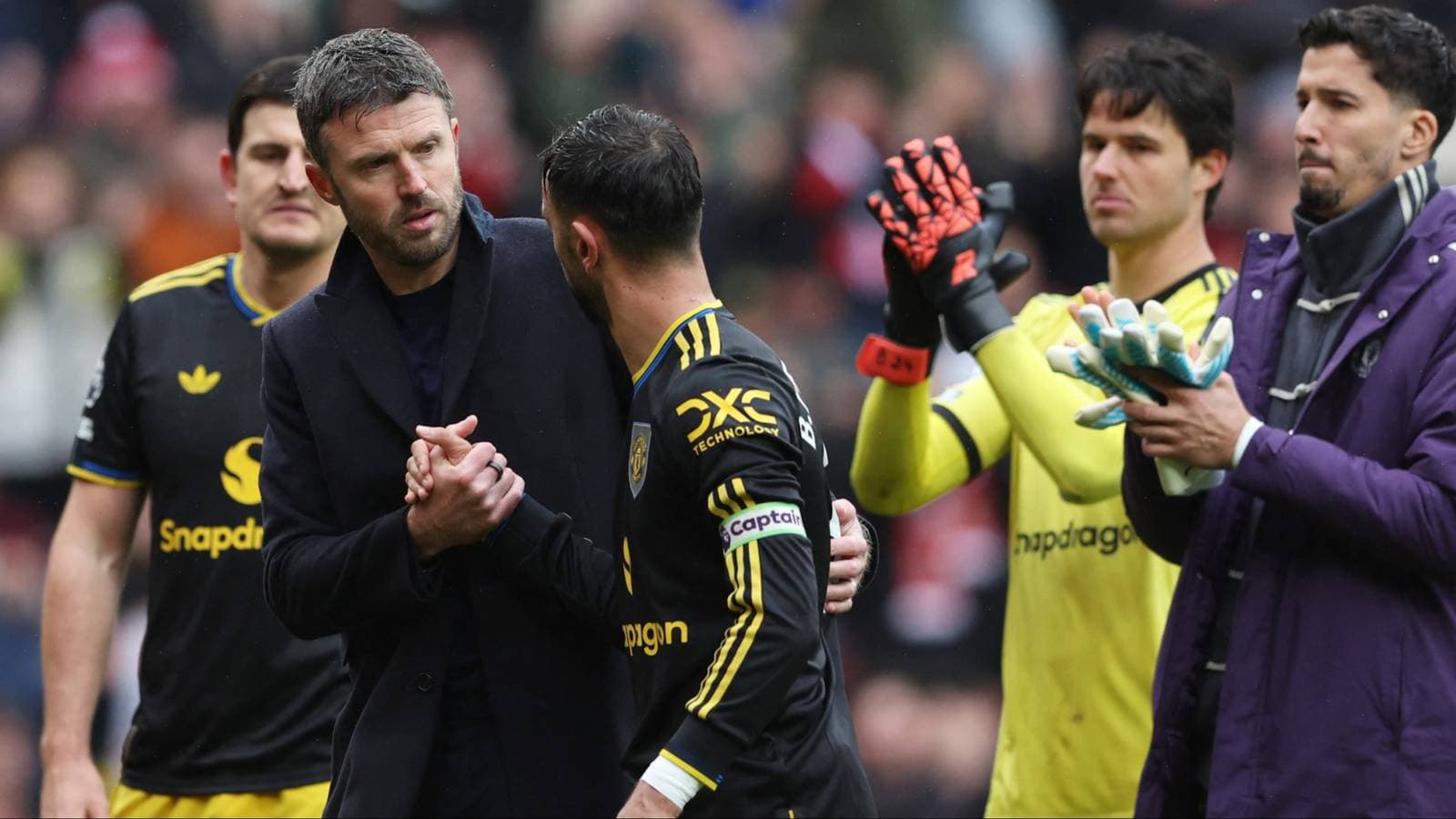
Manchester United's Draw at Sunderland: A Missed Opportunity for Fernandes
Manchester United’s goalless draw at Sunderland will not live long in the memory. For Bruno Fernandes, though, it might linger for all the wrong reasons.
The newly crowned FWA Footballer of the Year is running out of road in his chase of that elusive Premier League assist record. With Champions League qualification already boxed off, his hunt for a 20th and 21st assist has become the sub-plot of United’s run-in, a personal milestone that his teammates clearly want him to reach.
On Wearside, they never got close.
Carrick’s flat audition
This was the sort of end-of-season fixture that managers dread and sporting directors study. Michael Carrick rotated, patched and improvised, and the result was a United side that never found any rhythm.
No Casemiro. No control.
For the fourth time this season, United failed to win a league game that the Brazilian did not start. At 34, he has become the structural pillar of this team, the player who turns chaos into something resembling a plan. Remove him and the cracks are impossible to ignore.
Carrick’s reshuffle only underlined that point. United were disjointed, loose in possession and short of ideas. The interim manager, under the gaze of an Old Trafford hierarchy still weighing up long-term decisions, came away with more doubts than answers about his depth options.
Dalot rises, Mazraoui sinks
If Casemiro’s importance has been obvious for months, Diogo Dalot’s influence is growing more quietly but just as clearly.
Back in his natural role at right-back, Dalot has become a fixed point in Carrick’s short tenure. United have won every game he has started since the former midfielder took charge, and his balance of aggression and composure has restored order to that flank.
His absence here was telling. Noussair Mazraoui, drafted in to cover, struggled badly. Positionally uncertain and ineffective going forward, he never imposed himself. On a day when several fringe players had a chance to make a case, he let it slip.
He was not alone.
Joshua Zirkzee, handed his first start of 2026, again failed to find the net. The promise is there, the movement is clever, but the cutting edge is still missing. Mason Mount, deployed deeper in midfield, toiled without ever really influencing the game, stuck between roles and zones.
Amad’s difficult return
If anyone wanted this stage, it was Amad. Back at the Stadium of Light, where he once lit up the Championship, the script seemed ready-made.
It never came close to being written.
The Ivorian is still waiting for his first goal contribution since returning from AFCON. Here he completed just one dribble and created no key chances, drifting on the periphery as Sunderland shut down the spaces he usually thrives in. For a player trying to re-establish himself at United, it was another frustrating afternoon.
Even Fernandes, the heartbeat of this side all season, faltered. He lost the ball 20 times from 69 touches, forcing passes that were not on, chasing that landmark when the basics were already slipping. On days like this, when United lack fluency, they usually lean on him to conjure a solution. This time, there was nothing.
And yet, they still left with a point. They left with it because of a player who, quietly and efficiently, has changed the course of United’s season.
Lammens, the unlikely cornerstone
Bruno Fernandes will take the awards, the headlines and the arguments about where he ranks among the league’s elite. But the truly transformational figure in United’s campaign has been Senne Lammens.
That sounds bold until you look at the context.
Fernandes delivering goals and assists at a relentless rate is not new. Even in the turbulence of 2024/25, he still finished with 38 goal contributions in all competitions. This is his level, his standard.
Lammens, by contrast, arrived as an afterthought. A £17m signing, relatively unknown beyond specialist circles, stepping into a position that had become a magnet for anxiety. The chaos around Andre Onana and Altay Bayindir defined too many United performances. Every back-pass felt like a risk. Every cross invited panic.
Since Lammens walked through the door, that noise has stopped.
Ironically, it began with Sunderland. From his debut against them, the 23-year-old has looked like he belongs. He is not spectacular. He is not theatrical. He is calm. Unfussy. Unflustered. He does the one thing United desperately needed from their goalkeeper: he makes the routine look routine.
He did have his blemish – the stray pass against Liverpool last weekend – but what followed on Wearside mattered more than that mistake. Some keepers shrink after an error. Lammens grew.
When United’s outfield players drifted through the motions, he stayed sharp. Early on, he denied Noah Sadiki with a smart save, reading the angle and pushing the ball clear of danger. After the break, Brian Brobbey broke free at close range; again Lammens stood firm, again he palmed the ball away decisively.
No spills. No weak parries into the six-yard box. Just clean, authoritative goalkeeping.
He finished with four saves. At the other end, Sunderland’s Robin Roefs had just one to make. That disparity told its own story about Carrick’s misfiring attack, but it also underlined the extent to which Lammens carried United over the line.
United’s real player of the season
Fernandes remains the star attraction, the captain, the creative force. The team is built around his talent and his temperament. But when you strip away reputation and expectation, when you ask which player has changed United’s reality the most this season, the answer is Lammens.
Without him, the defensive fragility that haunted this squad would almost certainly have cost them more points, more momentum, maybe even their place in next season’s Champions League. With him, the back line has a foundation it simply did not possess before.
He was not signed to be the undisputed number one. He has become it by force of performance.
That is why, for all of Fernandes’ brilliance, the Belgian deserves to be called Manchester United’s player of the season. And as the club ponders its next steps – manager, recruitment, direction – it might just be the quiet, £17m goalkeeper who proves the most important building block of all.



