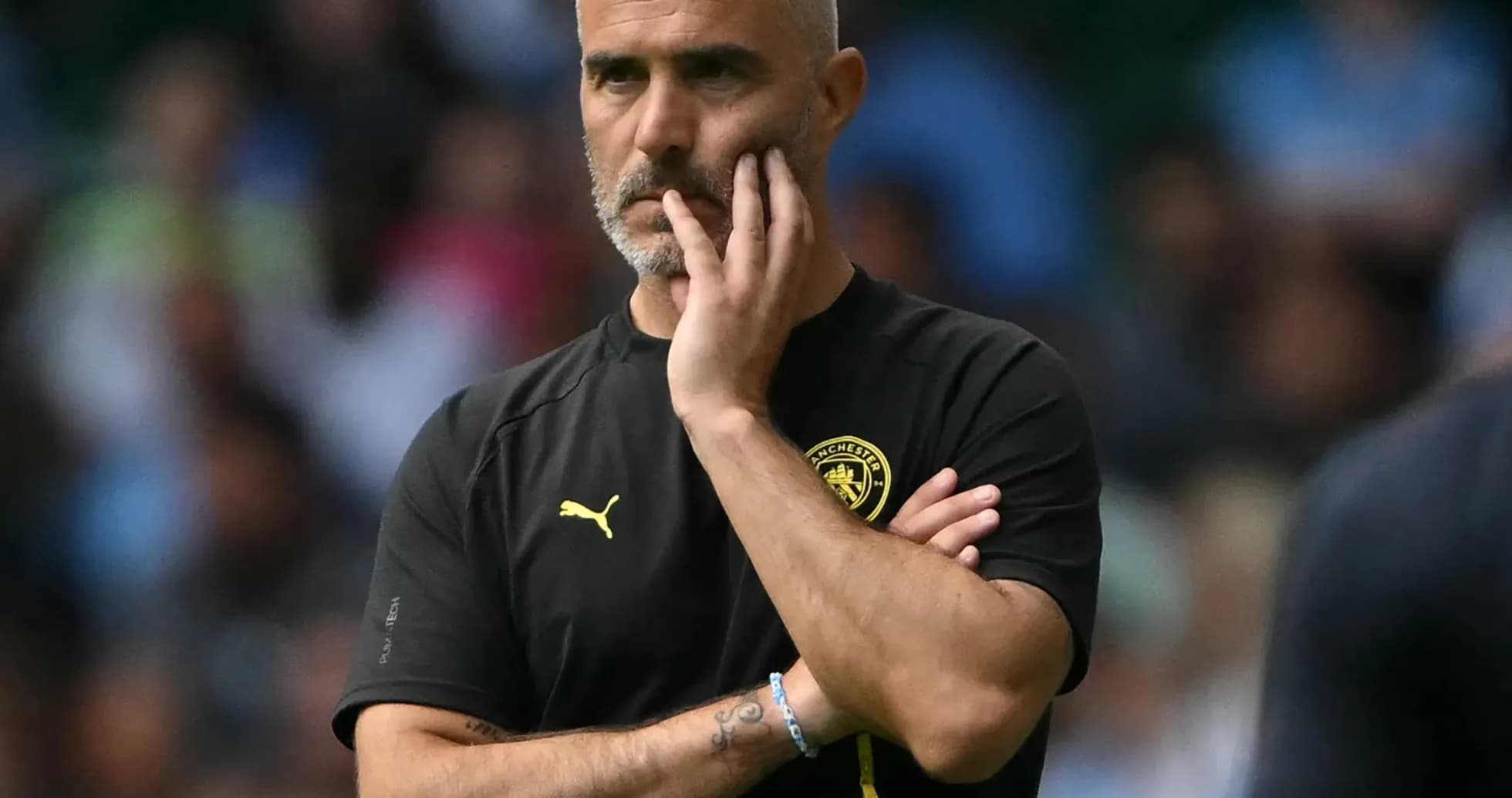
Manchester City Begins New Era Under Enzo Maresca
For the first time in a decade, Manchester City walk into a new season without Pep Guardiola prowling the technical area.
The Spaniard’s exit slams shut the most successful era the club has ever known: six Premier League titles, one Champions League, and a complete reshaping of English football’s balance of power. The machine he built now belongs to someone else.
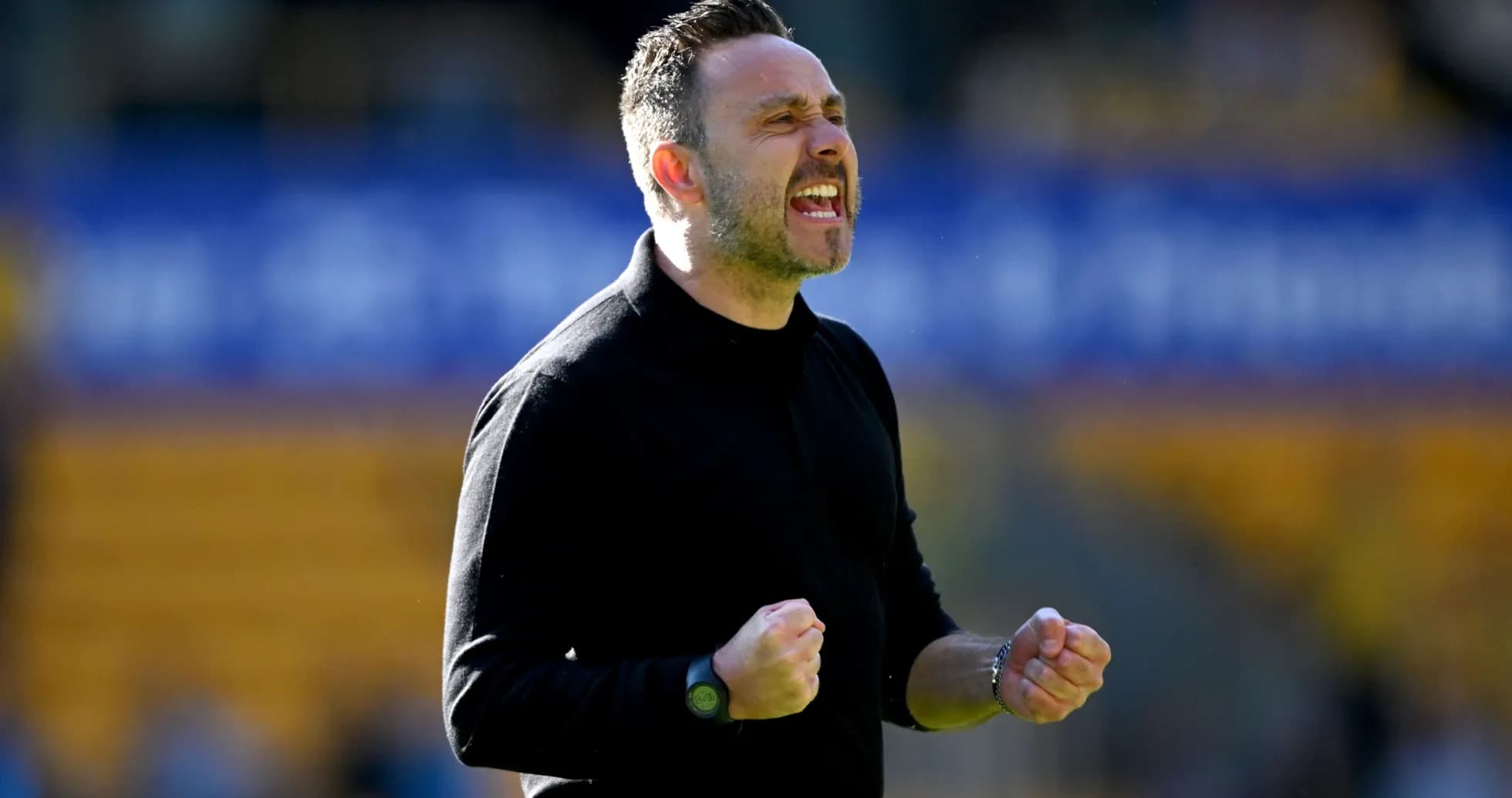
That someone is Enzo Maresca.
The Italian steps into a dressing room led by Erling Haaland and stacked with elite talent, but also into the shadow of a giant. On Sunday, as City open their league campaign at home to Bournemouth, the questions around this new era are already piling up.
Can Maresca really follow Guardiola?
City have spent 10 years bending every department of the club around one man’s ideas. Training, recruitment, academy, even the way full-backs think about space – all of it bears Guardiola’s imprint. It’s why the parallels with Manchester United post‑Sir Alex Ferguson are impossible to ignore.
Maresca is not an outsider parachuted in. He worked as Guardiola’s assistant during the treble season, then enhanced his reputation with spells in charge at Leicester and Chelsea. City’s hierarchy see him as a continuation of the same footballing language, not a revolution.
That’s the attraction. Continuity. The expectation is that City will look familiar when they have the ball: positional play, control, structure. But Maresca cannot simply cosplay Guardiola. He has to stamp something of his own on this team, and he has to do it quickly.
There is an edge to him. He has a track record of clashing with players and staff, a combustible streak that adds risk to a job already loaded with pressure after last season’s runners-up finish. The demand from above and in the stands is simple: challenge for the title immediately.
His first competitive outing underlined how brutal this job can be. Arsenal ripped City apart 3-0 in the Community Shield last Sunday. The scoreline didn’t just bruise confidence; it sharpened the focus on how steep this transition might be.
How do you replace Rodri?
You probably don’t. Not fully.
Rodri has been City’s metronome and shield, the heartbeat in midfield. His passing range, his positioning, his reading of danger – all of it underpinned the Guardiola era. This year he carried Spain to the World Cup title and took home the Golden Ball. Then he left for Barcelona.
Losing that profile is a huge blow.
City have tried to reload by bringing in England midfielder Elliot Anderson from Nottingham Forest for a reported £116m ($153m). He brings energy, aggression, and the ability to drive play forward. He is a ball-winner and a carrier, a box‑to‑box presence rather than a pure holding midfielder.
That’s the issue. Anderson strengthens the midfield, but he does not replicate Rodri.
City are also expected to move for 18-year-old Ayyoub Bouaddi from Lille, a teenager full of promise but still raw. Throwing him straight into the Rodri role would be a gamble, not a plan.
The reality is stark: there is no like-for-like replacement for arguably the best holding midfielder in world football. Maresca may have to spread Rodri’s responsibilities across multiple players, tweak the structure, and hope the collective can cover what the individual once did almost alone.
Can City finally manage games properly?
Last season’s title tilt didn’t just fade; it fractured in key moments. City dropped 17 points from winning positions. That isn’t about tactics on a whiteboard. That’s game management, or the lack of it.
Maresca’s reputation is of a coach who can be more pragmatic when required, someone willing to tighten up rather than chase perfection every minute. That might be exactly what City need in those tense final 20 minutes when a 2-1 lead should be locked down, not turned into chaos.
But the personnel have changed. John Stones, Bernardo Silva and Nathan Ake have all departed this summer, three players comfortable in possession and calm under pressure. They were central to the idea of control.
Whether the new arrivals can deliver the same level of composure is one of the most tangible tactical questions of this season. Maresca might want more control. The squad he has inherited may not be built for it in quite the same way.
Is Haaland enough to power a title charge?
Haaland remains the spearhead. When City click, he overwhelms defences. His movement, his physicality, his finishing – there are still very few back lines in the league that can cope with him.
But a title bid that leans too heavily on one man is always vulnerable. City felt that fragility last season. When the supply line stuttered or Haaland’s form dipped, the goals dried up and the whole structure looked less threatening.
Omar Marmoush offers support but is nowhere near Haaland’s level. He is a useful option, not a co-star. That puts the onus on Maresca to diversify City’s attack: more threats from wide, more goals from midfield, more variety in how they hurt teams.
If City become too predictable – find Haaland or bust – opponents will adjust. The margin for error at the top of the Premier League is too thin to rely on a single source of firepower.
Will the World Cup hangover drag into the season?
As if a managerial change and a churning transfer window were not enough, City’s squad has also been stretched by the World Cup. A significant chunk of their key players went deep into the tournament, including Haaland and Doku, with six first‑team regulars involved in the final week.
That has left Maresca with a thinner group for the early stages of pre-season and less time to drill his ideas into a full squad. The impact already showed. Against a fresher, sharper Arsenal in the Community Shield, City looked flat, short of rhythm and blunt in attack.
“I don’t know if it was physical condition, we had many players at the World Cup,” Maresca admitted afterwards. “After the first goal the reaction was very good, but after the second goal it was more complicated.”
The schedule will not wait for him. Bournemouth arrive on Sunday, the league marathon begins, and every dropped point will be measured against the Guardiola standard.
The dynasty is over. The structure remains. Now we find out whether Enzo Maresca can keep Manchester City at the summit, or whether the first cracks of a post‑Pep era are about to appear.