Liverpool's New Era Under Iraola: A Solid Start
Twelve months ago, Liverpool opened the Premier League season with five straight wins and the air around Anfield felt familiar: champions behaving like champions under Arne Slot. That surge began with a win over Bournemouth, then coached by Andoni Iraola, on the opening night.
No one in the ground that evening could have reasonably pictured the twist that followed. By the end of the campaign, Slot was gone, Iraola was in, and the man on the opposite bench that night now sits in the home dugout at Anfield.
Football turns quickly. Sometimes violently.
From Bournemouth’s touchline to Liverpool’s hot seat
Judging Iraola now would be premature, even if the numbers glare back at him. Liverpool are already six points worse off than at this stage last season. The unbeaten tag offers some protection, but not a shield.
Under the 44-year-old, Liverpool have yet to lose. They have, though, traded some of last year’s chaos for a more measured edge. This weekend, the story loops back on itself as Iraola returns to Bournemouth, the club he managed for three years and the place where his Premier League reputation truly took off.
The trip will feel strange. The walk into the away dressing room will feel stranger. Bournemouth have had to renovate the smaller visiting changing room to meet Europa League standards, so at least it is no longer the cramped, unforgiving space he once sent opponents into.
He has swapped the south coast for Formby, joining a quiet managerial enclave previously occupied by Jurgen Klopp and Brendan Rodgers. Locals say he is settling quickly. He has been seen in the city centre, and the keen cyclist has already taken to the coastal routes. But his real comfort zone is not the beach or the bike.
It is the training pitch.
A six-days-a-week coach with cones in his hands
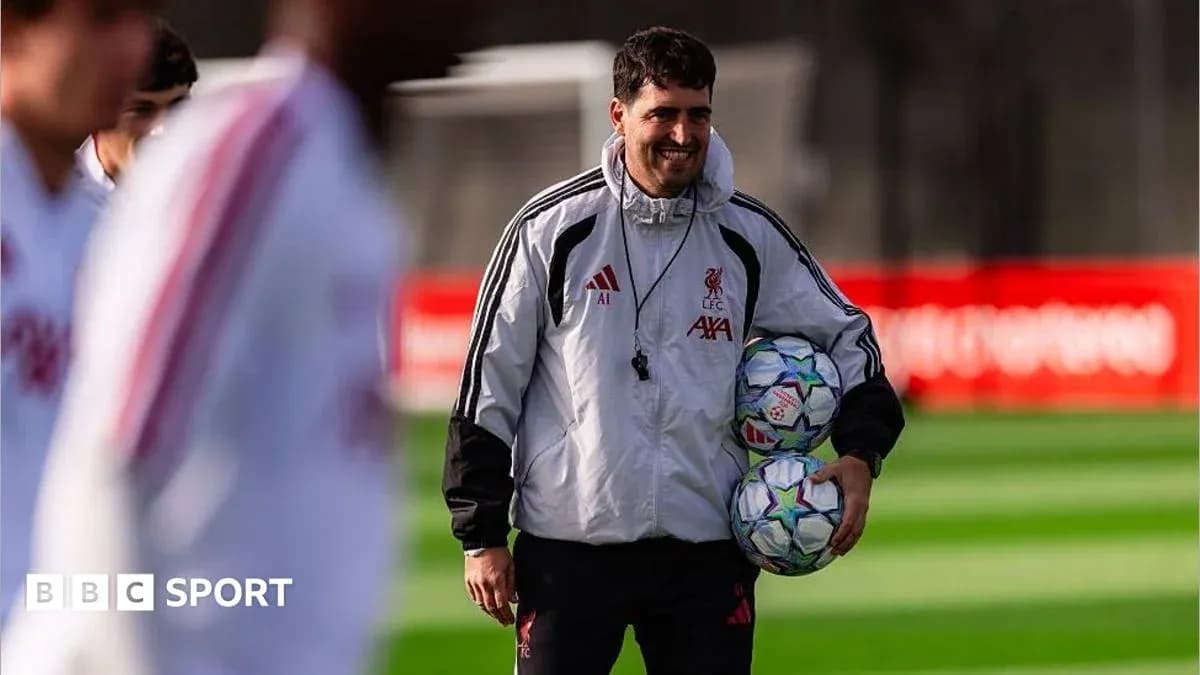
At Kirkby, staff describe Iraola as a “six days a week” coach. That is not a slogan; it is a routine. He is often the first man out on the grass, setting up cones, marking out grids, shaping the day with small details.
“It’s really intense. There’s a lot of hard work and no sort of light days. Everyone’s putting in 100%,” said forward Lewis Koumas.
After last season’s fatigue – physical and emotional – the mood inside Liverpool is that everyone simply needed a reset. Even if Slot had stayed, the feeling is that this campaign was always going to carry a fresher energy. Iraola has benefited from that, but he has also helped direct it.
At the AXA Training Centre, he cuts a low-key figure in the corridors. He rarely shuts himself away in his own office, instead gravitating to the coaches’ room alongside Tommy Elphick, Shaun Cooper and Pablo de la Torre. There is less of the grand-manager aura, more of a head coach embedded in the group.
De la Torre, who followed Iraola from Rayo Vallecano to Bournemouth and now to Liverpool, is central to the project. His job is simple to describe and brutal to execute: get the squad to the physical level Iraola demands.
From the outside, the change might look seismic. Inside the club, it is more subtle. The role of “head coach” at Liverpool comes with clear structures and established departments. Iraola has stepped into that framework rather than ripped it up.
Learning Liverpool’s schedule on the fly
His work at Bournemouth earned him the Liverpool job. The jump in scale, though, has brought a new challenge: the calendar. He is learning in real time what it means to manage a side expected to play deep into every competition.
There is a willingness to listen. The medical and fitness teams at Kirkby have a strong voice as Liverpool try to handle a season that will contain at least 49 matches and could climb into the 60s if the cup runs stretch out.
Training is no longer locked into a fixed time. Iraola bends the schedule around kick-off, with late afternoon and early evening sessions now common. Under Slot, the clock on the training ground barely moved; under Iraola, it shifts with the fixture list.
He has also opened a direct line to the academy. Rob Page, who coaches the Under-21s, has been clear on the alignment.
“We have an understanding of how the first team play and key principles, like how we press, how he [Iraola] wants his number 10 to press, how he wants his number eight to press, how he wants his centre-backs to press – we mirror that absolutely,” Page said.
The idea is simple: when a youngster steps up, he already speaks the same football language.
Roles, numbers and a system under scrutiny
Earlier this week, Dominik Szoboszlai broke down the shape. Liverpool are playing with a number six, a number eight and a number 10. The clamour for a pure defensive midfielder during the transfer window has not gone away, but Iraola’s belief is that the system works if the collective sharpens.
His emphasis is on roles, not reputations. The pressing patterns are drilled, the distances rehearsed. The demand is that each player, from the 10 to the centre-backs, understands how and when to hunt the ball.
Team selection follows a similar line of thinking. Iraola prefers to name his XI on the morning of the game. The post-match debrief waits until the following day. Emotions cool, analysis sharpens.
He has already had a reminder of the scrutiny that comes with the Liverpool job. After a pre-season friendly against Monaco, his comments to LFC TV were widely lifted and dissected. He said Liverpool had run out of steam after 30 minutes and did not yet have the energy to play with the intensity he demands. It was meant as an honest admission of a work in progress, not a criticism of the players.
The lesson was clear: at Liverpool, every sentence can become a headline or a social media clip. Iraola has responded with a calm, measured tone in his news conferences, open to questions but careful with phrasing.
For all that, this is not just Liverpool moulding a coach. It is also a coach reshaping himself for Liverpool.
Youth, intensity and the cost of a brutal schedule
One of the main reasons Liverpool turned to Iraola was his track record with young players. The numbers back up the direction of travel. The average age of their Premier League squad this season is 25.3, and only five teams in the division are younger.
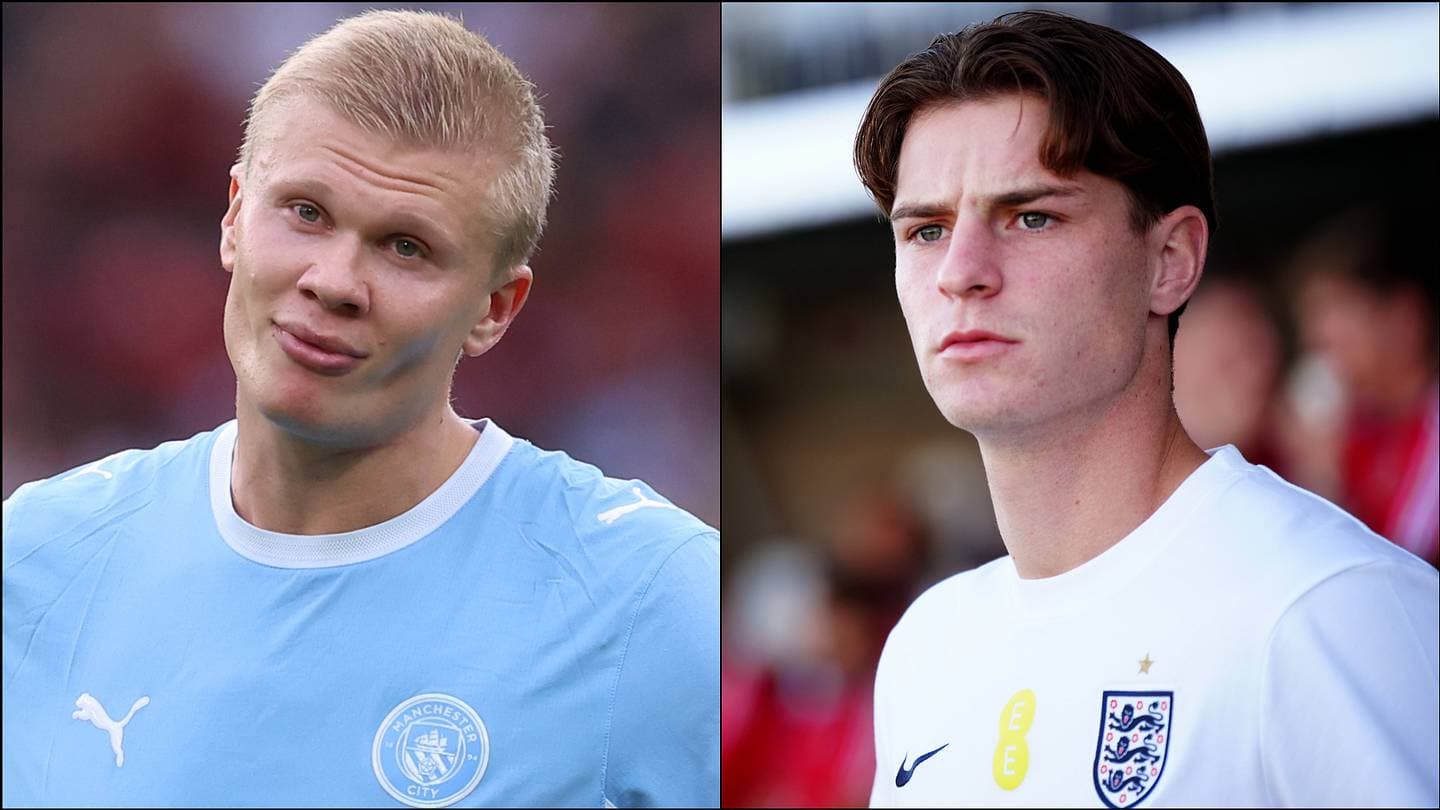
The Carabao Cup tie against Tottenham underlined that commitment. Rio Ngumoha, 18, Trey Nyoni, 19, and Koumas, 20, all started. None of them were token selections. All three are expected to play bigger roles this season than they did last.
“Intensity” has become the word that trails Iraola around every club he touches. At Liverpool, it is a non-negotiable. Yet he has already seen how cruel the schedule can be. The data shows Liverpool have made the most sprints in the Premier League so far, but the legs looked heavy in last weekend’s goalless draw with Fulham, which came less than 72 hours after beating Atletico Madrid in the Champions League.
Sunday’s match at Bournemouth will be Liverpool’s fourth game in 12 days. After the international break, it gets worse: four fixtures in 10 days. Between 11 October and 7 November, they will play nine times.
Even for a coach obsessed with high tempo, there has to be adaptation. Iraola knows Liverpool will sometimes have to win through a set-piece routine or a single flash of brilliance rather than a 90-minute press.
A return home, of sorts
On Thursday night, Bournemouth marked their Europa League debut with a win over Real Sociedad, in the Basque region where Iraola grew up. He will have noticed. He might even have allowed himself a quiet smile.
As he boards the flight from Liverpool to the south coast on Saturday, there will be a moment – perhaps just a few seconds – to take stock. From Rayo Vallecano to Bournemouth, from Bournemouth to Liverpool, from a touchline on the opening night of last season to the other side of the same fixture a year on.
Liverpool’s start under Iraola has not been spectacular. It has, though, been solid. They are yet to lose, a significant step forward from the 12 league defeats that scarred last term. But inside the dressing room, the standards are bluntly stated. As vice-captain Alisson said last week, draws are not good enough for Liverpool.
Iraola knows that as well as anyone. He has not lost a Premier League game since January, across both Bournemouth and Liverpool. On Sunday, he walks back into familiar territory, leading a very different team, chasing a very familiar outcome.
A win before the international break would not just tidy up the table. It would say something louder: that this new Liverpool, under a new voice, is starting to turn resilience into results.