
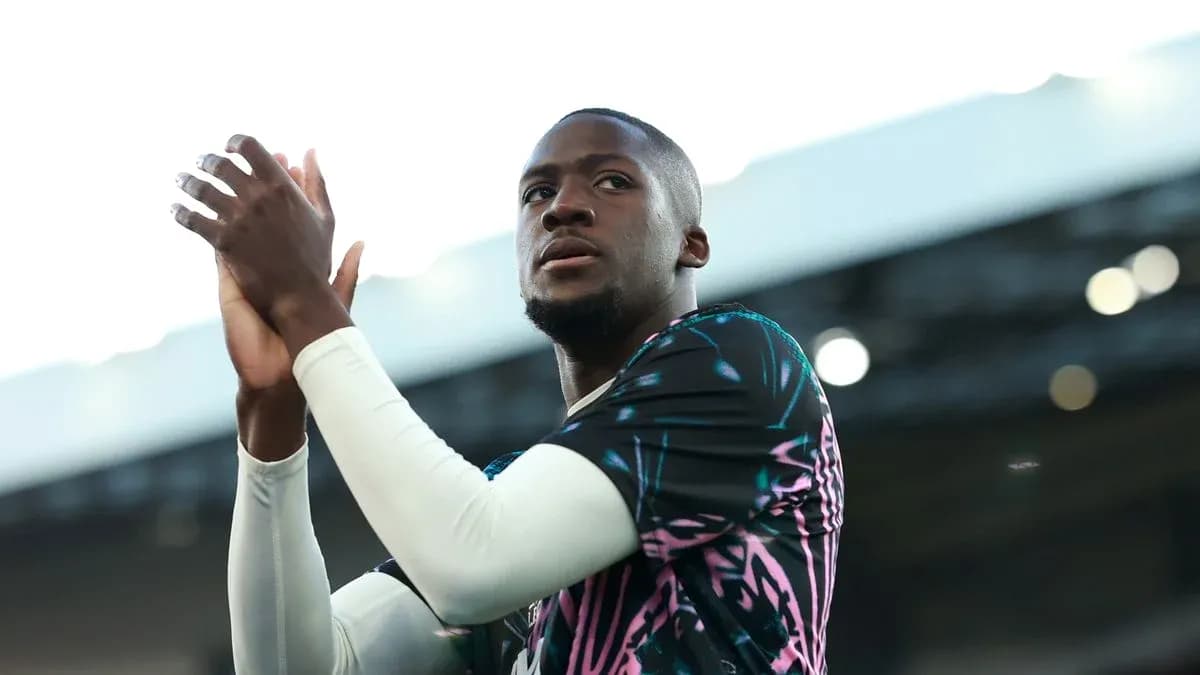
Liverpool's Centre-Back Dilemma: Replacing Konaté
Liverpool are braced for another painful goodbye. Ibrahima Konaté, Virgil van Dijk’s long-term partner at the heart of the defence, is set to walk away when his contract expires, with no agreement in sight over fresh terms.
Another pillar goes. Another key asset leaves for nothing.
Konaté is expected to follow Andy Robertson and Mohamed Salah out of Anfield this summer, continuing a pattern that will sting in the corridors of power as much as it does on the Kop. Factor in Trent Alexander-Arnold’s move to Real Madrid last year and the numbers are stark: four of Liverpool’s most important players of the last decade, a combined return of just £10 million.
For a club that once set the standard in the market, that is a brutal comedown.
Yet the fixtures will not wait. Arne Slot and new sporting director Richard Hughes must rebuild a back line that has lost its right-sided enforcer, in a world where elite centre-backs are hoarded, not traded. Liverpool need someone who can live next to van Dijk, absorb pressure, play on the front foot and handle the ball in a side that expects to dominate.
Four names stand out on the board.
Jan Paul van Hecke – Familiar face, familiar partner
If Liverpool want continuity in style as well as substance, Jan Paul van Hecke might be the cleanest fit.
The Brighton defender has already been linked with Anfield back home in the Netherlands, and his profile reads like a checklist for Slot’s system. He has operated in both a back three and a back four on the south coast, dropping into different structures without losing his composure or clarity on the ball. That tactical elasticity is gold dust for a coach still moulding a team around last summer’s expensive arrivals.
Van Hecke is comfortable stepping into midfield, threading passes and playing in a possession-heavy side. He has chipped in with three goals and three assists in the Premier League this season, but it is his behaviour under pressure that really catches the eye.
Konaté’s ability to draw fouls and roll through the press has been one of his underrated weapons. Van Hecke mirrors that knack: he’s been fouled 1.21 times per 90 minutes in the league, almost identical to Konaté’s 1.19. He invites contact, rides challenges, and helps his side play through the most aggressive presses.
Off the ball, he doesn’t sit back and admire. He steps in. The Dutchman sits in the 72nd percentile among Premier League centre-backs for interceptions per 90 (1.32), a sign of a defender who reads danger early and backs his timing.
He is not as dominant in the air as Konaté, despite standing 6ft 3in, but with van Dijk still ruling the skies and imposing prospect Jeremy Jacquet joining up for pre-season, Liverpool would not be short of height. Van Hecke’s job would be to complement, not clone.
The international picture only strengthens his case. Despite competition from Matthijs de Ligt and Stefan de Vrij, van Hecke has already collected 10 caps and has been named in the Netherlands’ World Cup squad ahead of both. He is expected to play a meaningful role alongside van Dijk in North America. That existing chemistry, those shared habits, are invaluable.
There is a catch. World Cup involvement means any move either happens fast, before the tournament, or late, when the market is already moving at full speed. His contract at Brighton enters its final year this summer, a detail that should make a deal more attainable but also invites a bidding war.
Tottenham have been linked. Chelsea are watching. Brighton, never shy in the market, are expected to ask for around £50 million. If Liverpool want van Hecke, they may have to fight for him.
Joachim Andersen – The grown-up in the room
If the priority is certainty, not potential, Joachim Andersen’s name deserves to be underlined.
The Fulham defender, once an unlikely Fantasy Premier League darling at Crystal Palace, brings a different profile to van Hecke but one that answers several of Liverpool’s looming questions. He is an aerial force, a dominant presence who ranks high for both interceptions and clearances, yet he still offers enough composure on the ball to function in a team that wants to build from the back.
He is not as progressive in his passing as van Hecke, but that might not be the point. With Konaté gone and van Dijk edging deeper into his thirties, Liverpool need someone who can absorb the league’s growing physicality and handle the ugly side of defending.
Andersen, just a centimetre shorter than van Hecke, has six years of Premier League experience and 49 caps for Denmark behind him. He sits in the top 10% of Premier League centre-backs for touches and aerial duels won, a sign of a defender who is constantly involved and rarely bullied.
His presence would also offer something Liverpool have lacked: a genuine stand-in for van Dijk. The captain has played more minutes than any other 34-year-old this season. He needs breathers. Andersen’s profile allows Slot to rotate without ripping the spine out of his defence.
Financially, he is the most accessible option on the list. Fulham paid £30 million for him two years ago. At 29, he would not block the pathway for Jacquet or Giovanni Leoni, both seen as long-term pieces. He would steady the present while the future grows in the background.
Jacquet, in particular, mirrors Konaté closely in the underlying data. Liverpool may yet decide that the true replacement is already on the books and that what they really need is a bridge, not a new cornerstone.
If that is the call, there are few better bridge-builders than Andersen.
Jarell Quansah – The one that got away?
This one would feel strange. It might also be the smartest move Liverpool could make.
Jarell Quansah left Anfield for Bayer Leverkusen last summer in a £35 million deal that raised eyebrows at the time and now looks downright baffling in the cold light of Konaté’s exit. Liverpool let go of a homegrown, right-sided centre-back with size, composure and upside – exactly the profile they are now scouring the market to find.
Quansah’s final months under Slot were messy. The new manager hooked him at half-time in his first game in charge, a decision that seemed to rattle the youngster’s confidence. The club cashed in, banking on other options and short-term stability.
Germany has rewritten the script.
At Leverkusen, Quansah has re-emerged as one of Europe’s standout young defenders and has earned a call-up to England’s World Cup squad. Those who watched him partner van Dijk in Jürgen Klopp’s farewell season will remember the raw tools. Now the numbers show how far he has sharpened them.
Across the Bundesliga season, he was only dribbled past twice. His pass completion sits at 90.3%. He averages 0.55 successful dribbles per 90, evidence of a defender who no longer just survives on the ball but drives his team forward with it.
Liverpool anticipated this possibility. They inserted a multi-tiered buy-back clause into the deal and even pre-agreed contract terms. Quansah can be re-signed this summer for £69.4 million.
That figure is heavy. Next year, it drops to £52 million, a far more palatable number for a player who could anchor the defence for a decade. Reports in Germany, including from BILD, suggest that any Anfield return is more likely in that lower-price window.
From a pure squad-building perspective, another year at Leverkusen makes sense for his development. From an emotional and sporting perspective, Liverpool may look at the current situation – losing Konaté for nothing, scrambling for a right-sided centre-back – and wonder how they let arguably their best pure defensive academy product since Jamie Carragher walk away in the first place.
The clause means they can correct that mistake. The question is whether they are prepared to pay for it now, or live with another season of regret.
Alessandro Bastoni – The marquee name, the different plan
If Liverpool want a headline, Alessandro Bastoni is it.
The Inter defender is a superstar-level name, a player who would electrify the fanbase and instantly reshape the back line. Yet he is not a like-for-like Konaté replacement. He is something else entirely.
Bastoni is left-footed, comfortable sliding out to left-back and stepping high into midfield. That versatility would be invaluable in a squad that has just lost Andy Robertson and is still working out exactly what Kostas Tsimikas can offer while Milos Kerkez develops. In many ways, he looks more like a long-term van Dijk successor than a direct Konaté stand-in.
His status in the game means he would not arrive to share minutes. He would arrive to start. That would almost certainly push van Dijk over to the right side of the pairing, a significant tactical shift and a decision that would define the next phase of Liverpool’s defence.
On the ball, Bastoni is elite. In Serie A he ranks in the top 10% of centre-backs for assists, successful passes and accurate long balls. He sits in the top 5% for big chances created, overall touches and expected goals conceded while he is on the pitch. He dictates games from the back, not just defends them.
At one stage this year, a departure from Inter felt plausible. Abuse after his red card against Bosnia and Herzegovina, which triggered Italy’s collapse and elimination from World Cup qualification, cast a shadow over his international standing and fuelled talk of a change of scenery. Barcelona’s interest only added noise.
Inter, though, have pushed back. President Giuseppe Marotta told DAZN that Bastoni “has absolutely not expressed his desire to leave.” The message is clear: he is expected to stay in Milan.
That does not mean the door is bolted shut. It does mean any deal would be complicated, expensive and drawn out. If there is even a sliver of opportunity, Liverpool should be in the room. Players of Bastoni’s calibre rarely come onto the market at an age where they can define a back line for the best part of a decade.
Konaté’s looming exit leaves Liverpool with a familiar dilemma and a harsher reality. The club that once set the standard for selling high and buying smart now watches key players walk away for free and faces inflated prices to replace them.
Do they gamble on familiarity with van Hecke, lean on experience with Andersen, swallow their pride and bring Quansah home early, or swing for a structural reset with Bastoni?
Whichever route they choose, this next centre-back will not just plug a gap. He will help decide what Liverpool’s defence – and by extension, their ambitions – really look like in the years after van Dijk.



