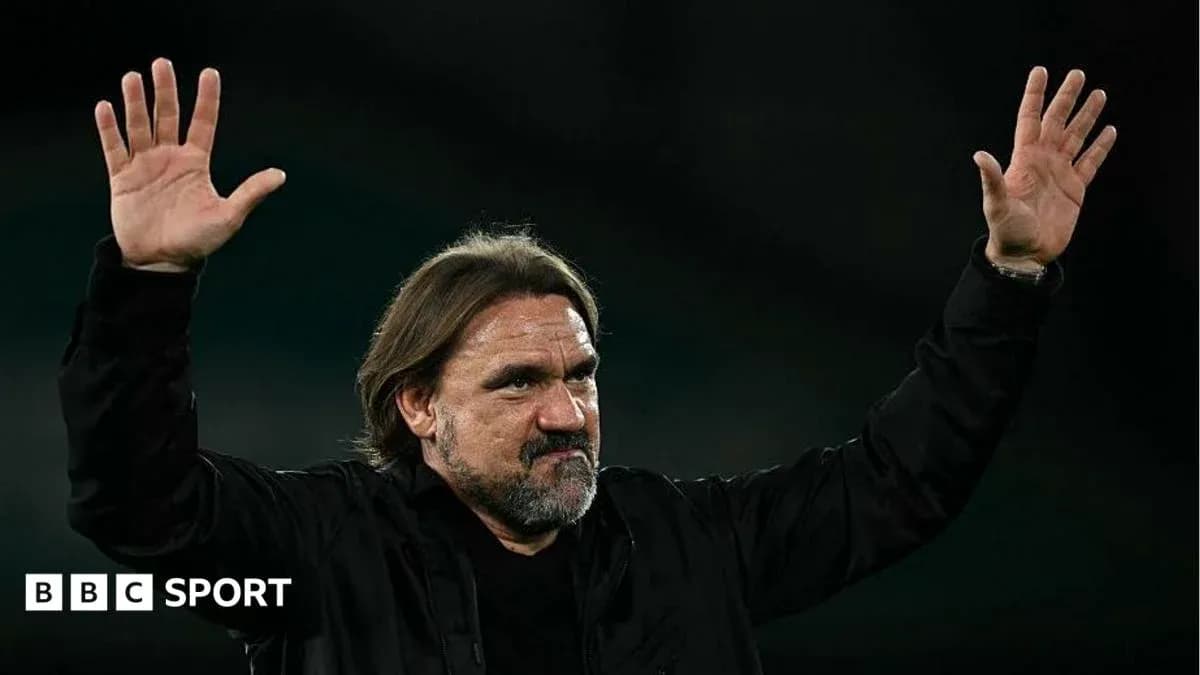
Leeds United's Remarkable Revival Under Daniel Farke
Look at the Premier League table and do a double take. Leeds United, third.
It evokes the days of David O’Leary, Elland Road under the lights and regular top-five finishes at the turn of the century. This time, it’s Daniel Farke’s team forcing the flashbacks.
Monday night’s 4-1 dismantling of Newcastle United was more than just a statement win. It kept Leeds unbeaten, moved them to eight points from four games, and confirmed this is their best start to a top-flight campaign since 2001-02. The numbers say it’s a revival. The football says it’s been coming for a while.
The turning point in Manchester
The real story starts nine months ago at Etihad Stadium.
Leeds went in 2-0 down against Manchester City on 29 November. Another newly promoted side about to be put in its place, or so it seemed. Farke ripped up his back four at half-time, shifted to a back three and watched his team drag themselves back to 2-2 before City finally broke them in stoppage time.
They lost the game. They may have found their identity.
From the next match – a home win over Chelsea on 3 December – the numbers changed dramatically. Leeds have lost only five of their past 29 league fixtures. Stretch that run into a hypothetical table and they sit fifth over that period. That’s not a bounce. That’s form.
The reshaped defence tightened them up, but it did more than that. It gave structure, clarity and a platform for the rest of the side to grow.
Building a taller, tougher Leeds
The summer of 2025 was about more than just plugging gaps. Farke and new sporting director Adam Underwood went after a very specific profile: height, power, presence.
They wanted what Farke called “a special physicality” for the Premier League grind. Leeds had been one of the smallest sides in the division. That was over.
Of the 10 permanent signings, eight stand over 6ft: Jaka Bijol, Sebastiaan Bornauw, Dominic Calvert-Lewin, James Justin, Lukas Nmecha, Noah Okafor, Lucas Perri and Anton Stach. Set-pieces, crosses, second balls – Leeds wanted to stop being bullied and start doing some bullying of their own.
Farke was blunt about it back in July 2025. Coming up from the Championship with a small squad into a league of giants meant more aerial pressure, more crosses to defend. If Leeds were going to survive, they had to grow up – literally as well as tactically.
When Pascal Struijk left for Brighton this summer, Leeds didn’t blink. They went back into the World Cup market, bringing in Bosnia-Herzegovina defender Tarik Muharemovic and Switzerland’s Nico Elvedi to reinforce the back line.
Muharemovic has barely missed a minute. He did blot his copybook with the error that gifted Bazoumana Toure a late consolation for Newcastle, but across the early weeks he has looked assured, aggressive and comfortable in front of James Trafford.
Behind him, Trafford towers at 6ft 5in and carries the weight of expectation as the most expensive British goalkeeper in history – for the second time – after his £40m move from City. Leeds have gambled big on their last line of defence. So far, it looks like a smart bet.
Add Harry Wilson, one of last season’s standout performers in the division, snapped up on a free from Fulham, and the recruitment picture sharpens. This isn’t scattergun spending. It’s a clear, coherent build.
From relegation fears to defensive steel
It’s easy to forget how precarious things looked not so long ago.
Leeds lost eight of their first 13 league matches in 2025-26. They were 18th, staring at relegation, the glow of their Championship title win over Burnley fading fast. Reports swirled that Farke’s job was on the line.
The shift to a back three was initially about survival. It has turned into something far more potent.
Since that switch, among clubs ever-present in the division over the period, only Arsenal, Manchester City and Nottingham Forest have conceded fewer goals. Leeds, once porous and fragile, now look organised, rugged and hard to break down.
Calvert-Lewin unleashed
Dominic Calvert-Lewin arrived with questions. Could he stay fit? Could he score consistently? Could he carry a newly promoted side?
He had struggled as a lone forward in a 4-3-3, isolated and feeding on scraps from wide areas. With the new shape and a genuine strike partner, he suddenly looks like the centre-forward England once built around.
Since last December, only Erling Haaland, Ollie Watkins and Joao Pedro have scored more Premier League goals than Calvert-Lewin’s 14. That’s elite company.
The system shift has helped. Farke now flicks between 3-4-3 and 3-5-2, but the constant is Calvert-Lewin with bodies close to him. Often it’s Nmecha or Okafor alongside. Okafor himself has seven goals and an assist in his past 11 league games, a sharp, restless presence who drags defenders away and creates space.
Calvert-Lewin put it simply: “I enjoy having bodies around me.” The evidence is there in the penalty box.
History in sight, and England watching
Next up at Elland Road are Crystal Palace on Saturday. For Calvert-Lewin, it’s more than just another home game.
If he scores, he becomes the first Leeds player to find the net in six consecutive league home matches since Arthur Hydes in 1932. That’s almost a century of club history in his sights.
He missed out on England’s World Cup squad, a painful omission for a striker who once looked nailed on for major tournaments. Now, with three goals in all competitions already this season and a Leeds side surging around him, the picture is changing again.
Thomas Tuchel names his squad for a Nations League quadruple-header on Friday. Calvert-Lewin has done what international managers always demand: play well, score goals, stay fit.
Leeds are back near the top of the table. Their centre-forward is hunting records. The question now is not whether they can stay up, but whether this carefully engineered, physically imposing, tactically sharp side can drag the club back into Europe for the first time in 24 years.