Leeds United: A Premier League Comeback Story
Leeds United are back near the top of the Premier League table and, for anyone who remembers the turn of the century, the sight feels oddly familiar.
Third place after four games. Eight points on the board. A 4-1 dismantling of Newcastle United at Elland Road on Monday night. This is Leeds’ best start to a top-flight campaign since the 2001-02 season under David O’Leary, when European nights and top-five finishes were the norm, not a romantic memory.
It hasn’t happened by accident. And it certainly didn’t happen overnight.
The night everything changed
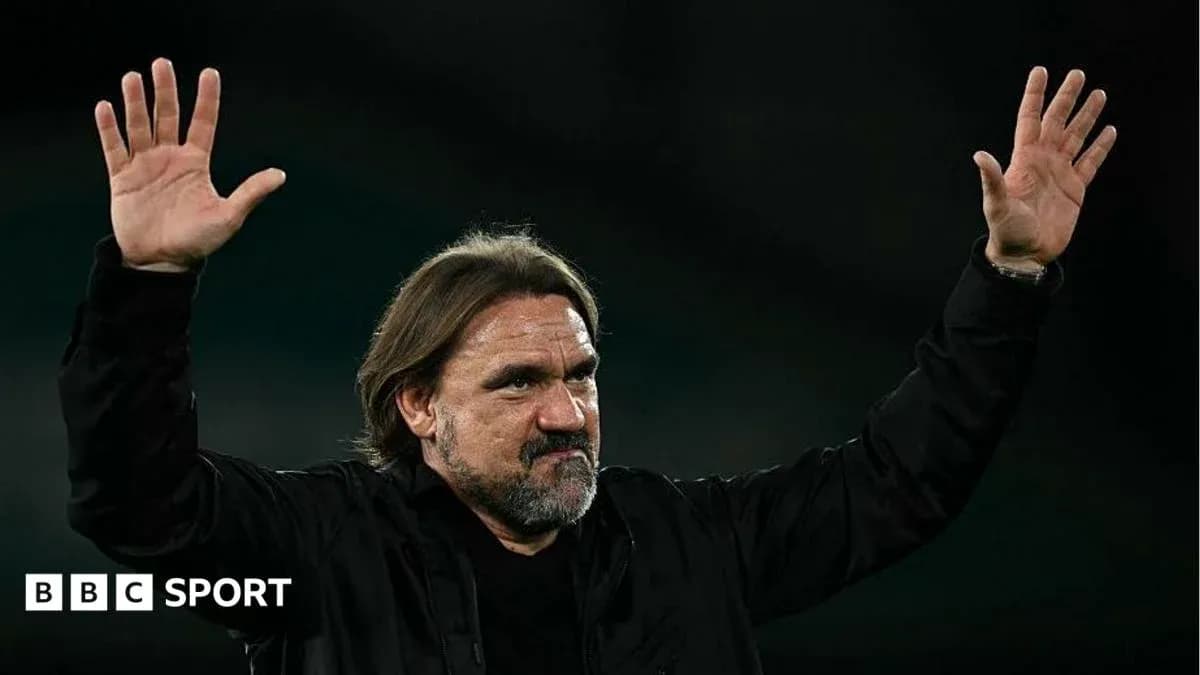
Wind back to 29 November at Etihad Stadium. Leeds trailed Manchester City 2-0 at half-time, staring at another long, painful evening against the champions. In the dressing room, Daniel Farke ripped up his blueprint.
Out went the back four. In came a back three.
The effect was immediate. Leeds clawed their way back to 2-2, only to concede in stoppage time. On paper, it was a defeat. In reality, it was the turning point.
From the next game – a home win over Chelsea on 3 December – Leeds have lost only five of their past 29 league matches. Stretch that run across a full season and those results would have them sitting fifth in a hypothetical table. This is sustained form, not an early-season sugar rush.
Building a taller, tougher Leeds
Farke and new sporting director Adam Underwood went into the 2025 summer window with a clear idea: Leeds had to grow up, literally as well as figuratively.
They targeted height and power for the Premier League grind. Of the 10 permanent signings, eight stand over 6ft: Jaka Bijol, Sebastiaan Bornauw, Dominic Calvert-Lewin, James Justin, Lukas Nmecha, Noah Okafor, Lucas Perri and Anton Stach.
Speaking in July 2025, Farke was blunt about the thinking. Leeds had one of the smallest squads in the division. In the Premier League, that meant pressure in both boxes, especially in the air. If they were going to survive – and then compete – they had to defend crosses, win duels and stand up physically.
When centre-back Pascal Struijk left for Brighton this summer, Leeds didn’t shrink. They doubled down. In came World Cup defenders Tarik Muharemovic of Bosnia-Herzegovina and Switzerland’s Nico Elvedi to reinforce the back line.
Muharemovic has barely missed a beat. He has played every league minute so far, marshalling the defence in front of 6ft 5in England international James Trafford, who became the most expensive British goalkeeper in history for the second time when he joined from Manchester City for an initial £40m.
Even his late mistake against Newcastle, gifting Bazoumana Toure a consolation goal, felt like a footnote on a night when Leeds’ new spine again looked imposing.
Add Harry Wilson, a free transfer from Fulham and one of last season’s standout performers in the division, and the recruitment drive looks less like a gamble and more like a carefully drawn plan.
From relegation fears to European whispers
The transformation feels even starker when set against where Leeds were not so long ago.
They lost eight of their first 13 league matches in 2025-26. Eighteenth in the table. Relegation a live threat. A newly promoted side, fresh from pipping Burnley to the Championship title, suddenly staring down the barrel.
Reports suggested Farke’s job was on the line. The switch to a back three, and the physical rebuild that followed, saved more than just a season.
Defensively, the numbers tell their own story. Among clubs ever-present in the division since that tactical change, only Arsenal, Manchester City and Nottingham Forest have conceded fewer goals. Leeds no longer look fragile; they look organised, awkward, hard to break.
But the change hasn’t just tightened them up at the back. It has unlocked their centre-forward.
Calvert-Lewin, finally unleashed
Dominic Calvert-Lewin arrived with a reputation and with doubts. At Everton, and early in his Leeds spell, he often toiled alone up front in a 4-3-3, feeding on sporadic service from the flanks.
In Farke’s new system, he has a partner. Often Lukas Nmecha. Sometimes Noah Okafor, who has seven goals and an assist in his past 11 league outings. The effect on Calvert-Lewin has been dramatic.
Since last December, only Erling Haaland, Ollie Watkins and Joao Pedro have scored more Premier League goals than his 14. That is elite company, and it reflects a striker finally playing in a structure that suits him.
Farke alternates between 3-4-3 and 3-5-2, but the principle remains the same: Calvert-Lewin is no longer an isolated target man. As he put it himself: “I enjoy having bodies around me.”
He looks it. He plays like it.
Eyes on history – and England
Next up at Elland Road are Crystal Palace on Saturday. For Calvert-Lewin, it is more than just another fixture.
If he scores, he becomes the first Leeds player to find the net in six consecutive home league games since Arthur Hydes in 1932. Almost a century of history sits in front of him.
There is another subplot. Calvert-Lewin missed out on England’s World Cup squad, a brutal cut for a striker of his pedigree. Now, with three goals in all competitions already this season and his club riding high, he is forcing his way back into the conversation as Thomas Tuchel prepares to name his squad for a Nations League quadruple-header on Friday.
Leeds, meanwhile, sit third, playing with structure, bite and belief. The question no longer feels like whether they can stay up or stabilise.
The real question is this: if this run continues, how long before Elland Road starts to dream seriously about European football again?