
Kepa Arrizabalaga's EFL Cup Final Curse: Three Nightmares
Kepa Arrizabalaga has now walked out for three EFL Cup finals. He has lost all three. Each one has carved out its own grim little corner in his career, a trilogy of nights that will be replayed for all the wrong reasons.
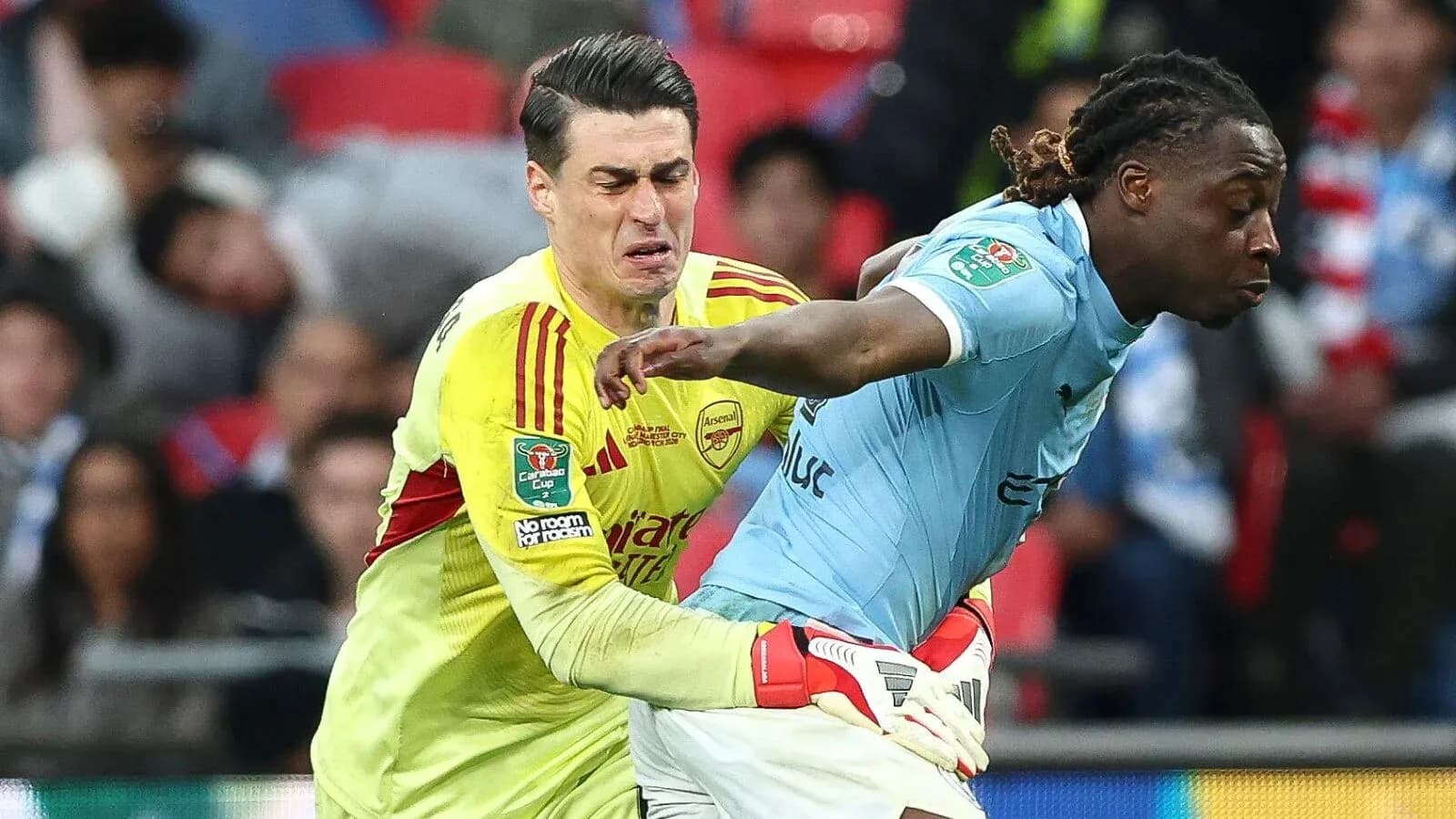
The latest chapter came in 2026 at Wembley. Arsenal, Premier League leaders and swaggering into the final as a would-be statement side, chose Kepa ahead of David Raya for the showpiece against Manchester City. It was a bold call. It backfired. Again.
This was not Kepa’s first brush with EFL Cup chaos. He had already lived through the drama of 2019 and the calamity of 2022 with Chelsea. Now, with a quadruple being whispered around Arsenal and a trophy still missing from the cabinet, he was back on the same stage, under the same harsh lights.
So which final was the worst? None of them brought glory, but some wounds cut deeper than others. Here’s how his three EFL Cup finals stack up, from bad to utterly brutal.
3) 2019 – Chelsea: The Refusal
The 2019 final is remembered less for the football and more for one image: Kepa, standing his ground, shaking his head, refusing to come off.
Late in extra time against Manchester City, Maurizio Sarri decided to replace his goalkeeper, believing Kepa was struggling with cramp. The board went up. The substitute was ready. The script said he should walk off.
He didn’t.
In a moment that instantly went viral, Kepa defied his manager on the touchline and stayed on. Sarri raged, stalked down the tunnel, then returned. The damage, to authority and trust, was done.
Chelsea then lost the penalty shootout 4-3. Kepa did save from Leroy Sane, but it wasn’t enough. City lifted the trophy; Chelsea were left with a controversy.
This was Kepa’s debut season in English football, the world’s most expensive goalkeeper trying to justify the fee after his move from Athletic Bilbao. Instead of a defining performance, he delivered a defining mutiny. He did, to his credit, keep a clean sheet for 120 minutes against an elite City side, but those still images of him waving away Sarri’s orders have long outlived any appreciation of his actual goalkeeping that day.
The football was forgotten. The rebellion was not.
2) 2026 – Arsenal: The Flap
Fast forward to 2026. New club, same competition, same opponents, same outcome.
Arsenal arrived at Wembley as league leaders, determined to underline their supposed control over Manchester City. Mikel Arteta turned to Kepa instead of David Raya, a decision that instantly framed the narrative: trust, redemption, experience on the big stage.
What followed only deepened the goalkeeper’s complicated relationship with this final.
Kepa was directly involved in the first goal Arsenal conceded. Rayan Cherki swung in a cross, not especially vicious, not especially unplayable. Kepa came for it and got nowhere near enough on the ball. He flapped, it dropped loose, and Nico O’Reilly reacted quickest to finish from close range.
City had their foothold. They do not often give those back.
From there, the final began to feel familiar. Arsenal chased, City controlled. The leaders of the league looked suddenly fragile, their supposed authority punctured by a basic goalkeeping error on the biggest domestic stage.
Kepa’s afternoon might have been even worse. He came racing out of his area and grappled with Jeremy Doku, dragging him down and inviting the referee into a huge decision. A yellow card came out, not red; the angle of Doku’s run just about spared Kepa from being judged the denier of a clear goalscoring opportunity. Arsenal stayed at full strength. The damage to their goalkeeper’s reputation deepened.
The defeat cannot be pinned solely on him. Arsenal wasted chances, lost battles, and allowed City’s serial-winner mentality to take over once the first goal went in. But the opening blow came from a mistake in goal, and in a final of such fine margins, that is what lingers.
1) 2022 – Chelsea: The Specialist Who Missed
If 2019 was insubordination and 2026 was a costly error, 2022 was pure, unfiltered disaster.
Chelsea again. Wembley again. This time against Liverpool.
Kepa started the day on the bench. Edouard Mendy, by then the first-choice goalkeeper, had the gloves. Thomas Tuchel, though, had a plan for penalties. Kepa was the specialist, the shootout expert. When the game remained goalless after extra time, Tuchel made his move and sent him on for the spot-kicks.
This was supposed to be his moment.
Instead, it turned into the harshest indictment of all.
Liverpool scored. Then scored again. And again. All 11 of their penalties found the net. Kepa did not get near enough to any of them to alter the script. The shootout rolled into sudden death, past the outfield players and on to the goalkeepers.
Kepa stepped up needing to score to keep Chelsea alive. He blazed it over the bar.
Conceded 11. Missed the decisive one. The specialist sub, brought on for one specific task, had failed on every front.
By then, Kepa had already been eased out of the Chelsea XI by Mendy, his status reduced from record signing to backup. One shootout was never going to define his entire career, but this one did nothing to revive it. Chelsea had gambled on his penalty reputation and lost. Publicly. Emphatically.
He did manage to claw back more game time the following season, a brief resurgence before his Chelsea story wound down for good. Yet when his career is eventually judged, that 2022 final will sit at the centre of the conversation: the night the “penalty expert” couldn’t save one and then ballooned his own.
Three EFL Cup finals. Three different clubs’ ambitions tied to the same pair of gloves, three different kinds of failure etched into the same narrative.
For Kepa Arrizabalaga, the competition has become less a cup run and more a curse. The question now is whether he ever gets another shot at rewriting it – or whether these three nights will always define his relationship with Wembley and the EFL Cup.



