
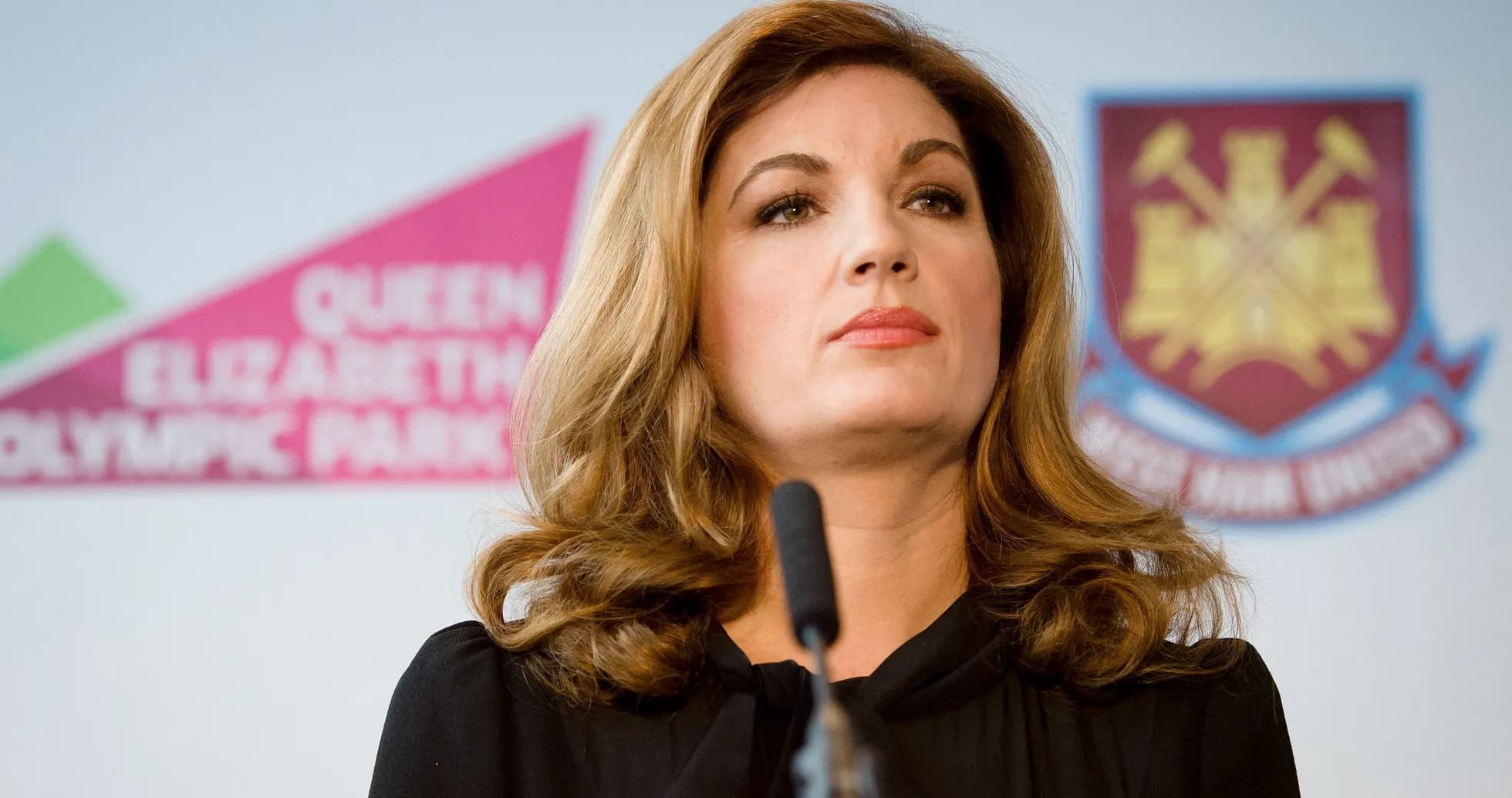
Karren Brady Leaves West Ham: A New Era Begins
Karren Brady’s departure from West Ham United does not just close a chapter. It ends a football partnership that has stretched across almost 40 years and reshaped two clubs and one London stadium.
Her exit severs the last formal professional tie with joint-chairman David Sullivan, who first hired her as managing director of Birmingham City in 1993 when she was 23 and already unapologetically ambitious. They have been a double act in English football’s corridors of power ever since.
At West Ham, that influence has been stamped across the club’s modern identity.
From Upton Park to a New World
Brady arrived in east London in 2010 alongside Sullivan and the late David Gold, stepping into a club still rooted in the Boleyn Ground and wrestling with its place in the modern Premier League. She quickly became the driving force behind the most contentious and consequential decision of the era: the move from Upton Park to the London Stadium.
The transition in 2016 was messy, emotional, and fiercely debated. But it was Brady who fronted the negotiations, who led the talks that secured tenancy of the 62,500-capacity arena, and who ultimately delivered a platform that allowed West Ham to grow a season-ticket base in excess of 50,000 supporters. That deal, however polarising among fans, changed the scale of the club.
Her fingerprints are on other landmark moments too. She played a central role in the British record transfer of Declan Rice to Arsenal, a sale that underlined West Ham’s new status as both a seller of elite talent and a club capable of commanding top-tier fees.
Inside the boardroom, Brady became one of the most prominent female executives in world football, a regular voice in Premier League leadership circles and a visible representative of the club at the game’s highest tables.
Triumph in Prague, Turmoil at Home
When Brady looks back, she has already picked out her defining memory. It came in Prague in 2023, as West Ham lifted the UEFA Europa Conference League trophy.
“It has been a privilege to work alongside the Board, management, players, staff and supporters at West Ham United,” she said in her farewell statement on the club’s official website. “Together we have achieved remarkable milestones, but the highlight for me will always be lifting the UEFA Europa Conference League trophy – a moment that will stay with me forever. I am deeply grateful for the relationships, challenges and opportunities that have shaped my time at the Club.”
That night felt like a vindication of the project: the stadium move, the commercial drive, the years of friction with sections of the fanbase. A European trophy, a new generation of supporters, a global profile.
Yet the glow did not last.
Her final season in the role has unfolded against a far darker backdrop. In February, the club reported a pre-tax loss of £104.2 million, a stark figure that cut through the celebratory memories of Prague and raised questions over the financial direction of the project she helped build.
On the pitch, Nuno Espirito Santo’s side has been dragged into a relegation fight, the tension spilling into the stands. Fan protests have occasionally turned towards the board, a familiar soundtrack for Brady and Sullivan, but no less pointed for that history. For all the corporate progress, the team’s struggles have sharpened scrutiny of those running the club.
A Legacy Written in Deals and Decisions
Strip away the emotion and Brady’s commercial record at West Ham remains formidable.
She was the lead negotiator on the London Stadium agreement, a deal that underpinned the club’s growth in matchday income and global appeal. She helped oversee major shareholder transitions and steered West Ham through a series of high-profile transfer windows, including the Rice sale that set a new British benchmark.
Joint-chairman Daniel Kretinsky, who arrived later into the ownership structure, made a point of highlighting that work.
“I want to thank Karren most sincerely for our collaboration since 2021 and for all the work she has done in the past for the Club,” he said. “Her contribution to West Ham United’s growth, such as the long-term contract for the London Stadium, shareholders transition and the British record transfer of Declan Rice, has been absolutely essential and not always fully appreciated. Karren is also very highly appreciated in the Premier League leadership community and was an excellent representative of our Club there. I wish her the best of luck in all future activities.”
Sullivan’s tribute carried the weight of history. He has known Brady longer than anyone in football.
“Karren has been an exceptional leader and a key figure in the Club’s development over the years,” he said. “We wish her every success in her future endeavours and thank her for her outstanding contribution over the past 16 years.”
Those 16 years at West Ham, layered on top of her time at Birmingham, have made Brady one of the defining boardroom figures of the Premier League era: visible, outspoken, often divisive, but never peripheral.
What Comes Next for Club and Executive
Brady insists that walking away from the day-to-day running of a Premier League club does not mean walking away from the game.
She has made it clear that her passion for football remains intact, and that she intends to keep backing the next generation of leaders. For someone who broke into the sport as a young woman in a boardroom full of men, that commitment is more than a soundbite; it is a statement of intent about where she sees her influence going next.
For West Ham, her departure is more than a change of job title. It signals a significant shift in the club’s boardroom structure at a time when stability off the pitch feels as vital as survival on it.
The stadium deal, the Rice transfer, the European trophy in Prague – those will stand as markers of the Brady years. What follows now will show whether the foundations she helped lay are strong enough to carry West Ham into their next era without one of football’s most recognisable executives at the helm.



