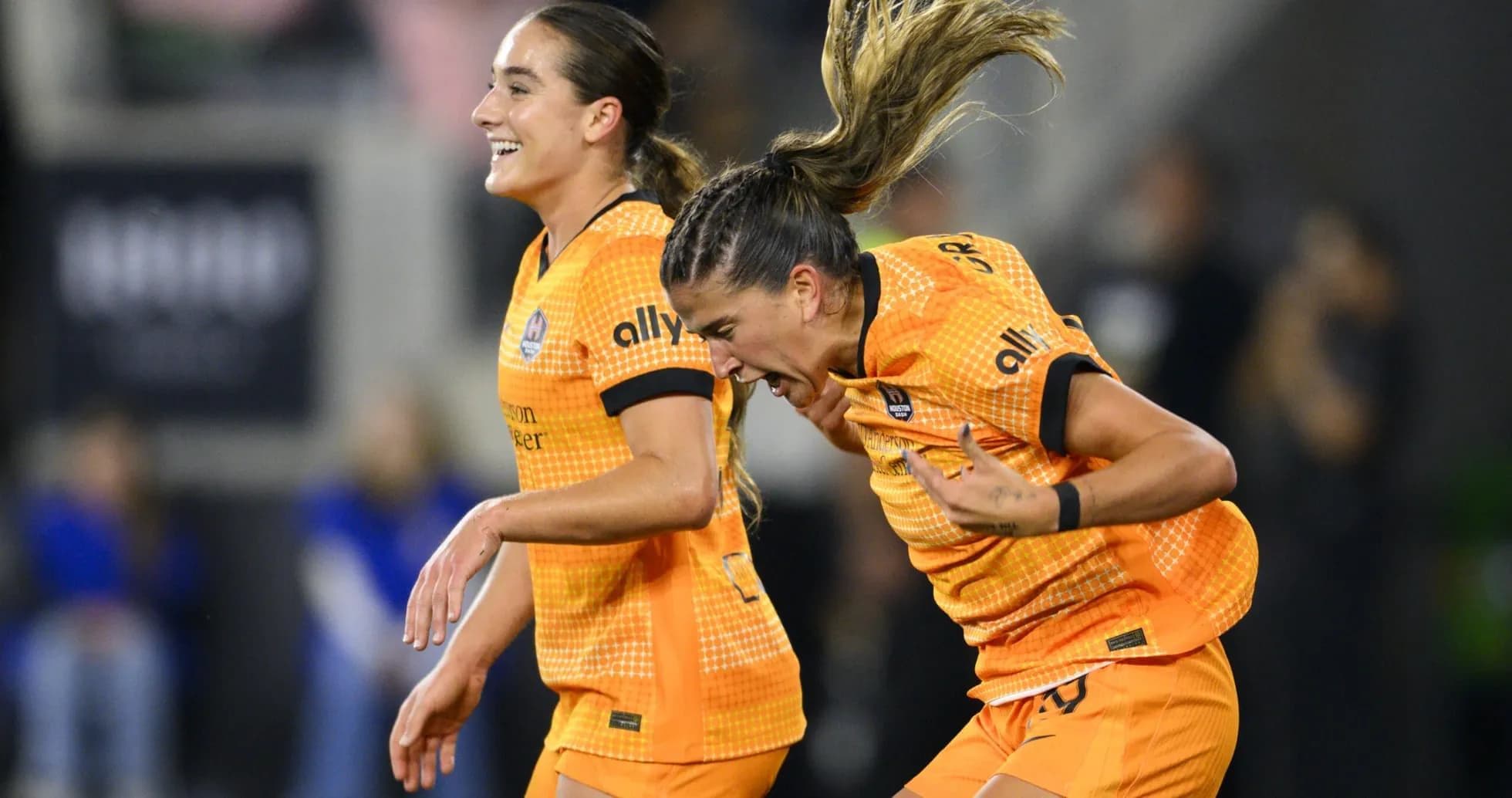
Kansas City W Dominates Houston Dash W 3–0 at CPKC Stadium
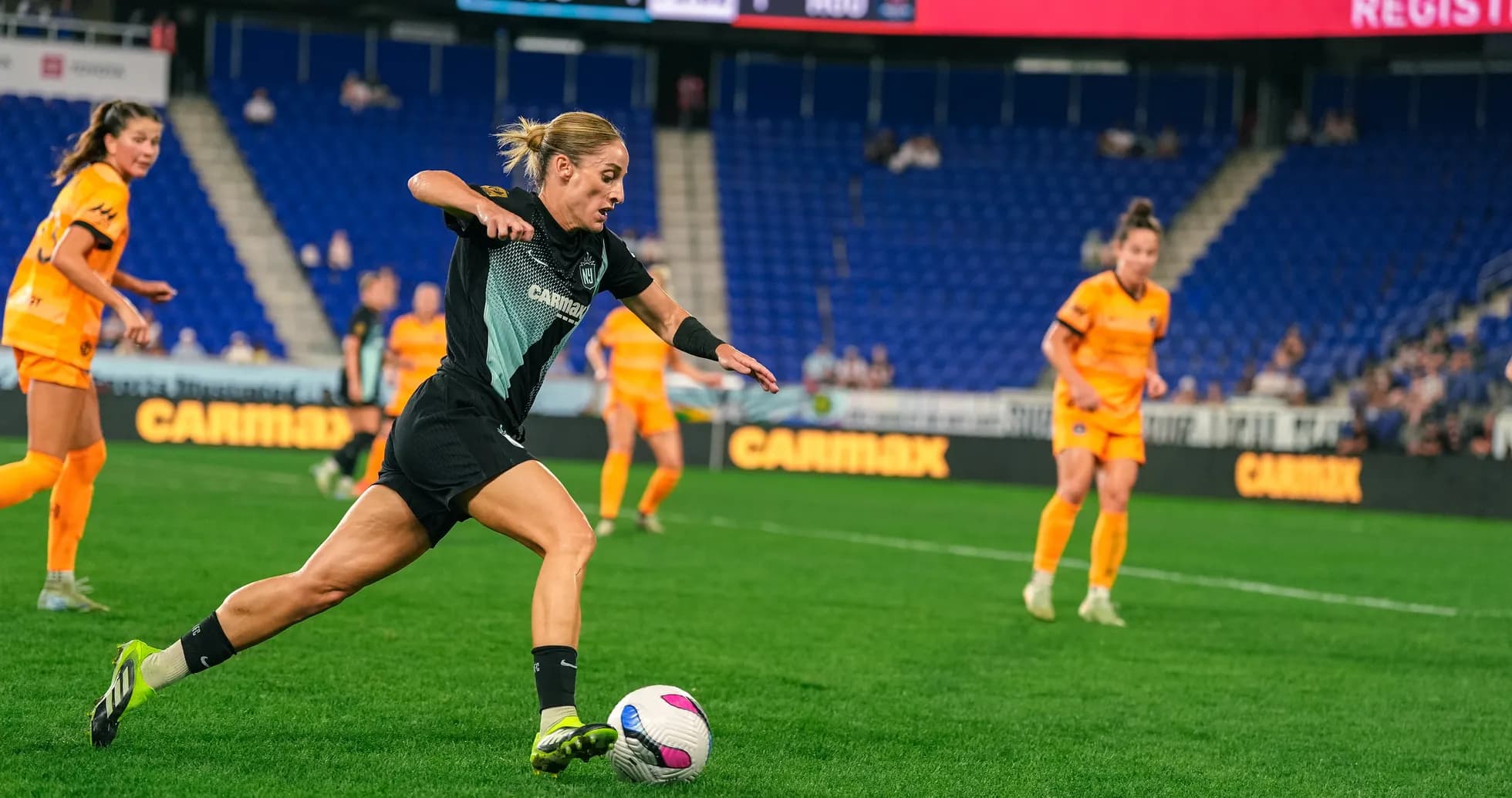
Under the lights at CPKC Stadium, Kansas City W authored a statement performance, dismantling Houston Dash W 3–0 and underlining why this ground has become one of the most hostile environments in the NWSL Women this season. In a group-stage fixture that felt far more like a knockout tie in its intensity, Chris Armas’ side married their season-long statistical profile with a ruthlessly coherent game plan.
Heading into this game, Kansas City W were already a paradox: sixth in the table with 15 points, yet carrying a negative overall goal difference of -1 (13 scored, 14 conceded in total). The split between home and away had been stark. At home they were perfect: 4 wins from 4, with 10 goals scored and only 2 conceded. On their travels, they had struggled badly, losing 4 of 5 and conceding 12. CPKC Stadium is their fortress, and this match followed that script to the letter.
Houston arrived in Kansas City as a team slipping down the table, 12th with 10 points and an overall goal difference of -5 (10 for, 15 against in total). Their away numbers told a worrying story: 1 win and 3 defeats from 4, just 2 goals scored and 7 conceded. This was a side that has found it difficult to carry attacking threat on the road, and the 3–0 full-time scoreline only deepened that narrative.
I. The Big Picture: Systems and Seasonal DNA
Kansas City lined up in a 4-3-3, a notable shift from their more common 4-2-3-1 this season, where they had been used 6 times. Lorena anchored the side in goal, with a back four of L. Rouse, E. Ball, K. Sharples, and I. Rodriguez. Ahead of them, a midfield trio of L. LaBonta, C. Bethune, and B. Feist provided control and verticality, while the front three of M. Cooper, A. Sentnor, and T. Chawinga offered pace and fluid movement across the line.
This structure played directly into Kansas City’s attacking DNA. Overall this campaign, they have averaged 1.4 goals per game in total, but that jumps to 2.5 at home. Their minute distribution for goals is particularly telling: a massive 41.67% of their goals have come between 46–60 minutes, with another 25.00% in the 16–30 window. They are a side that starts to bite early and then explodes after half-time. The 2–0 half-time lead here and the eventual 3–0 full-time result fit neatly into that pattern.
Houston, by contrast, shifted from their season’s staple 4-4-2 (used 8 times) into a 4-2-3-1. J. Campbell started in goal behind a back four of A. Patterson, P. K. Nielsen, M. Berkely, and A. Chapman. The double pivot of D. Colaprico and C. Hardin was tasked with both screening and progressing play, while L. Ullmark, M. Graham, and K. Rader supported lone forward K. Faasse.
Statistically, Houston’s attack has been modest: 1.1 goals per game in total, dropping to just 0.5 away. Their away defensive record—1.8 goals conceded per game—was always going to be tested by a Kansas City side averaging 2.5 at home.
II. Tactical Voids and Discipline
There were no listed absences in the data, so both sides appeared close to full strength. The tactical void for Houston was structural rather than personnel-based: moving away from their familiar 4-4-2 removed one forward from the first line of pressure, leaving Colaprico and Hardin exposed against a Kansas City midfield comfortable playing through tight zones.
Colaprico’s season profile underscored that risk. She is one of the league’s most combative midfielders, with 18 tackles, 6 successful blocks, and 6 interceptions in total, but also 3 yellow cards overall. Her aggression is an asset in a double pivot, yet against Kansas City’s rotating midfield three and the drifting movements of Cooper and Bethune, she was forced into repeated fire-fighting.
On the Kansas City side, K. Sharples’ disciplinary record—2 yellow cards overall—combined with her defensive workload (9 blocked shots in total, plus 11 interceptions) framed her as the last-ditch protector. In this match, with Houston’s forward line largely isolated, she could step out more confidently, compressing space and allowing the full-backs to be aggressive.
Houston’s broader card profile this season hints at late-game strain: 28.57% of their yellow cards come between 46–60 minutes and another 28.57% between 76–90. That aligns uncomfortably with Kansas City’s post-interval scoring surge, and the 3–0 scoreline reflected that structural mismatch in the game’s decisive phases.
III. Key Matchups: Hunter vs Shield, Engine Room vs Enforcer
The headline duel was always going to involve T. Chawinga. With 5 goals and 1 assist overall, she has been one of the league’s most dangerous attackers, operating nominally from midfield but constantly arriving in advanced zones. Her ability to turn limited touches into high-quality chances—8 total shots, 5 on target overall—meant that every transition carried threat.
Her primary obstacle was the Houston central pairing of P. K. Nielsen and M. Berkely, shielded by Colaprico. Nielsen’s season numbers—15 tackles, 6 successful blocks, 10 interceptions in total—mark her as a proactive defender, but she and Berkely were repeatedly dragged wide by the fluid rotations of Cooper and Sentnor. That opened channels for Chawinga to attack the half-spaces, especially in the key 16–30 and 46–60 minute windows where Kansas City statistically peak.
In the engine room, C. Bethune and M. Cooper formed a dynamic axis. Cooper’s season output of 2 goals and 3 assists overall, alongside 9 key passes and 22 dribble attempts, paints her as both creator and carrier. Bethune, with 2 goals, 2 assists, and 8 interceptions overall, adds both incision and defensive bite. Together, they overwhelmed Houston’s double pivot, repeatedly finding pockets between the lines.
For Houston, the creative burden was supposed to fall on players like K. van Zanten this season—4 goals and 12 key passes overall—but she did not feature in the starting XI here. Without her, Houston lacked a reliable outlet to break Kansas City’s press, leaving K. Faasse isolated and feeding on hopeful balls.
IV. Statistical Prognosis and xG-Style Verdict
Even without explicit xG numbers, the season data offers a clear Expected Goals-style reading of this match. A home side averaging 2.5 goals scored and 0.5 conceded at home, facing an away attack at 0.5 goals scored and an away defence conceding 1.8, heavily tilts the underlying probabilities toward a comfortable Kansas City win.
Kansas City’s goal timing distribution—peaking at 41.67% of goals between 46–60 minutes—combined with Houston’s tendency to collect cards and lose control in the same window, suggested a match that would open up decisively after half-time. The 3–0 full-time scoreline, after a 2–0 half-time lead, sits squarely within that predictive frame.
Following this result, the numbers and the narrative converge: Kansas City W are a brutally efficient home machine, their 4-3-3 unlocking the best of Chawinga, Cooper, and Bethune, while their defensive structure at CPKC Stadium remains almost impermeable. Houston Dash W, meanwhile, leave Kansas City with their away frailties further exposed and serious questions about whether a 4-2-3-1 without their primary creator can ever generate enough threat on their travels.