Juventus Dominates Bologna in Serie A Showdown
Allianz Stadium felt like a statement piece as much as a stage. Under the Turin lights, Juventus against Bologna was more than a routine Serie A date in Round 33; it was a collision between a side consolidating Champions League territory and another punching upwards from the chasing pack. Following this result, the table tells a clear story: Juventus sit 4th on 63 points with a goal difference of 28 (57 scored, 29 conceded), while Bologna remain 8th on 48 points and a far slimmer cushion of 3 (42 for, 39 against).
The 2–0 home win fitted almost perfectly with Juventus’ seasonal DNA. At home this campaign, they have been ruthless and controlled: 17 matches, 10 wins, 6 draws, just 1 defeat, scoring 34 and conceding 13. That translates to 2.0 goals scored and only 0.8 conceded on average at Allianz Stadium. Bologna arrived with a more road-warrior profile: on their travels they had played 17, winning 8, drawing 4 and losing 5, with 26 goals for and 21 against – an away average of 1.5 scored and 1.2 conceded. On paper, it was Juventus’ defensive structure against Bologna’s ambition in transition; on the pitch, the home side’s system suffocated the visitors.
Luciano Spalletti doubled down on Juventus’ season-long template, rolling out the familiar 3-4-2-1 that has been used 21 times in Serie A. M. Di Gregorio anchored a back three of P. Kalulu, Bremer and L. Kelly, a line built for aggressive front-foot defending rather than passive containment. Ahead of them, the wing-backs E. Holm and A. Cambiaso stretched the pitch, with M. Locatelli and W. McKennie forming the central engine. High up, F. Conceicao and J. Boga floated between the lines behind J. David.
The absentees only sharpened the tactical edge. Without D. Vlahovic and A. Milik, both ruled out with muscle and calf issues, Spalletti leaned into mobility and interchanging movement rather than a classic reference No.9. David’s profile – 6 league goals and 4 assists this season – allowed Juventus to attack the space behind Bologna’s back four rather than simply contesting aerial duels. With M. Perin also missing, Di Gregorio’s role in starting play from deep became even more important.
Vincenzo Italiano’s Bologna came in their staple 4-3-3, mirroring their season-long reliance on a back four (26 games in 4-2-3-1, 5 in 4-3-3). F. Ravaglia stood in goal with N. Zortea, E. Fauske Helland, J. Lucumi and J. Miranda forming the defensive line. The midfield trio of S. Sohm, R. Freuler and T. Pobega was designed to compete physically with Juventus’ central pairing, while the front three of R. Orsolini, S. Castro and N. Cambiaghi offered width, pressing and cutting runs inside.
Yet Bologna’s absences quietly undermined their spine. L. Skorupski’s muscle injury removed their first-choice goalkeeper and organiser. N. Casale and K. Bonifazi were also unavailable, thinning the options at centre-back. Further up, B. Dominguez and T. Dallinga – both missing through injury – stripped Italiano of alternative profiles in midfield control and penalty-box presence. The visitors arrived with their usual boldness but a diminished bench for in-game adjustments.
Discipline and card trends framed the risk landscape. Heading into this game, Juventus had accumulated 44 yellow cards for M. Locatelli alone this season and his 7 yellows mark him as their primary booking magnet. Team-wide, their yellow-card timing shows a clear spike between 61-75 minutes at 22.73%, reflecting how their intensity can boil over as they protect leads. Bologna’s profile is even more volatile: 26.67% of their yellows come in the 61-75 window, and 28.33% between 76-90. Red cards tell a similar story – they have seen dismissals in four different 15-minute windows, including 61-75 and 76-90. N. Cambiaghi, with 1 red and 3 yellows, embodies that edge.
In Turin, that disciplinary backdrop shaped the match tempo. Juventus’ structure allowed them to control phases where Bologna historically lose emotional control – the final half-hour – by locking the ball in midfield and forcing the visitors to chase. Locatelli’s role was central here: beyond his 1 goal and 2 assists this season, his 2354 passes at 88% accuracy and 89 tackles make him the side’s metronome and shield. He blocked 23 shots this campaign, underlining how he anchors transitions and protects the back three when the wing-backs fly forward.
The “Hunter vs Shield” duel was scattered across the front line. Juventus do not lean on a single scorer in this XI, but the broader attacking cast is high quality. Kenan Yildiz, though on the bench here, is the club’s standout league forward with 10 goals and 6 assists, 71 successful dribbles and 71 key passes – a player who can be dropped in to tilt any game. David’s 6 goals and 4 assists, paired with Boga’s 1v1 threat and Conceicao’s directness, targeted Bologna’s away record of 21 goals conceded.
On the other side, Bologna’s spearhead was unmistakable: Orsolini and Castro. Orsolini, with 8 goals and 1 assist in Serie A, arrived as Bologna’s leading scorer. His 59 shots (28 on target) and 23 key passes mark him as the primary creator-finisher hybrid. Yet his penalty profile is a warning light: he has scored 3 penalties but missed 2; Bologna’s overall spot-kick record this season is 4 scored from 4, but that hides those individual failures. Castro, with 7 goals and 2 assists, adds a more vertical, penalty-area presence, winning 260 duels and blocking 2 shots in his defensive work. In this match, however, Juventus’ back three – especially Bremer’s aerial dominance and Kalulu’s recovery pace – consistently shut down central lanes, forcing Bologna’s forwards wide and into lower-quality shots.
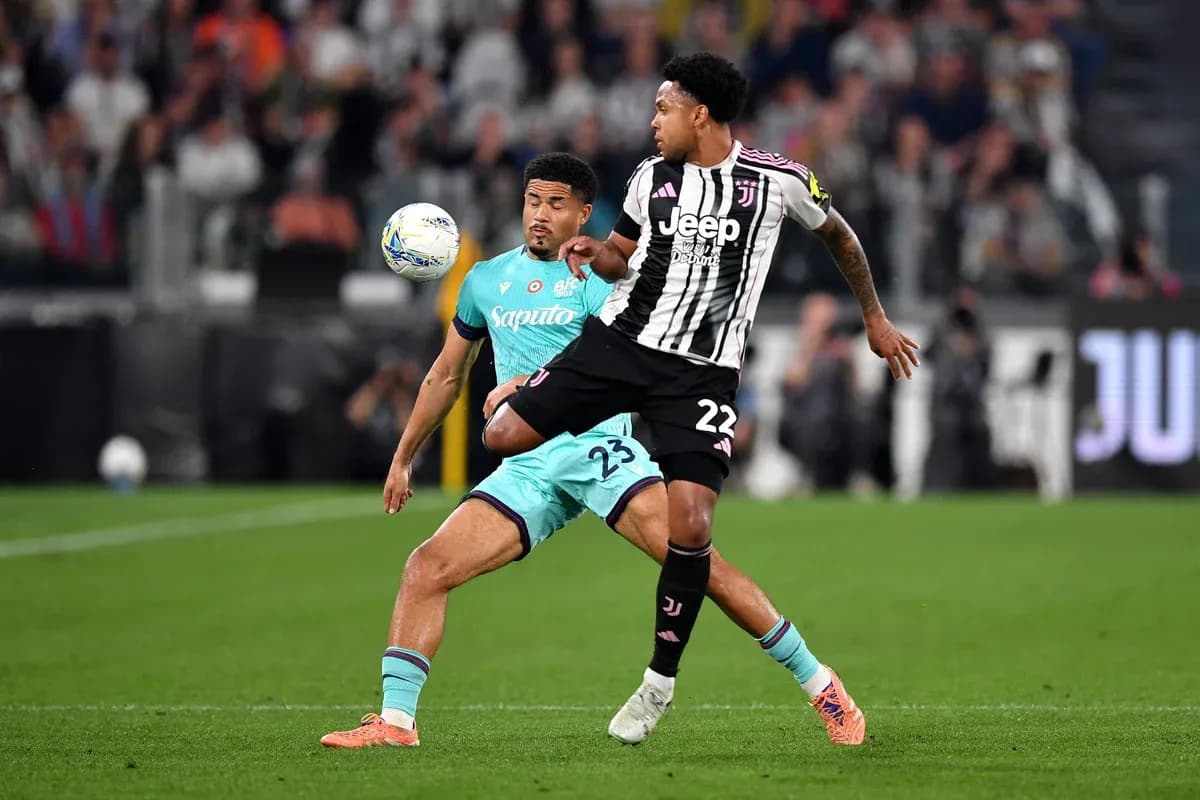
The “Engine Room” confrontation tilted decisively Juventus’ way. Locatelli and McKennie against Freuler and Sohm was a battle of control versus disruption. McKennie’s 5 goals and 5 assists, along with 33 tackles and 7 blocked shots, underline his dual role: late runner into the box and aggressive presser. His presence on the right half-space dovetailed with Holm’s overlapping, pinning Miranda and Pobega deep and denying Bologna their usual platform to build down the left.
Statistically, the outcome aligns with the pre-match prognosis. Juventus’ overall average of 1.7 goals scored and 0.9 conceded, combined with 14 clean sheets in total (8 at home), always pointed towards a low-scoring but controlled home win. Bologna’s total scoring average of 1.3 for and 1.2 against, with 9 matches where they failed to score, suggested that if they fell behind early in Turin, the probability of a comeback was slim against such a disciplined block.
Following this result, the tactical verdict is stark. Juventus’ 3-4-2-1, refined over 21 league matches, once again proved too structurally sound and technically clean for a depleted Bologna. The hosts leaned on their balanced offensive spread and elite midfield control rather than a single talisman, while the visitors’ reliance on Orsolini and Castro was blunted by a superior defensive scheme. In xG terms – even without the raw numbers – all the indicators point to Juventus generating the higher-quality chances and Bologna being forced into hopeful efforts.
In narrative terms, this was a night where Juventus played like a Champions League side should: organised, ruthless in key moments, and emotionally stable where Bologna’s season-long card patterns hinted at volatility. The 2-0 scoreline felt less like a surprise and more like the logical conclusion of two very different tactical identities meeting under the lights in Turin.