José Mourinho's Return: A New Era for Real Madrid
José Mourinho stayed seated when the touchline exploded.
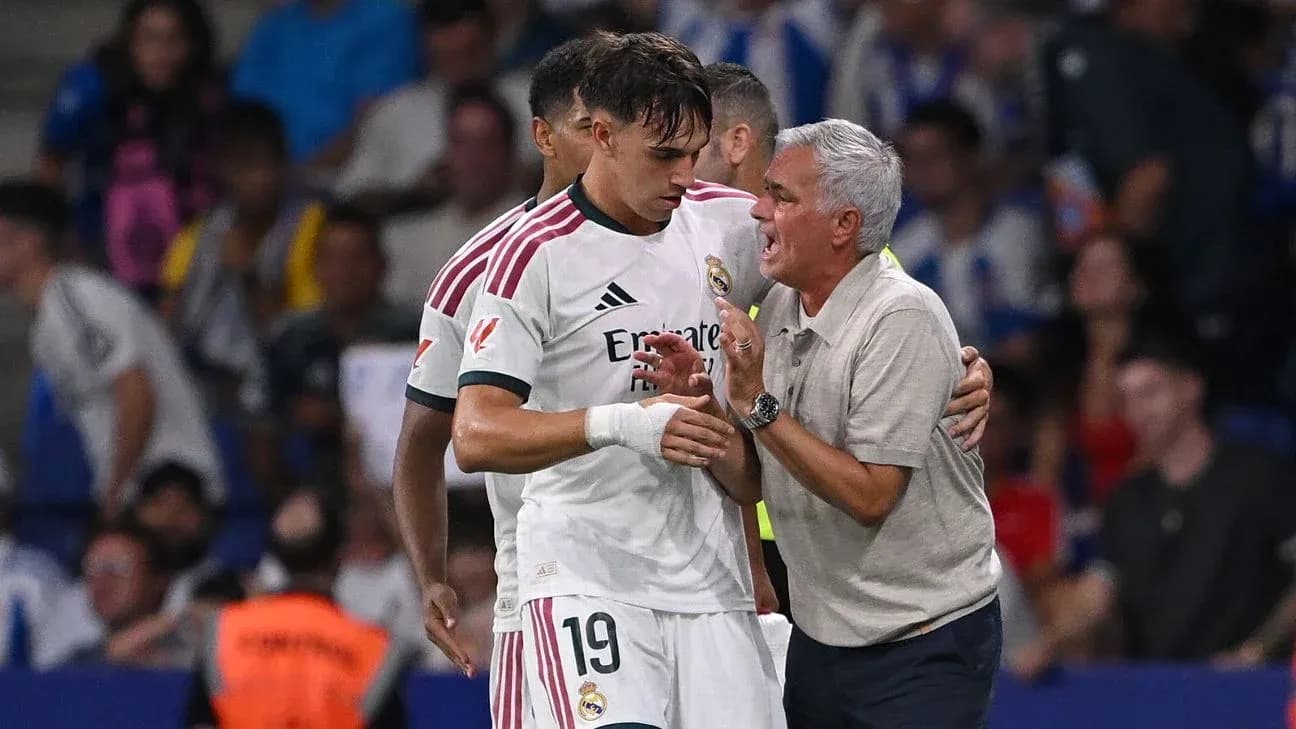
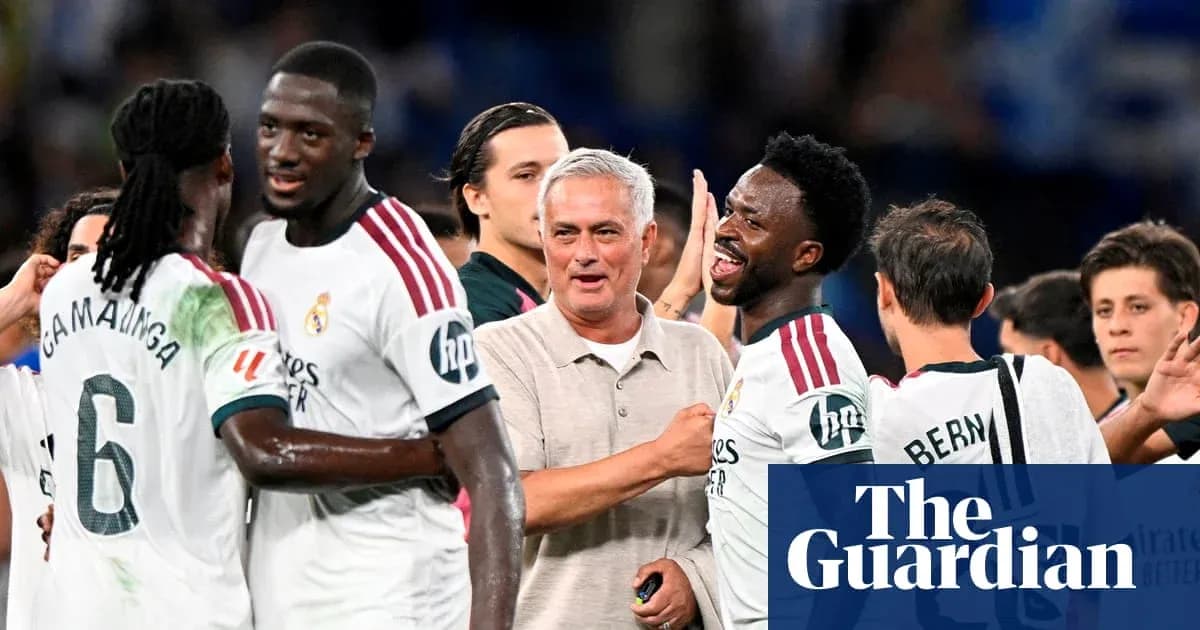
As the Real Madrid bench emptied and substitutes tore down the sideline to celebrate a 90th‑minute winner that finally broke Espanyol’s resistance, the new coach – back in charge of the club after 4,380 days – did not join the sprint. He rose slowly, fists clenched, walking behind the rush of players as they hurled themselves towards Carlos Espí in the corner. While they piled on the unlikely hero, Mourinho dragged his captain Fede Valverde over for a quiet word.
It might as well have been: “Phew.”
An old-school No 9, a very modern problem
For all the galáctico noise around this Madrid – the challenge of fitting Kylian Mbappé, Vinícius Júnior and Jude Bellingham into the same attacking frame, the debut of Yan Diomande, the most expensive signing in the club’s history – the night belonged to a 21‑year‑old who barely registered on anyone’s radar six months ago.
Espí, plucked from Levante after his goals had kept them in the top flight, was brought in to be something Madrid no longer really produce: a classic No 9. Penalty-box weight. Shirt-tugging, centre-back-wrestling presence. He now lives at Valdebebas, like his coach, the pair of them sharing breakfast each morning in the training ground bubble.
This is why they signed him. To be there when a messy move breaks loose and the ball spills where it matters most.
When a scrappy attack in the final minute ended with Mbappé losing control inside the area, Espí was exactly where Mourinho wanted him. He lunged, forced the ball over the line and, in doing so, forced a question too: is this profile something Madrid need not just as a Plan B, but as part of their main act?
On this night, at least, the answer was yes.
The circus returns, reality bites
Mourinho’s first Madrid game since a 4-2 win over Osasuna in May 2013 began with a familiar scene: photographers abandoning their spots behind the goals to swarm the bench, lenses trained not on the players but on the man in black on the touchline.
It ended with him hugging Espanyol coach Manolo González, high‑fiving the referee and ducking into the tunnel with three points and a reminder. Nostalgia sells, but reality always shows up.
He knew it would. He had warned that Espanyol were a good side, and they proved it. Madrid carved out more chances, but Manolo’s team restricted them for long spells, dragged the game into uncomfortable territory and exposed some of the same old cracks.
On a night that was supposed to announce a new era, Madrid still looked like a team in transition. Flaws resurfaced. Doubts lingered. It was only the first day, but it did not feel like a miracle cure.
There will be harder opponents. There will certainly be fiercer tests of Mourinho’s temper.
Nostalgia, violence and Florentino’s long wait
In the spring, when Madrid faced Benfica, Mourinho had described his first spell in the capital as “three hard, intense, sometimes violent years”. Time sands down the edges. The fights fade; the trophies stay.
Mourinho insists he is “not the kind of man who misses anything”, that he is not driven by regret. Others missed him for him. Florentino Pérez most of all.
In the president’s cold, transactional view of football, coaches are usually a necessary evil. Mourinho is the exception. The Portuguese is the only manager Pérez has truly liked, the one he credits for reshaping the club’s competitive edge. In his mind, the six Champions League titles in the 11 years since Mourinho left are, at least partly, his legacy.
Mourinho told a story on the eve of this game: after every Madrid trophy, Pérez would call. The president would hint at a return. Mourinho would brush it off. “I always said no, no, no, it was nothing to do with me,” he said. Which, of course, was his way of saying: it had something to do with me.
Pérez has said much the same. It took him 13 years to act on that urge. Now Mourinho is back, summoned again as the iron surgeon to cut into what he sees as cultural decay.
Chasing Barcelona again
The logic is simple in Madrid’s corridors of power. When they have gone back to what worked before, it has often worked again. When they have tried to reinvent the wheel, it has spun off.
Mourinho listened to the roll of honour and, at one point, paused to check if Zinedine Zidane and Carlo Ancelotti were the only coaches to have won anything in his absence. The implication was clear enough. The diagnosis of Madrid’s current ills, he believes, requires his medicine.
Like in 2010, Madrid are chasing Barcelona. They have gone two full seasons without a major trophy. That, for Pérez, is not just about tactics or missed chances. It is about culture, about standards.
“It may not be as simple as effort but that is a start,” Mourinho said. “We have to try not to negotiate things that are non-negotiable. Commitment can’t be missing.”
He has the authority, or at least the aura, to demand that. Training habits have shifted. Demands have risen. Sessions have a different edge. Diomande said he was ready to “die” for Mourinho. The coach dismissed it as just a phrase, but he clearly liked the sentiment.
The big three, the big question
There were other reasons to feel the air change. Vinícius’s future is finally settled, the contract wrangles and questions over status shelved. The World Cup is out of the way. No national-team distractions on the horizon.
Mourinho noted that Brazil, France and England had all found ways to get the best out of Vinícius, Mbappé and Bellingham individually. Doing it together, in the same shirt, is something else entirely.
“I don’t think they’re incompatible,” he insisted. Last season often suggested otherwise. Bellingham admitted they sometimes drifted into the same spaces, stepping on each other’s toes.
Here, all three started. Bellingham as a No 10, Vinícius glued to the touchline.
“For me this is his [Jude’s] position,” Mourinho said. “The connection with the forwards, he can score goals. He has to play close to the goal. Playing at 6 or 8 we’re losing his closeness to the goal.”
The plan was clear. The execution, for a while, looked ruthless.
Bellingham strikes, the script flips
The first goal of Mourinho’s second era came early, and from a set piece. After nine minutes, Vinícius was fouled on the left – already collecting kicks, already drawing anger from the home crowd and a raised‑arms protest from his coach after Alex Calatrava had planted one in his back.
Arda Guler stood over the free-kick and bent in a superb cross. Bellingham rose above everyone, powered his header past Marko Dimitrovic and Madrid were in front.
On the bench, Mourinho barely reacted. Sitting at the far left, he stood, slipped his hands into his pockets and strolled down the touchline to the other end, where the overflow of his sizeable staff sat in the stand. He shook hands with Sami Khedira, now installed as an in-house assistant, and analyst Roberto Merella.
It felt, for a brief spell, like a statement. Madrid pressed high. Espanyol could not find a route out. The gap between the sides looked enormous. This, they might have thought, is the future.
Then the intensity dropped. The door opened. Espanyol walked through it.
Espanyol bite back
When Dean Huijsen needed treatment for a cut, Madrid’s players drifted towards Mourinho for instructions. As they did, the game began to slip away from them. Espanyol pushed 10 yards higher. The crowd sensed it. So did the visitors.
Thibaut Courtois first saved from Riedel, only for Roberto Fernández to lash the rebound over. The warning went unheeded. A flowing move followed, Tuy Dolan combining with Javi Hernández before Calatrava arrived to sweep in the equaliser.
Mourinho sat almost motionless.
Madrid responded through Mbappé, who twice broke free to force Dimitrovic into saves from either side of the box. Yet Espanyol should have led at the break. Another sharp move opened up the right. Omar El Hilali whipped in a superb cross, Dolan just failed to connect inside the six-yard box and Fernández, arriving behind him, headed the ball straight at his own feet.
The second half started with an even bigger miss. From a Guler corner, Bellingham thundered a header against the bar, Dimitrovic’s fingertips just diverting it. The ball dropped to Mbappé at the back post, almost on the line. Somehow, the Frenchman steered it wide.
Valverde hit the post. Mbappé dragged another effort past the far upright. The clock ticked. The tension grew. The game, and the narrative, threatened to turn on Mourinho.
He turned to his bench.
Relief, not revolution
Marc Cucurella came on. So did Diomande, Eduardo Camavinga, Trent Alexander-Arnold and, finally, Espí. The fresh legs added energy but not, at first, clarity. Espanyol clung on, and Madrid’s attacks began to blur into one another.
Then the chaos of that final move, the ricochets, the loose ball, the one player alive to it.
Espí finished, the bench exploded and Mourinho, staying just behind the madness, earned his reprieve.
“I think we deserved to win, but Espanyol didn’t deserve to lose,” he said afterwards, ending the night with a touch of humility that contrasted with the thunder many expected from his return.
One game in, the myth has not swallowed the man. Madrid have their win. Mourinho has his second debut. The surgery, though, has only just begun.