
John Barnes on Liverpool's Transfer Strategy and Arne Slot's Approach
John Barnes has never been afraid to go against the noise. As the debate swirls around Arne Slot’s first transfer window and Liverpool’s tactical evolution post-Jurgen Klopp, the former Anfield winger has cut straight through the hysteria: trust the squad, trust the manager, and stop looking for a solution in the next shiny signing.
Speaking to Betfred, Barnes made it clear he sees no need for a recruitment spree under Slot, especially in attack. The names rolled off his tongue: Alexander Isak, Hugo Ekitike, Rio Ngumoha. In his view, that mix of established quality and emerging talent already gives Liverpool enough firepower.
“The solution to the problem isn’t just signing players because we have players here,” he said. “If somebody comes in, then what are we going to do with [Alexander] Isak, [Hugo] Ekitike and Rio Ngumoha, who’s coming through. We don’t need to sign anybody as far as I’m concerned because we need to work with what we have.
“We need to get the balance right, we need to get the blend right and unfortunately people believe the solution to any problem is just to keep signing more players.”
That word – balance – is at the heart of Barnes’ argument. Liverpool have been linked with Jarrod Bowen after West Ham United’s relegation, but Barnes pushed back firmly on the idea that another wide forward is the missing piece.
“I’ve seen we’ve been linked with Jarrod Bowen because West Ham United have been relegated, but I think what we have already is enough and I’m sure they can all stick together and work together.”
For Barnes, the real test for Slot will not be how many players he signs, but how well he moulds what is already in the dressing room into a coherent, competitive unit. Coaching over consumption. Structure over scattergun spending.
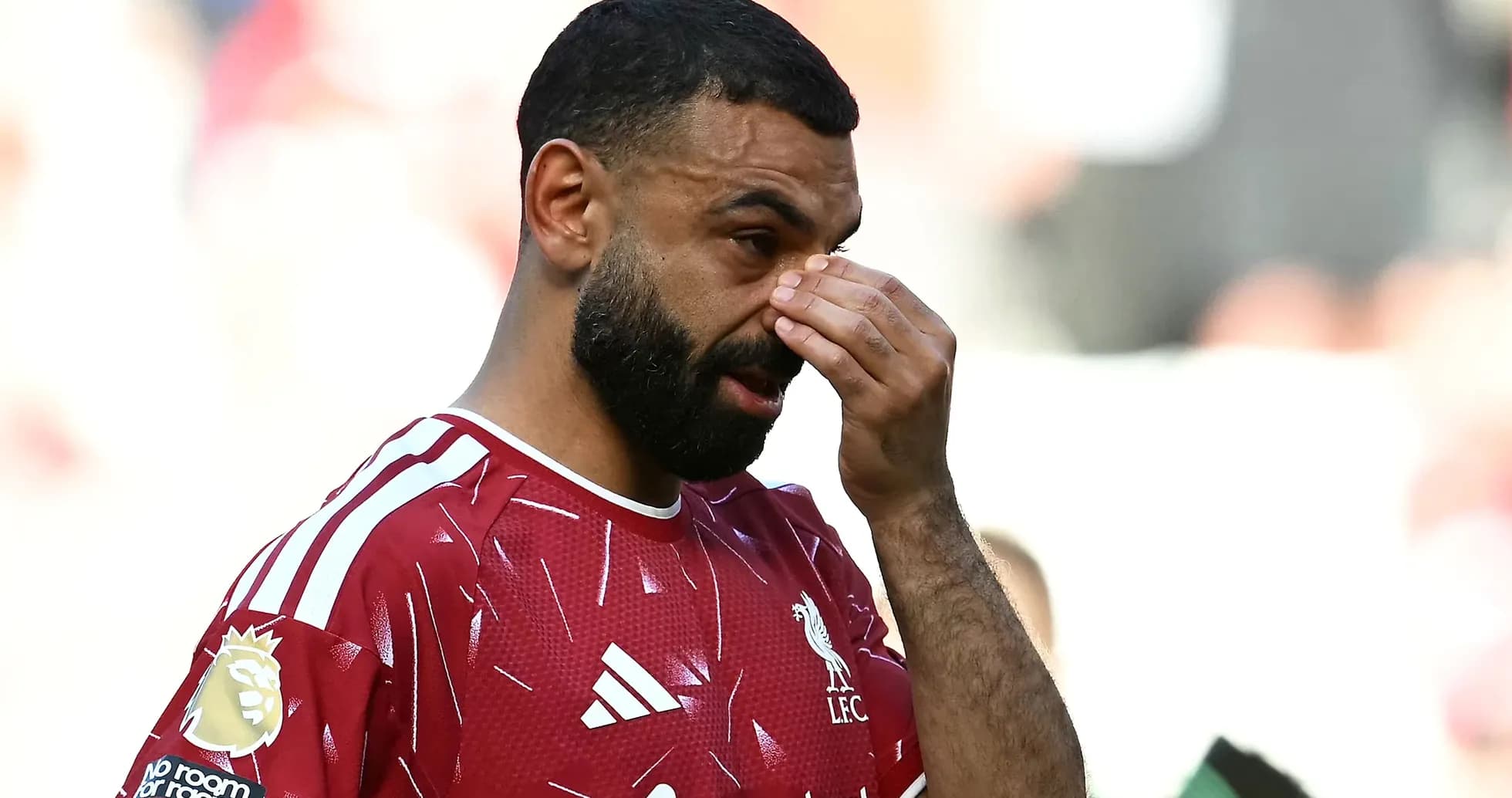
That same theme of authority and identity ran through his assessment of Slot’s handling of Mohamed Salah’s farewell at Anfield.
Slot chose to start the Egyptian in his final home appearance, pairing him with long-time stalwart Andy Robertson. It was a decision that could easily have been complicated by recent tension, but Barnes felt the Dutchman judged the moment perfectly.
“Absolutely, Slot did the right thing,” Barnes said. “I mean, Salah’s going, so if he was staying it could have been a bit different, but as he’s going, it was good for everybody to see Mo leave on a high.”
The send-off mattered. Salah’s numbers, his trophies, his status in modern Liverpool history demanded a proper goodbye. Slot gave him that. Yet Barnes did not shy away from criticising the forward’s recent comments about how Liverpool should play in the post-Klopp era.
“But I think Mo was wrong to do what he did and what he said,” Barnes continued.
Then he went deeper. For Barnes, Salah crossed a line when he appeared to frame Klopp’s “heavy metal football” as a non-negotiable template for any future Liverpool manager.
“If you analyse what Mo said, he’s saying that any Liverpool manager needs to be subservient to the way Jurgen Klopp played as a non-negotiable, which is rubbish. Any manager at Liverpool needs to say they’re doing it their way, not Jurgen’s way, so for Mo to say that ‘heavy metal football’ is a non-negotiable is crazy and ridiculous, so he was wrong to say it.”
Those are strong words, but they cut to the core of Liverpool’s next chapter. Klopp’s legacy is immense, his style beloved, but Barnes insists that no successor can live as a tribute act. Slot must be Slot, not a watered-down Klopp.
In that context, his treatment of Salah on the final day took on added weight. Despite the disagreement over the Egyptian’s comments, Slot still chose to honour the player rather than the argument.
“I think Arne Slot was the bigger man to give Mo his send-off for being a great servant,” Barnes said.
A manager asserting his own authority. A club legend urging patience with the squad. A fanbase wrestling with the end of an era and the start of something new.
Liverpool now stand at that delicate point where nostalgia and necessity collide. Barnes has nailed his colours to the mast: respect the past, but don’t be ruled by it. The real question is whether Slot will be given the space – and the time – to do exactly that.



