Joel Piroe on Ajax Talks and Leeds United Departure
Joel Piroe did not drift out of Leeds United by accident. He walked towards a different project, and for a while, that project looked like Ajax.
Speaking to Ajax Showtime on 2 September, the Suriname international revealed just how close he came to returning to the Netherlands. Ajax, reshaping their squad under Jordi Cruyff, had identified him as a central piece of their rebuild.
“Jordi had already contacted us. Ajax was a serious candidate for me in that regard,” Piroe said. “They were really putting together a new team and they wanted to sign me as a striker as well… I felt a sense of confidence.
“On the other hand, I also thought: if you can bring Ajax back to what they were a few years ago, that would be great. That is certainly an ambition.
“At that moment, they thought €15m was too much. Back then, they still had to get rid of Weghorst and other strikers.”
That was the turning point. Ajax liked the player, not the price. With Wout Weghorst and other forwards still on the books, the Amsterdam club balked at the €15m valuation. The door stayed half-open, never fully wide.
West Ham didn’t hesitate in the same way. They moved, and they got him.
The Championship club secured Piroe on a season-long loan with an obligation to buy, a deal understood to be worth around £12m if promotion triggers are hit. For a side chasing a return to the Premier League, they are betting on something very simple: goals.
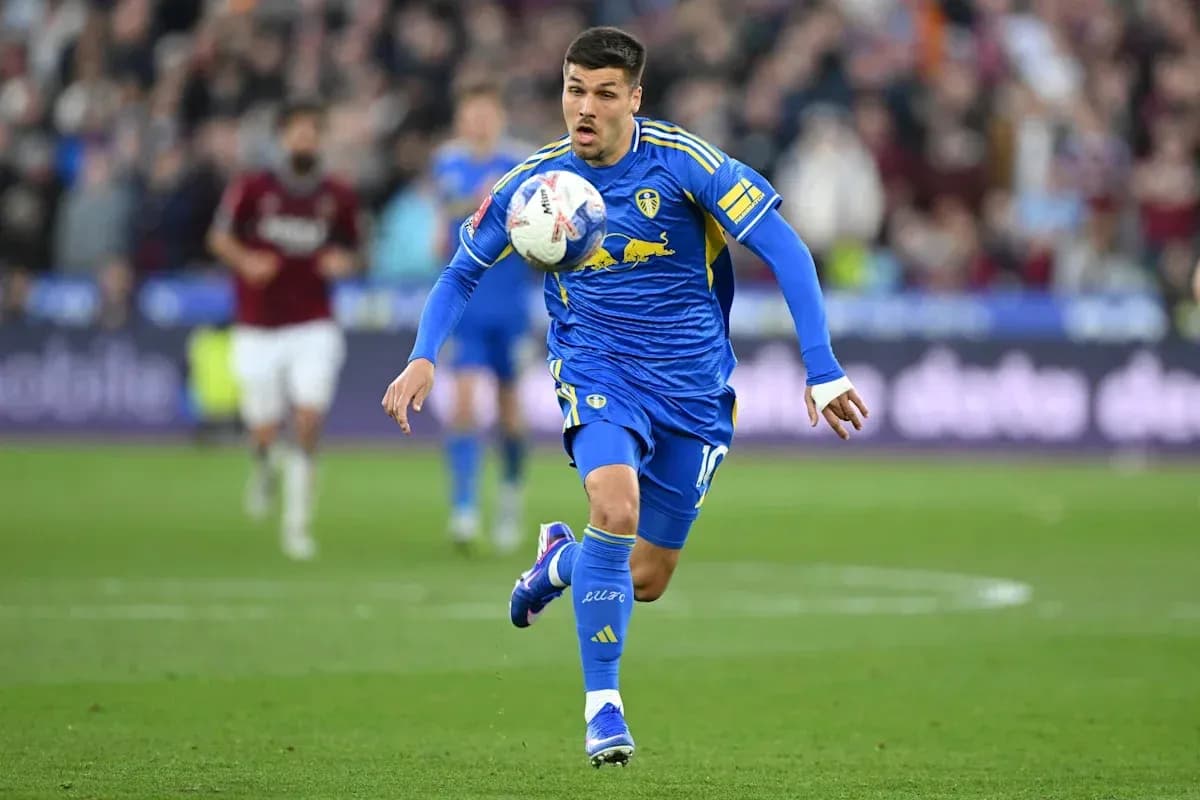
Piroe has already shown he can deliver those in this division. He struck 19 times as Leeds won the Championship title in 2024/25, a ruthless poacher in a team that regularly fed him chances. This season, he has one goal from his first three league outings for West Ham, a steady start in claret and blue.
Why Did Leeds Let Him Go?
On the surface, the numbers from last season tell their own story. One goal in 21 appearances. No goals in 16 Premier League matches. Just 259 league minutes under Daniel Farke. For a player once seen as a key weapon in the second tier, that is a brutal comedown.
Farke’s decisions made it clear: the fit had broken.
Tactically, the explanation is straightforward. Piroe lives in the penalty area. He thrives when the ball flashes across the box, when there is a cut-back to attack, when a half-yard of space is enough to punish a defence. Ask him to link play, drop deep, press relentlessly, and the edges of his game start to show.
Leeds under Farke wanted a lone striker who could do all of that dirty work. Pace. Aggression. Constant pressing. A focal point who could bully centre-backs and still stretch the pitch. In that context, Dominic Calvert-Lewin and Nmecha offered more of the physical profile and off-the-ball intensity the manager demanded. Piroe, once a sharp tool, turned into an awkward spare part.
From a sporting director’s perspective, the decision becomes colder, easier to justify. A fringe player, limited minutes, a structured deal potentially rising to around £12m–£15m. On paper, it is tidy business.
But it is not without risk.
Leeds strengthened in other areas. James Trafford arrived to bolster the goalkeeping position. Harry Wilson added creativity and end product in the final third. Tarik Muharemovic came in, and deadline day brought attacker Jean-Matteo Bahoya. The squad looks deeper in several departments.
Through the middle, though, there is now a thinner safety net.
Piroe left without a like-for-like central-forward replacement. If Calvert-Lewin’s injury record bites again or Nmecha misses time, Farke could find himself exposed, forced into reshuffles that blunt Leeds’ attack. For a club that finished 14th last season and still lives with the tension of a potential relegation scrap, that is a calculated gamble.
Farke has clearly prioritised Premier League survival traits over loyalty to a proven Championship scorer. Work rate over penalty-box instincts. Structure over individual finishing.
From Piroe’s side, the move makes sense in footballing terms. West Ham want his goals, not his pressing numbers. The Championship gives him the kind of environment in which he has already flourished once: more chances, more chaos, more time in the area where he is most dangerous.
For a forward built around finishing rather than relentless harrying, the second tier might feel like home again.
Ajax looked tempting. Leeds became suffocating. West Ham, right now, looks like the place where his reputation either rebounds – or stalls for good.