
Italy vs Northern Ireland: A Crucial World Cup Qualifier
The long wait that really stings is not Italy’s. It belongs to Northern Ireland.
Forty years have slipped by since they last walked out at a World Cup, back‑to‑back appearances in 1982 and 1986 offering the illusion of permanence. They finished third in a group with Brazil and Spain and left convinced they would be back soon enough.
They never were.
Italy’s exile is shorter but louder. A football superpower shut out of 2018 and 2022, four‑time world champions reduced to watching from the sofa. In a country that lives off the sport, that isn’t a blip. It’s a national wound. And it leaves Thursday night in Bergamo feeling like a referendum on an entire era.
One of these nations will wake up still dreaming of 2026. The other will be staring at wreckage.
Gattuso under the glare
Nobody around Gli Azzurri is pretending this is just another qualifier.
“This is the most important game of my coaching career so far,” Gennaro Gattuso says. He does not dress it up. He does not soften it. “Our aim is to get back to where we were for many years and have a starring role there, as well.”
The message from the dressing room matches the coach’s urgency. Mateo Retegui, plying his trade in the Saudi Pro League but fully invested in this week, calls it “the most important week of the entire season for each and every one of us”. Then he sets the challenge: “Now is the time to show everyone exactly who we are.”
For Gattuso, nights like this come with a cost. He was a chronic insomniac as a player; the stakes now have not exactly soothed him. Italy’s team doctor earned public thanks for the sleep aids that are getting him through.
“The older I get, the more help I need otherwise at 4.30am or 5am I am wide awake, like a bat,” Gattuso says. He insists his mind is clear. “I am prepared. Believe me, I am thinking positively. I want to think big.”
Yet he looks like a man already bearing the weight of failure that is not even his. Six games into his tenure, he carries the backlog of two missed World Cups on his shoulders. Beat Northern Ireland and there is still Wales or Bosnia away to come, neither a gentle stroll. Lose, and the fallout will be volcanic.
For someone who lifted the trophy in 2006, Italy’s prolonged absence has been a “shock” to the system. A country that once assumed its place at the World Cup now has to fight for the right even to dream of it.
A muted stage for a seismic night
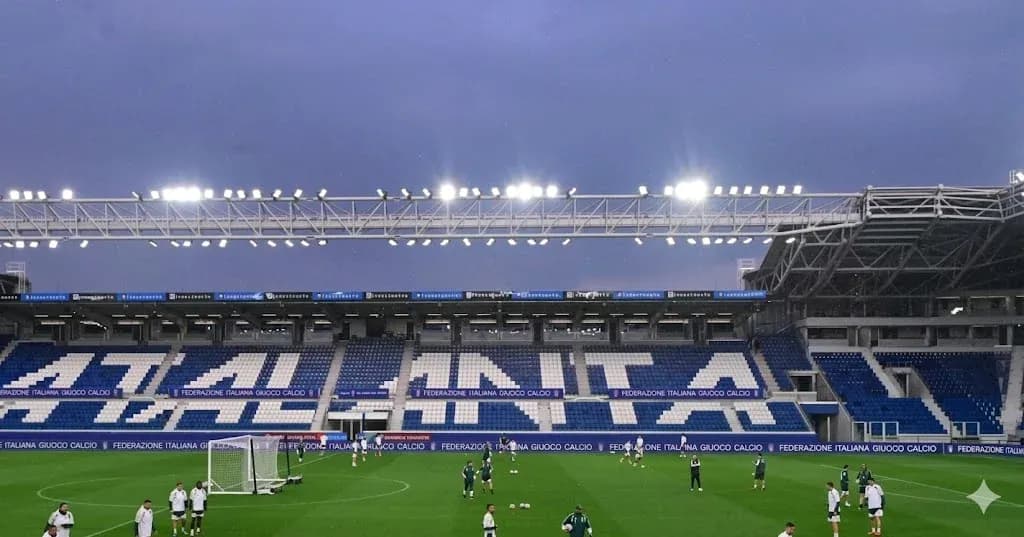
The venue tells its own story. This tie is not in Milan, Naples or Rome. It is in Bergamo, home of Atalanta, a charming, refined city where the stadium holds fewer than 25,000 and where you have to look hard to feel a storm brewing.
Gattuso refuses to point fingers at the stands.
“The supporters don’t have any responsibility, it is up to us,” he says. Two failures have dulled the bond between team and public; the choice of a smaller venue feels like a symptom of that distance. But he is not interested in revisiting past disasters. “There have been two huge disappointments in the past but now is not the time to look at what didn’t work. Now is about what our target is. This is crucial for us.”
Crucial, and complicated.
Northern Ireland’s blunt edge
Gattuso has done his homework on Michael O’Neill’s side and delivers his verdict with the bluntness that once defined his tackling.
“They typically ‘toss the ball into the box’, as they say in the British Isles,” he explains. Eight or nine men crowding the area, thriving on second balls. “Direct, vertical football. I haven’t seen a team that is necessarily going to be keeping the ball and dragging you around in midfield.”
There is no insult intended, just a clear-eyed scouting report. O’Neill, smiling, gently reminds everyone that Italy can go long and diagonal too. There will be no stylistic snobbery from the away bench.
Northern Ireland arrive as clear outsiders, even before injuries bit. Conor Bradley was always expected to miss out, but the late loss of Dan Ballard to a hamstring injury after the squad was named strips O’Neill of a key defender and leader. For a nation with limited depth, that matters.
O’Neill has made a habit of stretching thin resources to their limit, coaxing competitive, organised performances from squads that, on paper, should not be troubling higher‑ranked opponents. Here, even with Italy under suffocating pressure, progress would rank as one of the great shocks of the qualifying campaign.
“The important thing for us is to play the game and not think about what is at stake,” O’Neill says. The burden, he knows, sits squarely on the home side. “The expectation clearly lies with the home nation. I have a lot of belief in this group. It will be a young team; the benefit you get with youth is a lack of fear. We have everything to gain. This will be a huge test but one I believe we are ready for.”
Ready, and liberated by the knowledge that almost nobody expects them to survive.
Futures on the line
The implications stretch beyond one night. For O’Neill, defeat would almost certainly close his competitive chapter with Northern Ireland. He is already juggling this role with the fight to keep Blackburn in the Championship, a double life that cannot last much longer. One job will have to give.
For Gattuso, the stakes are even harsher. “We are masters of our own fate,” he says. “We know very well what we need to do. We also need to be fully aware that we will be up against players that will be foaming at the mouth. We must not underestimate the opposition. Yes, they are Northern Ireland … but how did they get this far?”
That question hangs in the air like a warning. Northern Ireland have arrived here by refusing to bow to reputation. If Italy allow old fears to seep in, if they let the tension of two lost World Cups grip their legs, the underdogs will not hesitate.
For Italy, failure would mean more than another missed tournament. It would trigger a fresh wave of recriminations, another national inquest into how a country with such talent keeps falling short when it matters most.
For Northern Ireland, success would tear up the script and rewrite their modern history.
One will leave Bergamo clinging to the World Cup road. The other will be left to count the cost of a journey that ends too soon.



