
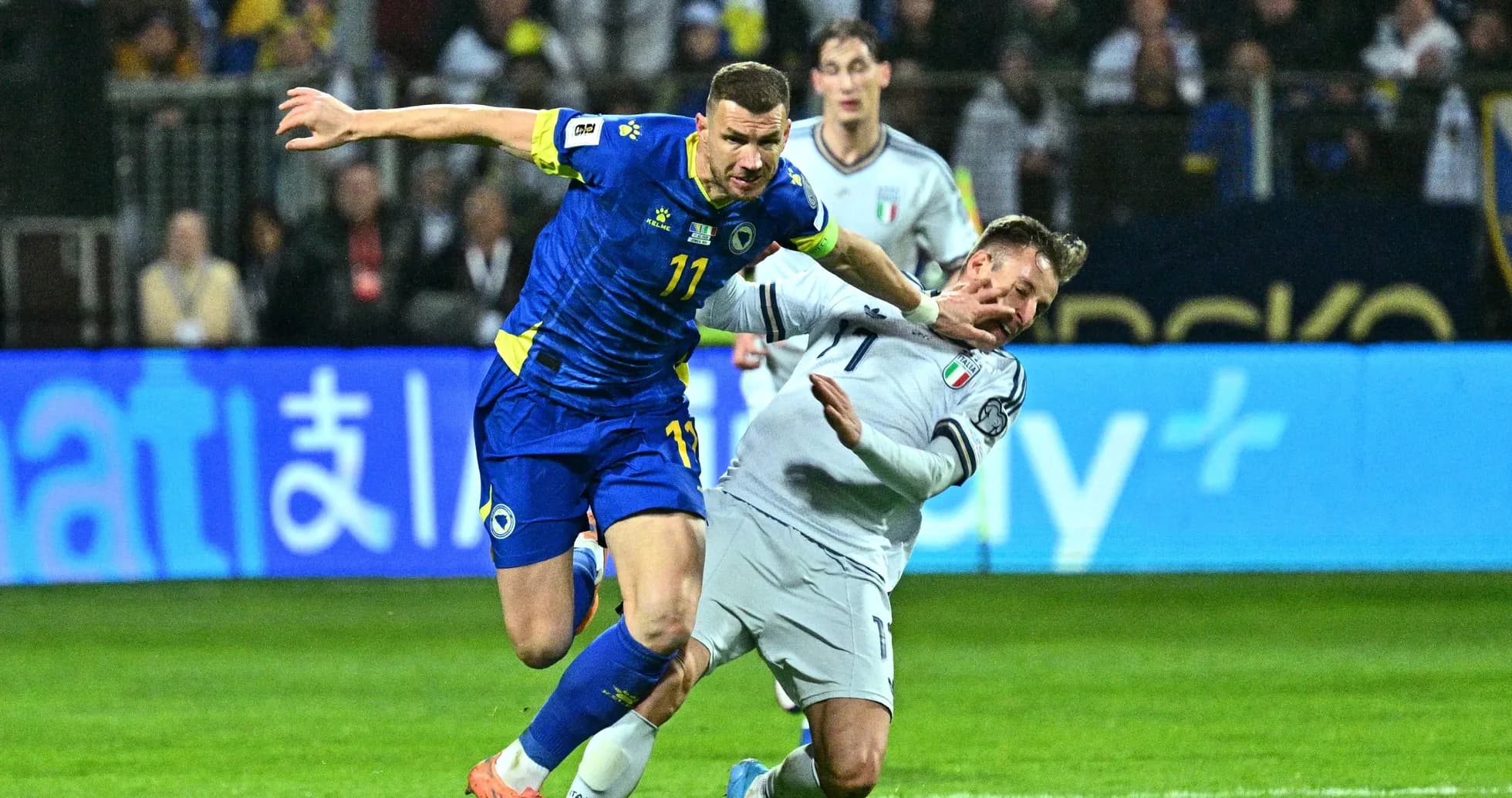
Italy's Hopes for World Cup Ride on Iran's Turmoil
For Italy, the road to the 2026 World Cup is no longer on the pitch. It runs, improbably, through Tehran, Washington and Zurich.
The Azzurri’s only theoretical route back into the tournament rests on Iran withdrawing from next summer’s finals, a scenario fuelled by escalating tensions with the United States, one of the host nations. It is the slimmest of hopes, but enough for some Italian fans to start dreaming again.
RMC Sport reports that a section of Italy’s support has seized on the idea of a “technical qualification” if Iran pull out. The logic is simple: Italy are the highest-ranked team not to have qualified. Group G – currently featuring Belgium, New Zealand, Egypt and Iran – would, on paper, gain a heavyweight replacement without disrupting the competitive level of the tournament.
Reality tells a different story.
Geopolitics at the World Cup’s Door
The football issue is tangled in a much darker backdrop. In February, the United States and the Zionist entity carried out a joint missile strike on Iran, killing Supreme Leader Ayatollah Ali Khamenei. The fallout has gone far beyond diplomacy and into sport.
Iran’s Minister of Sport publicly cast doubt on the national team’s presence at the World Cup, stating that the country “does not have the capacity to participate.” That remark alone sent shockwaves through qualification charts and fan forums alike.
Then came the provocation from across the Atlantic. US President Donald Trump urged Iran to withdraw “for its own safety,” writing on Truth Social that while the Iranian team was “welcome,” he did not believe it was appropriate for them to take part.
Tehran fired back, insisting it “cannot be excluded” and even suggesting the United States should withdraw instead. The rhetoric hardened when Iran’s Ministry of Sport issued an official decision: all national sports teams and delegations are banned from travelling to countries classified as “hostile,” until further notice.
On paper, that would rule out playing in the US. On the pitch, nothing has changed yet.
FIFA Stands Firm Behind Iran
Despite the political storm, Iran’s status in the tournament remains intact. The team qualified on merit through the AFC route and, for now, fully intends to play.
Inside FIFA, there is no appetite to force Iran out. President Gianni Infantino has made that clear. Recent talks between the Iranian delegation and FIFA reinforced the plan: Iran will participate, and their matches will go ahead in the United States as scheduled.
Speaking on the sidelines of a friendly between Iran and Costa Rica in Turkey on Tuesday, Infantino underlined the governing body’s stance. The Asian side, he said, will be at the World Cup. There is no alternative plan.
Ideas floated in some quarters – such as moving Iran’s fixtures to Mexico – are not being pursued. The official line is straightforward: Iran stay, the schedule stands, Group G remains untouched.
Which means, for now, Italy stay at home.
A Tournament on Edge
Iran are due to open their World Cup campaign on 16 June against New Zealand, then face Belgium in California before meeting Egypt at Lumen Field in Seattle. The calendar is set, the venues locked in.
Yet the uncertainty refuses to disappear. If Iran were to announce a withdrawal just days or weeks before kick-off, FIFA would be plunged into a logistical crisis. Venues, travel, broadcast plans, ticket allocations – all would need urgent revision.
This is where the Italian fantasy collides with FIFA’s political reality.
According to RMC Sport, the prevailing view within football’s corridors of power is that any replacement for Iran would almost certainly come from Asia. The reasoning is blunt: the confederation balance must hold. The World Cup’s allocation of places is a political construct as much as a sporting one, and FIFA is determined not to disturb it.
The regulations do not explicitly force FIFA to choose an Asian replacement, but the logic is overwhelming. Handing Europe an extra spot by reinstating Italy would give UEFA yet another place in a tournament where it already commands 16 berths out of 55 associations. That would provoke fierce resistance from other continents.
UAE Waiting in the Wings
Under that logic, one name stands out: the UAE.
After Iraq secured their ticket through the intercontinental play-off by beating Bolivia 2-1, the UAE emerged as the best Asian team not to have qualified. On sporting criteria within the continent, they sit at the front of the queue.
If Iran step aside, the UAE would be a leading candidate to step in. It would preserve the Asian quota, respect the continental balance and avoid reopening the long, bitter debate over Europe’s dominance in World Cup slots.
Italy, by contrast, would symbolize the very imbalance FIFA is trying to avoid. However romantic the notion of the four-time world champions being parachuted into Group G, it runs against the political and structural logic that governs modern World Cups.
A Door Left Barely Ajar
Everything now hinges on developments inside Iran and the stance of its government. The Ministry of Sport’s travel ban and the ongoing tension with the United States could still collide with FIFA’s insistence on Iran’s participation.
Until a definitive decision emerges from Tehran, the scenario board stays cluttered. The UAE wait, Iraq watch, and, far in the background, Italy listen for the faintest creak of an opening door.
It is open, but only just. And for the Azzurri, that sliver of light may be all they get.



