Iran Prepares for World Cup Amid Political Tensions and Injury Setbacks
The noise around Iran has been deafening. War, security threats, political posturing. Yet behind closed doors, away from the headlines, Team Melli have been quietly doing the one thing that actually matters in a World Cup year: getting ready to play.
Kits, cameras and a guarded camp
On Monday, Iran’s official social media channels offered a rare glimpse inside a tightly controlled camp. Short, sharp clips on Instagram showed players stepping under studio lights, posing in what is set to be the new home kit for the FIFA World Cup.
No grand reveal yet. No slogans. Just glimpses: first-choice goalkeeper Alireza Safar Beiranvand in fresh colours, winger Milad Mohammadi in full match gear, and others cycling through a photo shoot that signalled one thing – Iran are planning for a tournament they weren’t sure they’d be allowed to reach.
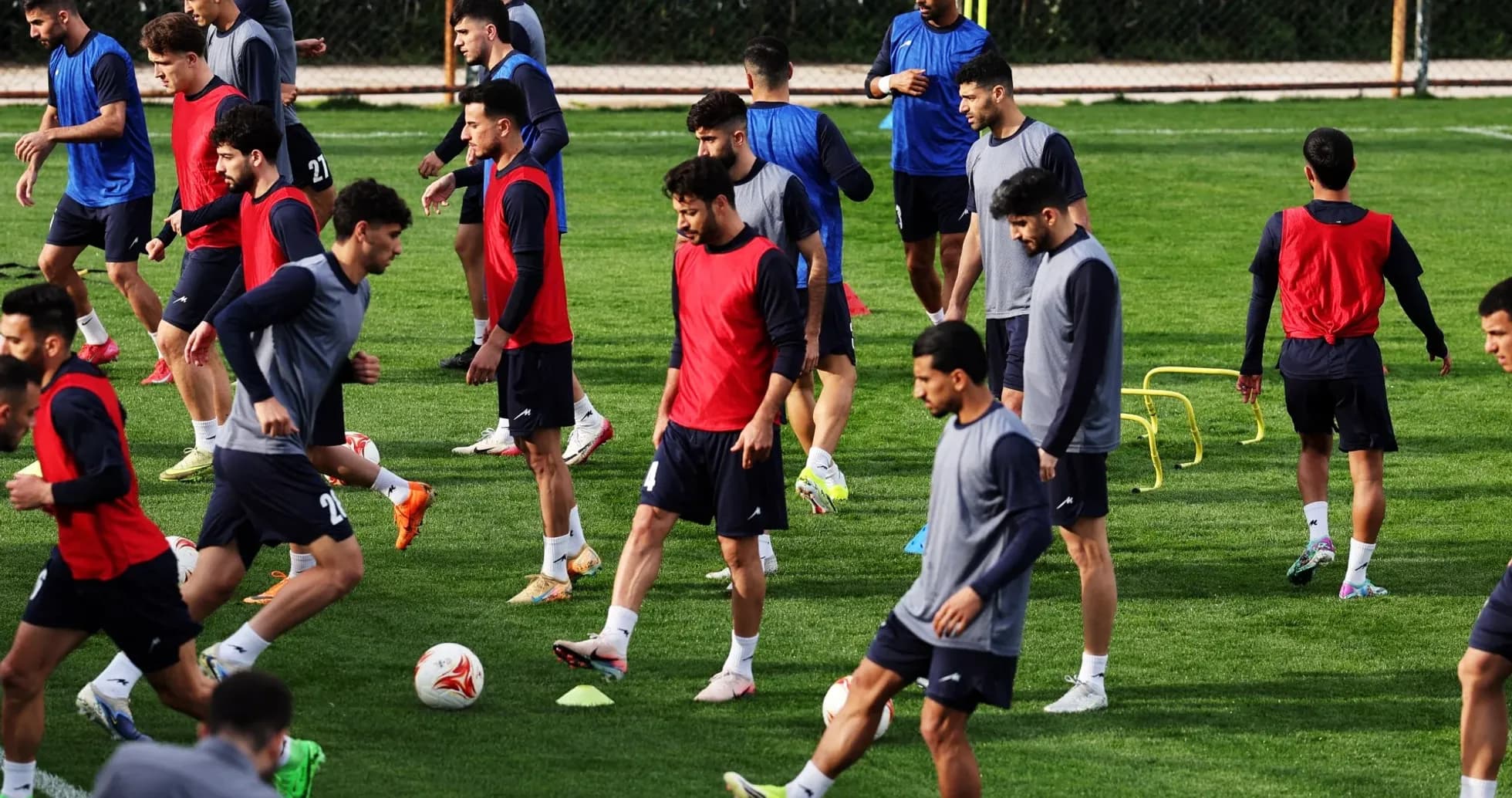
Training images followed. Sessions are currently being held in Iran at an undisclosed venue, with the federation keeping locations quiet as the squad complete the first phase of their preparation before heading to Turkiye. The mood in the pictures is businesslike. No smiles for the cameras, just a group who know the spotlight that awaits them this summer.
War, politics and a World Cup in America
Only weeks ago, their very presence at the World Cup looked fragile.
The US and Israel’s war on Iran, launched on February 28, plunged the tournament into uncertainty. Iranian officials publicly questioned how their national team could safely compete in a country involved in direct conflict with them, and whether the United States should still serve as host. President Donald Trump, never one to dampen tension, suggested Team Melli’s players might not be safe if they travelled to his country for the championship.
For a time, the football felt secondary.
Then came clarity from the only voice that truly counts in tournament logistics: FIFA. Speaking at the FIFA Congress in Canada on Thursday, president Gianni Infantino cut through the speculation.
“Let me start at the outset. Of course, Iran will be participating at the FIFA World Cup 2026. And of course Iran will play in the United States of America,” he declared.
With that, the path was fixed. Trump, asked about Infantino’s stance, rowed back on his earlier tone.
“If Gianni said it, I’m OK,” he told reporters at the White House. “You know what? Let them play.”
The political storm hasn’t vanished, but the football side now has something solid to build around: Iran will be in Group G, and they will play all their matches on US soil, cohost nation alongside Canada and Mexico.
A camp built to mirror tournament pressure
Inside the Iranian setup, the response has been straightforward: prepare as if nothing off the pitch can touch them.
Assistant coach Saeed Alhoei laid out the plan in comments to Iranian outlet Varzesh3. The first phase of camp will wrap up with an intra-squad match on Wednesday, designed to replicate World Cup conditions as closely as possible.
This is not a routine training kickabout. The game will be staged in a stadium, with players wearing official match kits. An international referee has been lined up, and VAR technology will be in place to mirror the pressure, rhythm and interruptions they’ll face in June.
From there, the team will fly to Turkiye on Monday for the final stretch of their preparations before crossing the Atlantic in June. Three friendlies are on the slate: two likely behind closed doors against local club sides, and a third against an African national team.
“It is a quality team that can be a good simulation for playing against African teams,” Alhoei said, hinting at the tactical and physical test they want before facing Egypt in the group stage.
The road through America: LA and Seattle await
The fixtures are set. The margins will be thin.
Iran open their Group G campaign against New Zealand in Los Angeles on June 15, a game that will set the tone for everything that follows. Six days later, they stay in LA to meet Belgium on June 21, a clash that will likely demand their most disciplined performance of the group.
The final hurdle comes in Seattle on June 26, where they face Egypt in what could easily become a decisive showdown for qualification. Three games, three very different styles, all on rival soil in a country whose relationship with Iran is defined by tension far beyond the pitch.
For the players, though, the route is now clear: Iran to Turkiye, Turkiye to the US, and then a month that could redefine a generation.
A brutal setback: Gholizadeh ruled out
Just as the footballing picture sharpened, bad news struck.
On Monday, Iran suffered a significant blow when winger Ali Gholizadeh was ruled out of the World Cup with a season-ending knee injury. Playing for Lech Poznan in Poland against Motor Lublin last Saturday, Gholizadeh was stretchered off the pitch. Scans later confirmed the worst: a torn anterior cruciate ligament in his left knee.
He was expected to start on the right wing at the World Cup, a key part of Iran’s attacking balance and one of the players capable of carrying the ball at pace in transition. Now he faces surgery “in the coming days, followed by several months of rehabilitation,” Lech Poznan said in a statement.
For Team Melli, it’s a tactical headache and an emotional gut punch. For Gholizadeh, it’s the loss of a stage every player dreams of.
Yet the machine keeps moving. The kit launch will come. The intra-squad match will be played with VAR and whistles and all the trappings of the big show. The flight to Turkiye is booked. The dates in Los Angeles and Seattle are inked in the calendar.
Iran know where they’re going. The question now is simple: when the politics fade into the background and the whistle blows in LA on June 15, will all this controlled preparation be enough to carry them through a World Cup played in the eye of a geopolitical storm?