A Beautiful Obsession: Guardiola's Vulnerability Exposed
Pep Guardiola has never been shy of the camera. Manchester City have invited them in before, polished the lenses, curated the angles. But “A Beautiful Obsession”, the club-controlled four-part Amazon series released on Prime from Wednesday, does something very un-City-like.
It lets the mask slip.
This is not a glossy farewell to the Catalan who turned City into a “machine built for winning”, as chair Khaldoon al-Mubarak calls it. It is not a soft-focus tribute to a decade of trophies. The series walks straight into Guardiola’s bleakest season, the fractured 2024-25 campaign, and refuses to look away.
Nine defeats and a single win in 13 games. A mid-winter collapse that shredded the aura of invincibility. A manager unravelling in real time.
A season falling apart
The cameras are there for the slump. They see Guardiola reach for every trick he knows and come up empty. They see a man whose personal life is breaking down as his team does the same.
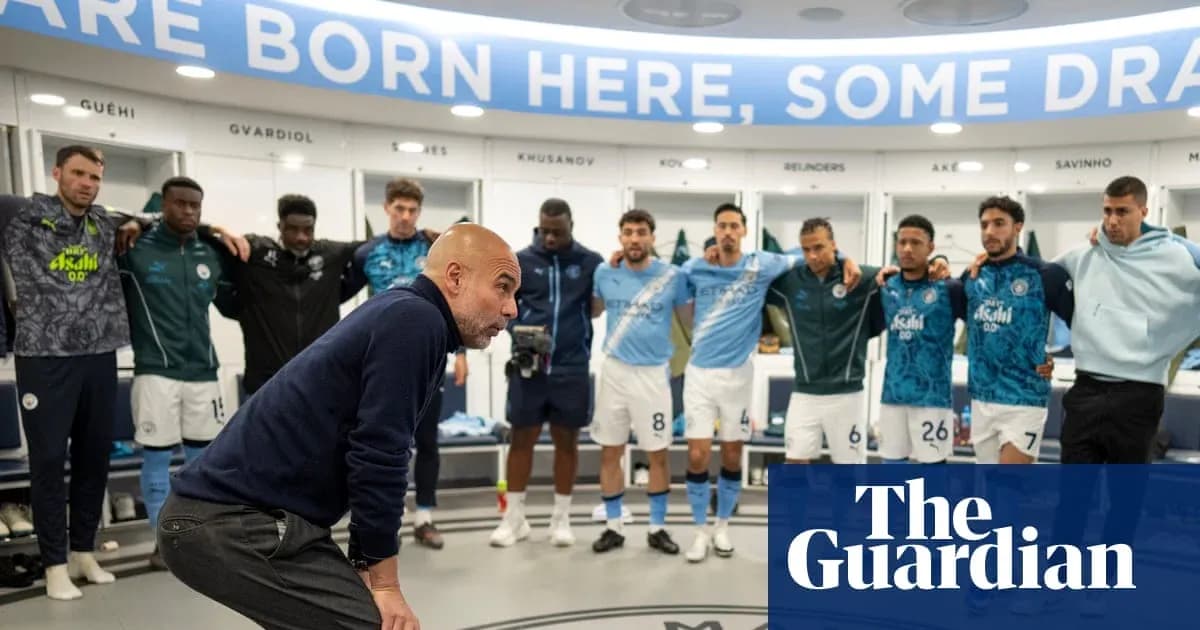
After a 2-0 Champions League defeat by Juventus on 11 December 2024, City’s seventh loss in 10 games, Guardiola stands in front of his players and crosses a line most managers never approach.
“I’m fucking divorced from the most beautiful woman on your planet,” he tells them. “I love her unbelievably, but we lost the passion. How do you play football, because you are paid? Or because of something inside? Where is the passion?”
It is raw, jarring, and deeply revealing. He uses his own divorce from Cristina Serra as a metaphor, as a plea, as a challenge. But it also exposes a manager whose usual tools are no longer enough. Instead of the familiar tactical lecture, he offers his private life as collateral.
Later, he defines what he believes a true No 1 must be: someone who can convince his players to go “to the penthouse, the roof and jump down” for him. In that moment, you wonder if this confession brings them closer to the edge for him, or quietly pushes them back from it.
The cost of vulnerability
The documentary keeps returning to this theme of human frailty. Manuel Estiarte, Guardiola’s close friend and City’s director of first-team operations, lifts the curtain even further in episode two, “The Rebuild”.
He reveals he went to the squad and spelled it out: Pep is getting divorced.
“I said to the team: ‘Please, you have to understand, you’re not playing with a coach who can be a bit impulsive, intense, sometimes a bit up and down. You’re seeing a human being. He’s getting a divorce.’ It was necessary for the team not only to visualise Pep as a manager but for the first time as a human being.”
It raises its own questions. Why did Guardiola not deliver this himself? If the aim was to deepen the bond, wouldn’t the message have carried more weight from the man at the centre of it?
The series offers no boardroom debate on it, but the implication hangs there: did Khaldoon and CEO Ferran Soriano ever sit down and ask whether the manager’s private turmoil was starting to bleed into his work?
Then, just as the viewer settles into the image of a broken man, the cut jumps to a different Guardiola. Laughing, lighter, almost breezy.
“In my life I made a lot of changes – I got divorced and I have to settle a bit. But no complaints at all honestly,” he says, before narrowing the definition of his happiness. “In my job, yeah.”
The separation between the man and the manager is there in a single beat.
Captains, dressing rooms and a breaking point
Relationships, and how Guardiola manages them, become the spine of the series. Episode three is pointedly titled “Love and Hugs”, but the most gripping moments are anything but warm.
In part one, “The Desert”, the cameras catch him close to tears as Kyle Walker walks away from a listing ship in January 2025, exactly when City need their captain most.
Guardiola tells the squad Walker did not behave like their leader. Then he turns the accusation on them. They voted for him as captain. Why didn’t they pin him to the wall and demand loyalty?
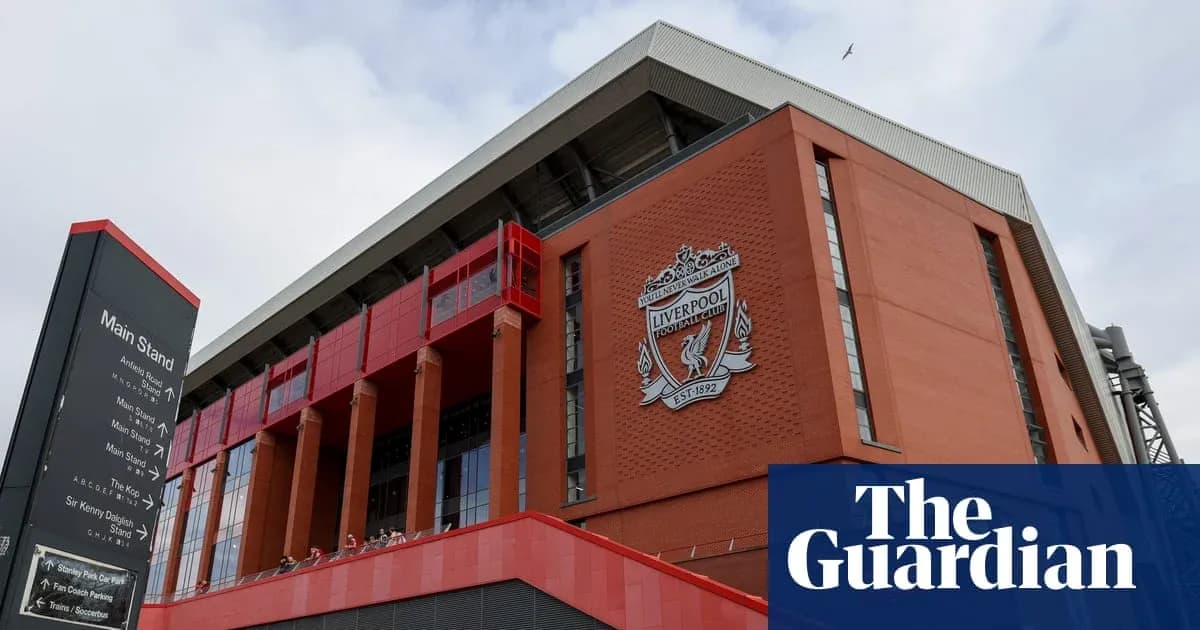
The flashpoint is filmed with a precision that feels almost theatrical. In the Anfield dressing room, after Walker’s mistake leads to Luis Díaz winning a penalty converted by Mohamed Salah in a 2-0 defeat, Guardiola references the error. Walker snaps.
He complains he is being singled out “every meeting”. The tension is suffocating. It ends with Guardiola in tears, delivering a monologue that lands somewhere between confession and plea. He reminds them he signed a new contract only 11 days earlier, in the middle of the disastrous run, because he wanted to fight.
“If captains first, then the other ones, for example [feel] that there’s a problem, tell me,” he says. “It’s not going to change the love I have for all of you. I’m sorry.”
The camera holds the shot. Guardiola speaking, voice cracking. Walker silent, absorbing his part in the fracture. It is as close as elite football gets to a therapy session, and it ends with the captain gone.
Letting go of Kevin De Bruyne
If Walker’s exit feels like a wound, the handling of Kevin De Bruyne’s departure is surgery without anaesthetic.
Episode two opens with regret. De Bruyne, the greatest player of City’s modern era in Soriano’s words, is not offered a new deal. The CEO stresses to Khaldoon that “Kevin gets the respect he deserves as the greatest player in the modern history of City”, but respect has its limits.
Guardiola reveals that “Super Kev” broke down in his office when the decision became clear. The manager admits there had to be a coldness to it. The machine must keep moving, even if it means discarding its finest part.
The cameras then find De Bruyne, and the emotion is unvarnished. Asked what he will miss most, he cannot hold back the tears.
“My kids don’t want to go,” he says.
The line cuts through the usual football clichés. This is what the game often hides: the families uprooted, the bonds torn, the children who have to be told that home has moved.
It underlines the central tension of the series. City’s empire runs on relentless decision-making, on stripping emotion from judgment. But the people at the heart of it feel everything.
When the board turns on Pep
The documentary’s honesty is not reserved for players. Guardiola himself is placed under the harshest light after one of the most baffling calls of his reign.
In November 2025, he changes 10 outfield players for a Champions League home tie against Bayer Leverkusen. City lose 2-0. The fallout is brutal.
“Our attitude with Pep Guardiola should not be too negative. But it shouldn’t be too kind or accommodating either. This is his mistake this time,” Soriano says.
Khaldoon goes further.
“To pick an entire new [outfield] team in a game this important is probably one of the lowest points we’ve had. I can’t speak to him – I’m so angry.”
These are not the words clubs usually allow out into the world, let alone in a film they control. Yet they stay in. Guardiola is not shielded. The power dynamic is laid bare: even a manager of his stature can be hauled over the coals when the machine judders.
Later, Guardiola returns to his divorce as a symbol of sacrifice. A year on from the Juventus defeat, still searching for a way out of the crisis, he tells the players: “I leave my life, my divorce and my family is away, and everything for all of you. And what do you give back?”
The appeal is emotional, almost desperate. The response, on the pitch at least, is mixed.
Trophies, goodbyes and what comes next
For all the chaos, the ending is not a collapse. Part four, “Nothing Is Eternal”, closes with City lifting the Carabao Cup and FA Cup. Twenty trophies in a decade under Guardiola, if you count three Community Shields. A second-place finish in the league. Not a vintage year by their standards, but hardly a wreckage.
The rebuild, in the club’s eyes, is complete. The send-off is grand, befitting a manager who redrew English football’s map. Yet the series never quite lets you forget the cost of that decade: the strain, the sacrifices, the private life left in ruins.
Guardiola, standing on the edge of his post-City life, sums it up with a line that lands like a verdict on everything we have just watched.
“Life should not just be about football. It’s too much to be honest.”
The cameras fade. The machine will keep turning without him. The real question is whether, after laying himself this bare, Guardiola will ever let the world that far inside again.