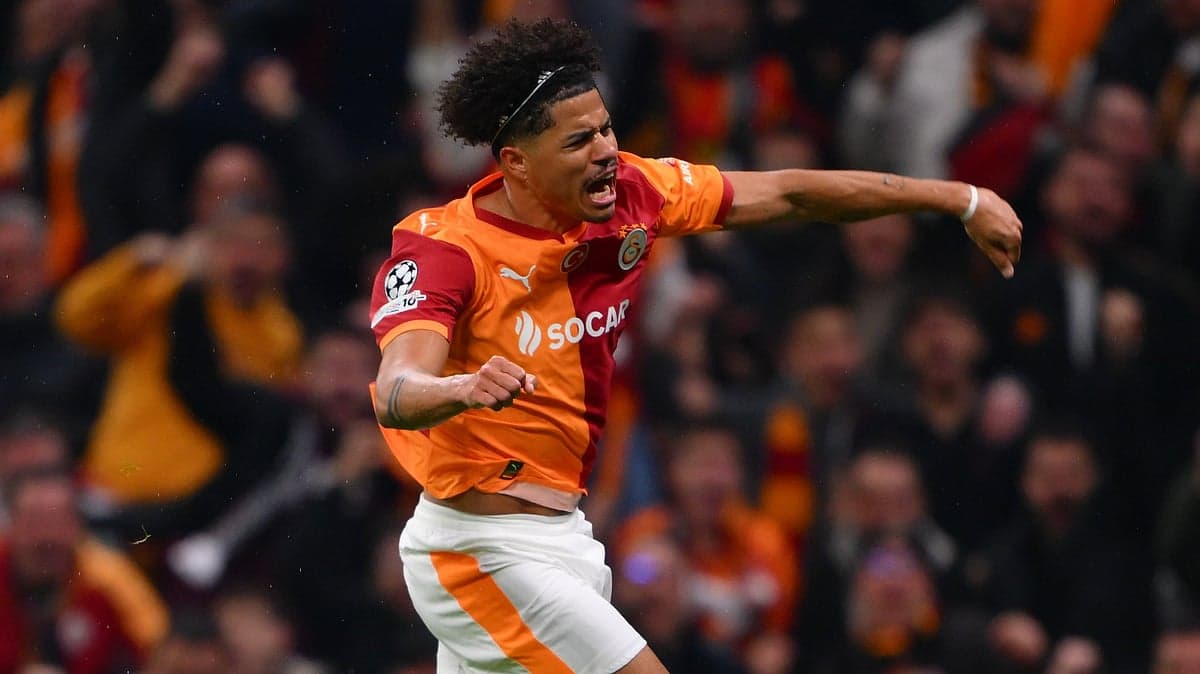
Galatasaray Overcomes Juventus 5–2 in Stunning Comeback
At Rams Park Stadyumu in Istanbul, Galatasaray produced a remarkable second‑half surge to overwhelm Juventus 5–2 in a UEFA Champions League Round of 32 tie on 17 February 2026. Trailing 2–1 at half-time, Okan Buruk’s side hit four unanswered goals after the break, aided by a red card for Juventus debutant Juan Cabal, to flip both the match and the momentum of their European campaign. The result is a statement win for a Galatasaray team that arrived with a negative goal difference, while Juventus’ previously solid record in this competition took a heavy dent.
First-half analysis
The opening period unfolded at a breathless pace, with three goals inside the first 32 minutes. Galatasaray struck first on 15', Gabriel Sara putting the hosts in front with a normal goal that underlined his dual importance in midfield. Juventus responded immediately: just one minute later, Teun Koopmeiners levelled on 16', finishing after an assist from right-back Pierre Kalulu.
Luciano Spalletti’s side then tilted the scoreline in their favour. On 32', Koopmeiners struck again, this time assisted by Weston McKennie, to give Juventus a 2–1 lead and briefly silence the home crowd. There was an early defensive reshuffle for the visitors on 34', when centre-back Bremer went off and Federico Gatti came on, a like-for-like change that hinted at either an injury concern or a bid for greater aerial security.
Discipline began to fray before the interval. Andrea Cambiaso was booked for a foul on 18', and Gabriel Sara collected a yellow card for argument on 43'. The half-time whistle came with Juventus ahead 2–1, having been more clinical in front of goal despite Galatasaray’s territorial initiative.
Second half & tactical shifts
Spalletti made another defensive adjustment at the restart, withdrawing left-back Cambiaso for Juan Cabal on 46'. Within minutes, however, the pattern of the match flipped. On 49', Noa Lang brought Galatasaray level at 2–2, finishing a move created by Barış Alper Yılmaz’s assist. The equaliser energised Buruk’s 4-2-3-1, with the attacking midfield line increasingly pinning Juventus back.
Cabal’s introduction quickly turned disastrous. He was booked for a foul on 59', and just eight minutes later, on 67', he received a second yellow – again for a foul – immediately followed by a red card. Juventus were reduced to ten men at a critical juncture, and Galatasaray capitalised ruthlessly.
The hosts had already seized the initiative moments before Cabal’s first booking. On 60', centre-back Davinson Sánchez made it 3–2, converting after a delivery from Gabriel Sara, whose goal and assist underpinned Galatasaray’s comeback. With the numerical advantage confirmed at 67', Buruk went for the kill. On 70', he replaced Yunus Akgün with Leroy Sané, adding fresh pace and directness in the attacking band.
Spalletti tried to respond with attacking width, sending on Filip Kostić for Francisco Conceição on 70'. But Galatasaray’s front four were rampant. On 75', Lang struck again, his second of the night, finishing from Victor Osimhen’s assist to stretch the lead to 4–2 and effectively settle the contest.
Buruk then managed the game and the workload. On 77', he made a double change: Barış Alper Yılmaz went off for Mauro Icardi, and Abdülkerim Bardakcı was replaced by Wilfried Singo, slightly rebalancing the back line while keeping attacking options high. Juventus, still chasing the game with ten men, turned to Loïs Openda for Kenan Yıldız and Fabio Miretti for Khéphren Thuram on 81', a clear attempt by Spalletti to add legs and verticality in transition.
Galatasaray continued to rotate late on. On 83', Ismail Jakobs made way for Eren Elmalı, and two-goal hero Lang was withdrawn for Sacha Boey, nominally a defender but used here to solidify the flank. The move paid off immediately: on 86', Boey added a fifth, again assisted by Osimhen, capping a devastating second half that saw Galatasaray score four times without reply.
Statistical deep dive
The numbers underline just how comprehensively Galatasaray controlled the contest after the break. The hosts had 62% of the ball, circulating it with 492 total passes at an impressive 88% accuracy. Juventus conceded possession, completing 305 passes at 80%, and were forced into a more reactive, counter-attacking posture, especially once reduced to ten men.
In attack, Galatasaray’s volume and quality were decisive. They generated 22 total shots, with 9 on goal and an expected goals figure of 2.96. Converting five times from that platform speaks to both sustained pressure and sharp finishing, particularly from Lang and Osimhen’s supporting contributions. Juventus managed only 7 shots in total, 3 on target, for an xG of 1.13 – broadly aligned with their two goals, suggesting they were efficient early but simply created too little once pinned back.
Discipline was another clear dividing line. Juventus committed 18 fouls to Galatasaray’s 8, collecting three yellow cards and a crucial red for Cabal. Galatasaray picked up just one booking, for Sara. With both sides earning five corners, the difference lay not in set-piece volume but in how often Galatasaray forced Juventus into last-ditch defending.
Standings & implications
In the broader Champions League picture, this result is a significant boost for Galatasaray. They came into the tie ranked 20th in the competition table, with 10 points and a negative goal difference of -2 (9 scored, 11 conceded). A five-goal haul against a higher-ranked Juventus side will improve that differential and, more importantly, reinforce their status as genuine contenders in the play-off phase.
Juventus, previously 13th with 13 points and a +4 goal difference (14 for, 10 against), suffer a rare but heavy defeat. Their strong overall form (unbeaten in eight before this, with three wins and four draws) meets a reality check, and defensive frailties exposed in Istanbul may become a key talking point as the knockout rounds progress.