Fulham Preview: Silva's Departure and Arbeloa's New Era
Guardian writers’ predicted position: 15th
Last season’s position: 11th
A riverbank era ends
Marco Silva’s exit felt less like a shock and more like the end of a long, tense negotiation. Five years by the Thames, a club rebuilt, a style restored – and a manager who never hid the fact his ambitions stretched into European nights.
He wanted more backing, said so often, and rarely sugar-coated it. The ownership did not stretch to the squad he believed could push Fulham into Europe. Even so, he turned an ageing, patched-together group into a side that punched up, not down. Craven Cottage saw entertaining football, awkward afternoons for visiting heavyweights, and a team that, for once, kept its distance from the relegation trapdoor.
Silva leaves with credit in the bank and a sizeable hole on the touchline.
Arbeloa and the Madrid connection
Into that space steps Álvaro Arbeloa, a very different proposition. Less experienced in senior management, yes, but carrying the sheen of Real Madrid and a playing career spent at the very top.
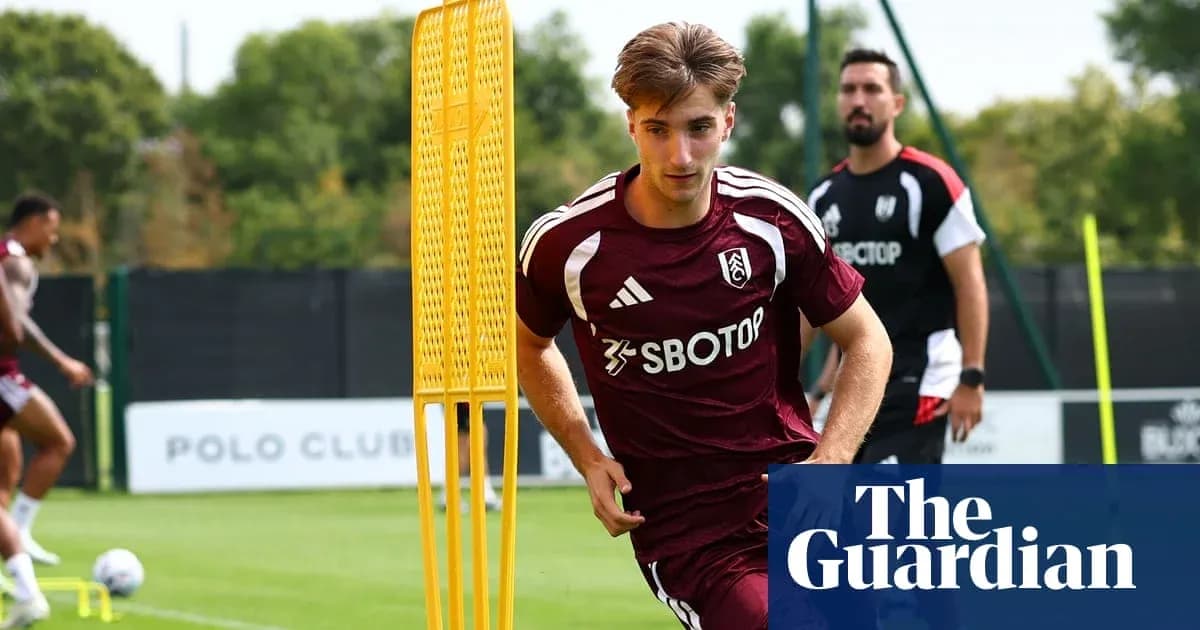
His appointment has already redrawn Fulham’s recruitment map. Gonzalo García and César Palacios arrive from Madrid, players Arbeloa knows well from the youth ranks. They share not just a footballing education but an agency, a modern football detail that underlines how joined-up this shift really is.
There are links to more Real talent – Endrick and Thiago Pitarch among the names floated – feeding the idea that Fulham could become a kind of Madrileño outpost, a development arm on the banks of the Thames. If that pipeline truly opens, this is not just a new manager. It is a new identity.
Silva trusted grizzled pros. Arbeloa is being asked to nurture prospects. Raúl Jiménez has gone. So has Harry Wilson, who finally produced his best season in west London only to move on to Leeds. In their place comes a strategy that mirrors the likes of Brentford, Brighton and Bournemouth: buy younger, polish smarter, sell higher.
Those clubs lean heavily on data. Fulham now want to join that club. Whether they can match the success of those mid-tier models – and whether supporters will still be glancing up the table rather than down – is the riddle of this season. An enigmatic club has chosen a more enigmatic path.
Money, marble and the Riverside gamble
Off the pitch, Fulham are a Premier League curiosity: boutique stadium, superyacht owner, and financials that demand the Riverside Stand delivers.
The new stand’s luxury hospitality helped earn the club a runners-up spot at the football business awards in May for stadium experience. It also needs to help balance the books. The 2024-25 accounts showed a pre-tax loss of £44.5m, trimmed by the sale of João Palhinha in July 2024. Since then, no comparable windfall.
The Khan family’s commitment is not in doubt on the spreadsheets. Overall investment sits around £900m, while staff costs run at 117% of turnover. That ratio explains a lot: why Silva felt underpowered in the market, why Fulham’s room for manoeuvre is tighter than their postcode suggests.
A gilded owner, a restless fanbase
The tension between boardroom opulence and turnstile reality is impossible to ignore.
The most expensive season ticket at Craven Cottage now stands at £3,084 for access to the Riverside’s plush facilities, the highest in the division. Shahid Khan and his son Tony, the vice-chair and director of football operations, have become lightning rods for anger over price hikes and what many regulars see as a tilt towards tourists.
Khan’s superyacht Kismet, named superyacht of the year in 2025 and boasting a Versailles-inspired main salon, can be chartered for more than $3m a week. Those numbers jar with a fanbase that knows the owner has poured money into the club yet still feels increasingly priced out of its own ground.
The balance sheets say one thing. The mood in the Hammersmith End often says something else.
Arbeloa’s brief: youth, attack, identity
Arbeloa arrives with a World Cup and Champions League winners’ medals, and a reputation that carries weight in Madrid. Florentino Pérez once sounded him out to replace Xabi Alonso mid-season at Real, a measure of how highly he is regarded there, even if that particular move never happened.
At Fulham, the job is clearer: refresh an ageing squad, trust younger legs, and keep the football front-footed. Shahid Khan has already highlighted Arbeloa’s belief in giving youth a chance, a public nod to the club’s new direction.
Crucially, Arbeloa shares one core principle with Silva – he wants his teams to attack. For a fanbase that has grown used to open games and risk-taking football, that continuity matters. The question is whether he can marry that with the physical and tactical demands of the Premier League in a way a rookie coach rarely finds straightforward.
Gonzalo García: Golden Boot, big burden
The headline arrival is Gonzalo García, the forward whose reputation exploded at last summer’s Club World Cup. He left that tournament with the Golden Boot and comparisons to Raúl ringing in his ears – no small compliment at the Bernabéu.
He then scored in the Champions League against Juventus and Borussia Dortmund, proof that his finishing holds up under serious scrutiny. But Real Madrid’s star system is unforgiving. With Vinícius Júnior and Kylian Mbappé ahead of him, García’s pathway closed. Fulham offer him the minutes and responsibility he could not get in Spain.
His work off the ball has been widely praised, an attribute that will be vital in England. Last season, Rodrigo Muniz’s injuries pushed Jiménez into an extended shift as the main striker. Now García is expected to lead the line with younger legs and a far higher ceiling.
The hype is real. So is the pressure.
Numbers that demand change
Silva’s Fulham were easy on the eye but creaked under the surface. Last season they fielded the oldest side in the Premier League and, unsurprisingly, produced one of the least intense presses in the division.
They recorded the fewest high turnovers – regaining the ball in the final 40 metres to launch new open-play sequences – a metric that highlights just how rarely they squeezed opponents high up the pitch. Real Madrid are not exactly a pressing machine, yet even they outstripped Fulham in that area.
Arbeloa must decide how far he wants to push the dial. Does he try to drag an older core into a more aggressive style, or lean fully into the youth movement and reshape the team’s energy profile? That tactical call will define his first season.
The next wave: Kusi-Asare and company
The recruitment of Jonah Kusi-Asare last summer from Bayern Munich fits the new template: young, tall, raw, and sourced from the academy of a super-club. Bayern insisted on a buy-back clause, a sign they are not ready to close the book on his potential.
The Sweden Under-21 forward, previously at AIK, made seven substitute appearances last season without scoring before his initial loan became permanent. At 6ft 5in, he offers a very different option to García – a towering presence who can change the picture late in games.
Hayden Mullins, then Fulham’s under-21 coach and now at Newport, saw the sharper edge of Kusi-Asare: five goals in six matches at youth level last season. Arbeloa’s challenge is to turn that promise into something more tangible under the Premier League lights.
World Cup momentum
Several Fulham players arrive into this campaign with their reputations enhanced by the World Cup.
García made his Spain debut in a pre-tournament friendly against Iraq, even if he did not make the final squad that went on to lift the trophy. Antonee Robinson enjoyed a strong tournament with the USA, who reached the last 16 before falling to a Belgium side featuring Timothy Castagne.
Luc de Fougerolles, still waiting for a Premier League bow, showcased his composure and timing in Canada’s run to the knockout stages, while Sander Berge capped a fine summer as Norway reached the quarter-finals.
Fulham return to domestic duty with players who have tasted the highest stage and a manager determined to build something fresher, faster and far more modern.
The question now is simple: does this Madrid-flavoured reboot keep Fulham drifting in mid-table, or does it finally turn Craven Cottage into a launchpad rather than a landing spot?