Four Americans in Pivotal Club Seasons: Tillman, Aaronson, Robinson, Pepi
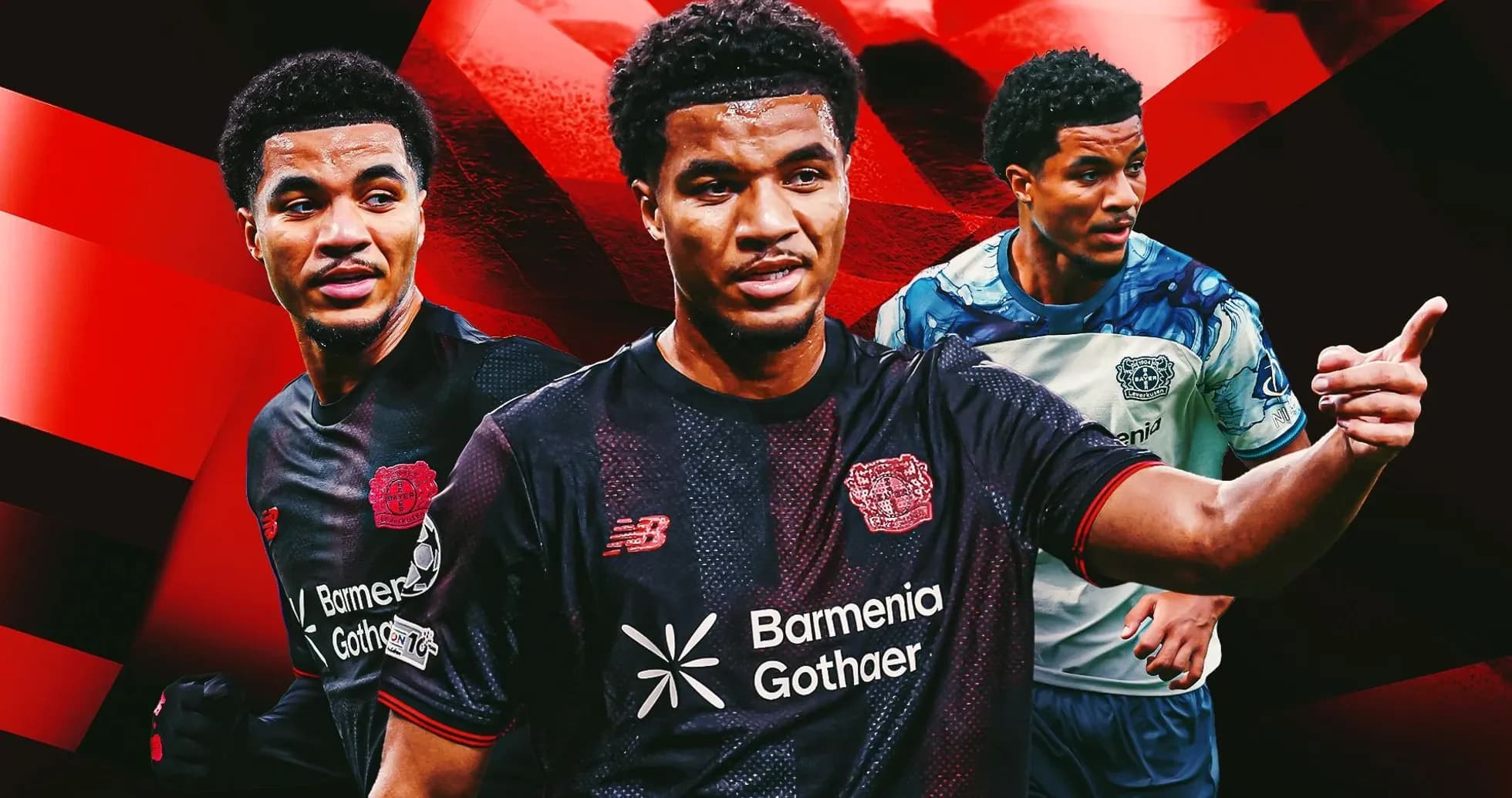
Malik Tillman just walked out of a World Cup that changed how people talk about him. Mauricio Pochettino took the elegant No.10 who had drifted between the lines at PSV and tore up the script. Tillman became a No.8. A runner. A presser. A ball-progressing engine.
The flair never vanished. It just arrived in different areas of the pitch. Those two outrageous free kicks will live in USMNT highlight reels for years, the kind of moments that turn a solid tournament into a memorable one.
Now comes the awkward part: going back to a club that has changed almost beyond recognition.
The Bayer Leverkusen Tillman joined a year ago still felt like a rising force, fresh from ending Bayern Munich’s stranglehold on the Bundesliga and competing in the Champions League. The version he returns to is bruised. A flat domestic campaign dumped them into the Europa League and stripped away some of that swagger.
Tillman didn’t exactly bend that season to his will either: six goals and one assist across all competitions is a modest return for a player of his talent at a club with those ambitions.
So this year becomes a reset.
Carles Martínez Novell arrives with a reputation for squeezing the maximum out of limited resources at Toulouse. Four years of clever, progressive football in France have earned him this shot. He looks, on paper, like the right profile for a club needing a new idea rather than a new brand campaign.
He also looks like the right coach for Tillman.
Martínez wants his teams to play forward, to break lines, to run. Tillman can do all of that, whether he’s used as Pochettino’s box-to-box disruptor or restored to a more classic No.10 role behind the striker. The key is simple: he has to be central, not peripheral.
Elversberg, the Bundesliga newcomers, arrive as the first test. For Leverkusen, it’s a chance to shake off last season’s hangover. For Tillman, it’s an invitation. Start fast, impose himself, and the narrative shifts from “underwhelming year” to “World Cup star ready to lead the revival.”
He has the platform. Now he needs the production.
Aaronson’s Endless Engine, Lingering Question
Brenden Aaronson remains one of the most intriguing puzzles in American soccer.
His effort is never in doubt. He runs, he presses, he harries. He’s sharper now as a playmaker than when he first landed in Europe, more aware of space and tempo. Yet the numbers tell a harsher story: 33 goals and 31 assists in 268 league games. Respectable, yes. Transformative, no.
That gap between how he plays and what he produces still lingers over him.
At Leeds, he’s earned something invaluable: Daniel Farke’s trust. It hasn’t been a smooth journey. There were stretches when his place felt fragile, when it wasn’t clear if he would be a core piece or a rotational option. But he’s come through that, and this season he looks locked in as a genuine starter in Farke’s system.
His first league outing of the campaign, a 1-0 win over Nottingham Forest, summed him up neatly. Deployed on the left wing, Aaronson didn’t register a single chance created. Yet he never stopped working. Seven defensive contributions, 14 sprints, six ball recoveries — it was a performance built on sweat and structure rather than sparkle.
That’s useful. It’s also not enough on its own.
Leeds have tried to balance the attack. Harry Wilson’s arrival on the right gives them a more natural creator and goal threat from the opposite flank, someone who can share the creative load and ease the pressure on Aaronson to be the primary playmaker.
But this team still needs more in the final third, especially against a disciplined side like Brentford on Sunday. Leeds can’t rely only on industry and defensive shape; they need moments that break games open.
This is where Aaronson’s season could tilt. If he adds a sharper edge — a few more final balls, a handful of extra goals — his profile changes. He stops being the hard-working winger who “does a job” and becomes the attacking fulcrum he’s long hinted at.
The effort is there. The minutes are there. Now the question is whether the output finally catches up.
Robinson and Fulham’s Controlled Chaos
Alvaro Arbeloa’s first league match in charge of Fulham was wild.
The 3-2 defeat to Chelsea was chaotic, entertaining, and oddly encouraging. Fulham looked loose in the best way, brimming with attacking talent and youthful invention. For a coach who once struggled to manage the egos and expectations at Real Madrid, this feels like a better fit: a squad packed with hungry players rather than established superstars.
Antonee Robinson sits right at the heart of this experiment.
Arbeloa wants “controlled chaos” in the final third and full-backs who don’t just overlap but attack relentlessly. That’s Robinson’s game. His pace, his willingness to surge forward, his ability to connect play down the flank — this is exactly the kind of environment that should bring out his best.
Against Chelsea, the numbers backed that up. Robinson played more line-breaking passes than Fulham’s left winger, Cesar Palacios, a clear sign of how central he was to moving the ball upfield and unsettling the visitors’ shape.
But there was a brutal flip side.
Cole Palmer tore into that flank and delivered a masterclass. Robinson spent long stretches chasing, turning, reacting. He never really got to grips with him. Fulham’s attacking promise came at a defensive cost, and Robinson was often the one exposed.
Now comes the need for a response.
Sunderland arrive as opponents in an unusual position of their own. They overachieved last season, somehow clawing their way into Europe, and now face the reality of juggling domestic fixtures with a draining Europa League campaign. It’s the profile of a side that could be vulnerable — stretched squad, heavy legs, focus divided.
For Robinson, this is a chance to recalibrate. Keep the ambition going forward, keep breaking lines, but tighten the screws defensively. Show that he can thrive in Arbeloa’s aggressive system without becoming the weak point opponents target.
Fulham don’t want to lose that chaos. They just need it to come with a little more control.
Pepi Stuck in Neutral at PSV
Ricardo Pepi went to the World Cup on the brink of something bigger.
He was supposed to be neck-and-neck with Folarin Balogun for the starting striker role, a straight shootout to lead the line. Instead, he left with no goals, no assists and roughly 200 minutes that never quite caught fire. For a player tipped for a breakout tournament, it was a sobering return.
The months since have felt oddly static.
In January, he looked close to a Premier League move. That door never fully opened. A broken arm interrupted the momentum. Back at PSV, he did what he does best: scored goals. Yet the step up many expected this summer didn’t materialise either.
So he stays in Eindhoven. Still scoring. Still waiting.
Two goals in his first three league games underline his importance. Whatever the transfer noise, PSV rely on him. He’s their main striker, the focal point of a team with a title to defend and a Champions League campaign to navigate. His job is brutally simple: keep putting the ball in the net.
Utrecht at home is the next assignment. On paper, it’s a fixture that should suit him: a strong side at home, plenty of possession, chances to attack the box. Keep his league form ticking over and the narrative shifts from “stalled move” to “undroppable No.9 for a contender.”
Pepi may feel like he’s running in place, but seasons like this can redefine careers. Lead PSV to another title, make an impact in Europe, and those transfer rumours won’t just resurface — they’ll come with bigger clubs and bigger fees attached.
For all four of these Americans, this isn’t just another club season. It’s a crossroads.