
Footballers and Mental Health: The Toll of the World Cup Calendar
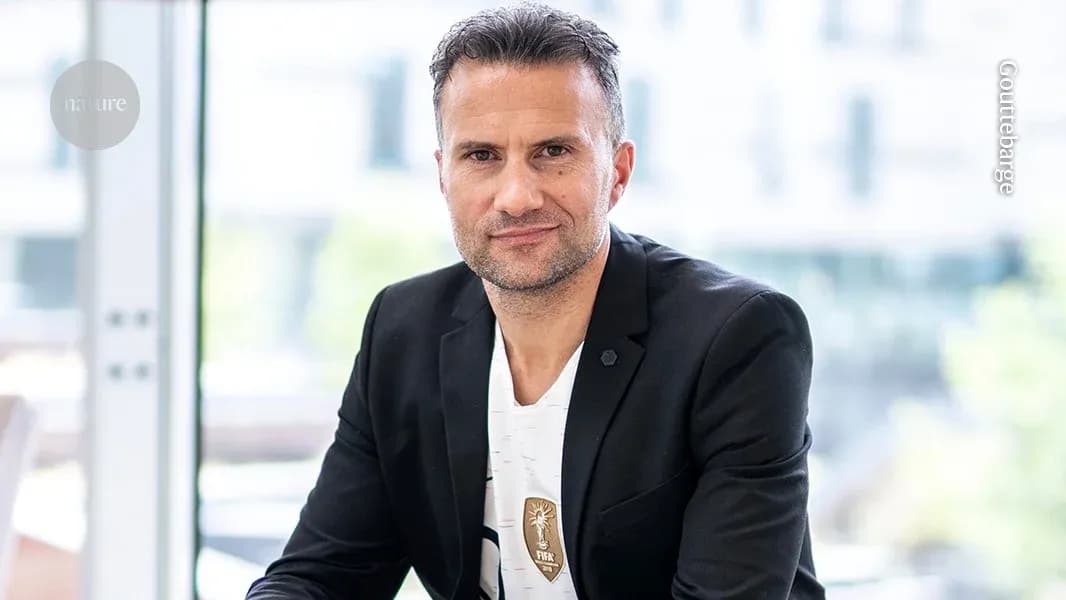
Vincent Gouttebarge knows what it feels like when the body breaks down and the mind starts to follow.
He spent more than a decade in professional football in France and the Netherlands before retiring in 2007. The injuries stayed with him. So did the questions.
Now, instead of patrolling midfields, he dissects data. Gouttebarge serves as medical director at FIFPRO, the global players’ union, chairs the International Olympic Committee’s Mental Health Working Group, and conducts research at the University of Pretoria and Amsterdam University Medical Centre. His focus is blunt: what the modern game is doing to the people who play it.
As the 2026 men’s World Cup kicks off across the United States, Canada and Mexico, the spectacle is being sold as football’s next great frontier. Gouttebarge sees something else behind the fireworks: a tournament dropped into an already suffocating calendar, with consequences that go far beyond tired legs.
The hidden injuries you can’t scan
“Footballers are not superheroes,” he stresses in his work. That might sound obvious. In practice, the sport still behaves as if they are.
Musculoskeletal injuries are familiar territory: hamstrings, ankles, cruciate ligaments. Those problems are logged, scanned, rehabbed and discussed in press conferences. The mental scars are not.
From years of research across professional football and elite sport, Gouttebarge has seen how common symptoms of mental-health issues are in the dressing room. Not always full clinical diagnoses, but clear patterns of adverse thoughts, feelings and behaviours that players report themselves.
Diagnosing specific disorders in that environment is almost impossible. The process is too time-consuming, the access too limited. So he works with what can be measured: symptoms, trends, risk factors.
And the picture is consistent. Players face the same life stressors as anyone else — family problems, relationship breakdowns, financial pressure. On top of that, they carry a load unique to elite sport.
Injury stands out as a major trigger. The data points to a bidirectional relationship: poor mental health can predispose an athlete to musculoskeletal injury, and a serious injury, with months away from training and competition, often becomes the single most significant adverse event in a career. Unexpected poor performances pile on more pressure, turning a bad week into something much darker.
World Cup glory, World Cup cost
Being picked for a World Cup squad is the pinnacle. For many, it is the dream that drove every decision from childhood. That high is real. So is the comedown.
What the tournament does to a player’s mental health depends on the role they end up playing. Are they starting or stuck on the bench? Is their team winning or crashing out early? The emotional swing between national hero and forgotten squad member can be brutal.
Then the circus moves on. The calendar does not wait.
Once the World Cup ends, players are expected back at their clubs almost immediately. If they are fortunate, they might get one or two weeks off. For plenty, even that short pause is unrealistic. There is effectively no buffer between one season and the next.
That relentless churn is not just a performance issue. It is a health problem.
A calendar that grinds players down
At the sharp end of the sport, players now face two or even three matches a week, stacked back-to-back, sometimes with no proper day off. Domestic leagues, domestic cups, continental competitions, national-team windows, expanded tournaments — each new event arrives with fanfare, but the same small pool of players is expected to carry the load.
Gouttebarge and FIFPRO have been raising the alarm. In 2024, alongside the World Leagues, the union called on FIFA to reschedule tournaments and build in more recovery time between major competitions. The message is simple: the current match calendar places a huge burden on players physically, physiologically, emotionally and cognitively.
And that’s before you even factor in the modern noise. Social media has erased any remaining safe space. Criticism, abuse and speculation now follow players through the season and into what used to be holidays. The phone never really goes quiet.
Stigma that still shuts players up
One of the most stubborn problems sits in the culture of the game itself.
Football, by tradition, is conservative. In many countries, talking openly about depression, anxiety or other mental-health struggles is still seen as weakness. That stigma mirrors what exists in the wider population, but in football the stakes feel amplified: selection, contracts, careers.
In Europe, Gouttebarge sees progress. Campaigns, education and prominent voices have started to chip away at old attitudes. Yet even there, the job is far from done.
Look at South America, Africa, and parts of Asia, where football holds enormous social weight. In many of those environments, admitting to mental-health problems remains taboo. Players fear that if a coach learns they have experienced depression, they will be dropped from the starting XI. That fear keeps conversations behind closed doors — or stops them happening at all.
The contrast is stark. A player with an ankle injury or a hamstring tear will talk about it openly in a press conference. A player battling anxiety often says nothing.
Changing who sits at the medical table
For Gouttebarge, tackling this problem requires pressure from both ends.
On the ground, he argues for mental-health literacy programmes and education for players and coaches. Explain what mental-health challenges look like. Explain why they belong on the same agenda as muscle tears and heart screenings. Show that seeking help is not a career-ending admission.
From the top, he wants structures to change. At national-federation level, medical committees typically include sports physicians, orthopaedic surgeons and cardiologists. Mental-health professionals are usually absent.
That gap sends a message. It says physical health is central and mental health is an optional extra. Gouttebarge believes that has to shift. If federations formally embed mental-health expertise into their medical setups, the sport starts to treat the mind with the same seriousness as the body.
There are signs that education works. In 2018, FIFPRO rolled out a programme designed to raise mental-health awareness among players. Evaluations showed that attitudes and behaviours improved after the sessions. It was not a randomized controlled trial, but it was evidence that a relatively small investment of time in mental-health literacy can produce real, measurable benefits.
Isolation as punishment
One practice particularly infuriates him: the routine isolation of unwanted players.
It is a familiar story. A new coach arrives, decides the squad is too big, and a handful of players are told to train alone or with the youth team. Their contracts remain in force, but their status inside the club vanishes overnight.
From a trade-union perspective, Gouttebarge views this as poor employment practice. From a health standpoint, he sees something even more serious.
Social support is one of the strongest protective factors for mental health. Strip a player out of the main group, cut them off from their usual working environment, and you increase their risk. In almost any other industry, systematically isolating an employee would be seen as unacceptable. In professional football, it still happens regularly, a by-product of weak leadership and short-term thinking at club level.
The World Cup spotlight
The World Cup will dazzle. Stadiums will sell out, broadcasters will celebrate record audiences, and new stars will emerge.
Behind that spectacle stands a quieter question that Gouttebarge keeps asking through his research and his work with FIFPRO and the IOC: how long can the game keep stretching its players before something breaks that cannot be fixed with a scan, an operation or a few weeks on the sidelines?
The answer will not be found in a trophy lift, but in how football chooses to protect — or neglect — the minds of the people who make its greatest show possible.



