Five Major Overreactions After USA’s World Cup Exit: Pulisic, Pochettino, and Unrealistic Expectations
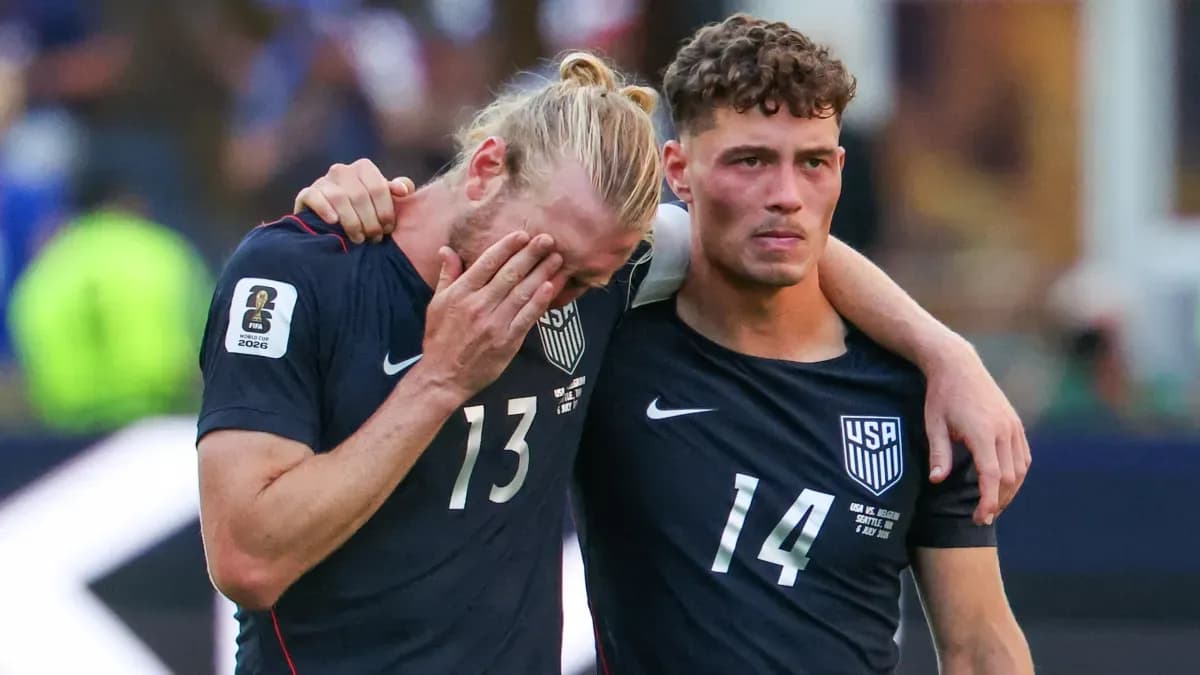
The United States men's national team’s World Cup journey ended abruptly with a 4-1 loss to Belgium, dashing hopes for the 2026 tournament held on home soil. The fallout was intense, with plenty of over-the-top responses from media and fans alike.
Experts Mike DeCourcy and Kyle Bonn weigh in on the five biggest overreactions stemming from this disappointment.
1. Expectations Were Too High for the USMNT
Mike DeCourcy argues expectations were not inflated. Historically, the USMNT has only once reached the quarterfinals, losing in the Round of 16 in 2010, 2014, and 2022. Sure, some hopeful bettors fancied the U.S. as potential champions, but serious belief in that was rare.
The team earned its respect through solid wins over Paraguay and Australia and resilience despite a red card. They appeared limitless at times. But on match day in Seattle, they lacked confidence, connection, and aggression—traits that had brought success earlier.
Could they have made it further? Absolutely. But falling short after their performance wasn’t shocking.
Kyle Bonn agrees expectations were reasonable. Fans wanted to see this talented squad prove they could compete with top-ranked teams. Belgium, without some of their biggest stars, was still a tough opponent, but the goal was to win a Round of 16 game—not the whole tournament.
The US players simply didn’t meet these fair hopes.
2. Christian Pulisic’s World Cup Performance Was a Letdown
DeCourcy notes Pulisic’s international career has faced bumps since scoring the key goal that failed to qualify the US for 2018. His 2022 World Cup moment was significant despite injury, but this time he looked lost.
He was one of many who underperformed against Belgium. Despite his accolades—Champions League winner, domestic trophies—this World Cup should have been his stage. He fell short alongside the whole team.
Bonn points out Pulisic started strong in warm-ups and early matches but faded when it mattered most. He seemed burdened by the star role, lacking the drive to lead under pressure. His reserved nature made him appear disconnected from the moment.
Pulisic wasn't worse than his teammates, but he was expected to carry the team forward and didn’t deliver.
3. Youth Soccer Development Is to Blame for Stalled Progress
DeCourcy says youth soccer’s pay-to-play model limits access but isn’t unique—hockey is expensive too, yet the U.S. recently won Olympic gold. MLS academies have improved affordability and development, with over 70% of this World Cup squad having academy backgrounds. Progress exists, but the Belgium loss exposes lingering challenges.
Bonn highlights that while pay-to-play excludes many, other issues persist. Multiple development paths create inconsistency. College soccer often arrives too late to develop elite talent. MLS academies are improving but uneven across clubs. Centralizing youth development in a country this large is tough, and much work remains to broaden access and modernize pathways.
4. The US Just Lost to a Better Belgium Team
DeCourcy finds it annoying that the loss is seen as defeat to an unbeatable powerhouse. This Belgium side lacks the legendary stars of past years, with benching of key players like De Bruyne. Their coach was recently fired elsewhere. Though solid, this team shouldn't have dominated the U.S. so thoroughly.
Bonn agrees Belgium was clearly superior but thinks the match could have been taken by the U.S. had they played their best. Belgium’s squad was not firing on all cylinders; some stars lacked past athleticism. The U.S. was capable but failed to seize the opportunity.
5. Mauricio Pochettino Was Out-Coached by Belgium's Rudi Garcia
DeCourcy acknowledges Pochettino’s efforts to reshape the USMNT culture and experiment with lineups, though his overall record is mediocre. The team evolved into a creative unit but cracked under pressure against Belgium’s attack-minded squad. Whether Pochettino can take the next step or a new coach is needed remains open.
Bonn credits Pochettino with improving the program and implementing a strong tactical style that overwhelmed weaker opponents. Against Belgium, however, Rudi Garcia exposed flaws by packing the midfield and disrupting U.S. possession. Pochettino was clearly outmaneuvered tactically in this match. With time, Pochettino might build a sturdier system, but he’s not a miracle worker.
Final Thoughts
The USMNT’s exit sparked emotional reactions, many exaggerated. Expectations were grounded, and the team’s flaws were collective rather than isolated to individuals. Youth development shows promise but needs refinement. Belgium was better but beatable. Coaching decisions worked until pressure mounted.
We think the future demands patience and smart adjustments rather than harsh blame.