
FIFA Revises World Cup Bottle Policy After Fan Outcry
FIFA has rowed back on its controversial World Cup water bottle policy after a wave of anger from supporters, confirming that fans will be allowed to bring one disposable bottle into stadiums at the 2026 tournament in the USA and Canada.
The governing body had come under heavy fire this week after updating its stadium code of conduct to ban refillable bottles, a move that critics said would leave fans exposed in extreme heat and force them to rely on stadium-priced drinks.
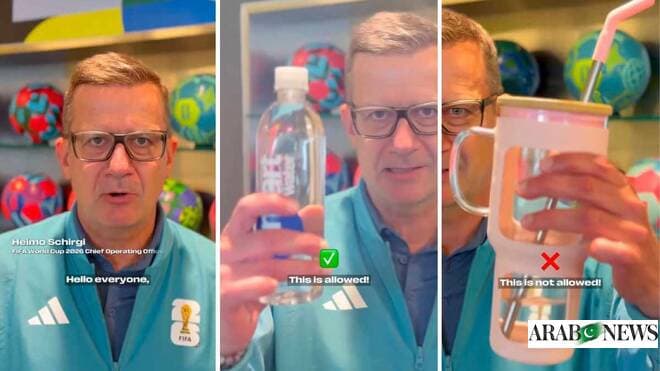
On Friday, World Cup chief operating officer Heimo Schirgi appeared in a video on FIFA’s X account to spell out the revised stance.
“All fans will be permitted to bring in one, soft, plastic 20 ounces (590ml), factory sealed disposable water bottle into any FIFA World Cup 2026 match in the USA and Canada,” Schirgi said, calling the move a clarification of the existing policy.
The climbdown comes just two days after FIFA confirmed that refillable bottles would not be allowed at matches, citing safety concerns. That decision, effectively pushing supporters toward paid bottled water inside arenas, was met with instant criticism given the expected temperatures across several host cities.
The safety argument, though, has not disappeared.
Schirgi stressed that “fans will not be permitted to bring in hard sided, reusable water bottles due to safety and security reasons,” and displayed examples of what will and will not make it through the turnstiles. FIFA has pointed out that many of the venues already prohibit outside bottles as part of their regular event rules, and the organization is extending that approach across all World Cup stadiums.
The timing of the row could hardly be worse. Meteorologists and climate researchers have been warning for months about the potential health risks facing fans in open-air venues in the United States, Canada and Mexico in 2026.
A report from the World Weather Attribution research group last month estimated that 26 of the 104 World Cup matches are likely to be played in conditions where the Wet Bulb Global Temperature (WBGT) exceeds 26 degrees. WBGT is a composite measure of heat stress on the human body, blending temperature, humidity, wind and sunlight. Once that threshold is crossed, prolonged exposure can quickly become dangerous, especially in packed stands.
Memories of last year’s FIFA Club World Cup in the United States are still fresh. Supporters complained of searing conditions then as well, and were also blocked from bringing water bottles into venues. The images of fans baking in the sun with limited options for hydration helped fuel the latest backlash.
FIFA insists it has learned from that experience. The organization says “misting stations, fans, hydration stations and cooling tents” will be set up within the “stadium footprint” to help spectators cope with the heat. Bottled water will be on sale inside at prices that, according to FIFA, “remain consistent with other events held at each stadium.”
The compromise leaves a clear line: one soft, sealed disposable bottle from outside is acceptable; the sturdy, reusable flasks many fans prefer are not. As temperatures rise and kick-off times edge closer, the debate over whether that distinction is enough to protect supporters in 2026 is only likely to intensify.



