FAI Faces Defining Call on Israel Fixtures Amid Protests
The FAI board will convene next week for what is shaping up to be one of the most sensitive decisions Irish football has faced in years: what to do about the Nations League fixtures against Israel in September and October.
This is no longer a quiet scheduling issue buried in a calendar. It has been dragged into the spotlight, quite literally, by protests on the pitch.
Protest spills onto the pitch
On Thursday night, during the Republic of Ireland’s 1-0 friendly win over Qatar, play at the Aviva Stadium was interrupted three times in the first half. Tennis balls, branded “stop the game” and wrapped in Palestinian flags, rained down from the stands.
The message was blunt. So was the disruption. Security staff cleared the pitch, players waited, and the match restarted, but the symbolism lingered far longer than the stoppages.
Within 24 hours, the FAI confirmed the issue can no longer be parked.
“A board meeting is likely to happen next week but still not confirmed,” an FAI spokesperson said. “The topic of Israel games will be discussed.”
No more hiding places. Not for the association, and not, as one senior player made clear, for the squad.
Coleman: “It should have been dealt with above us”
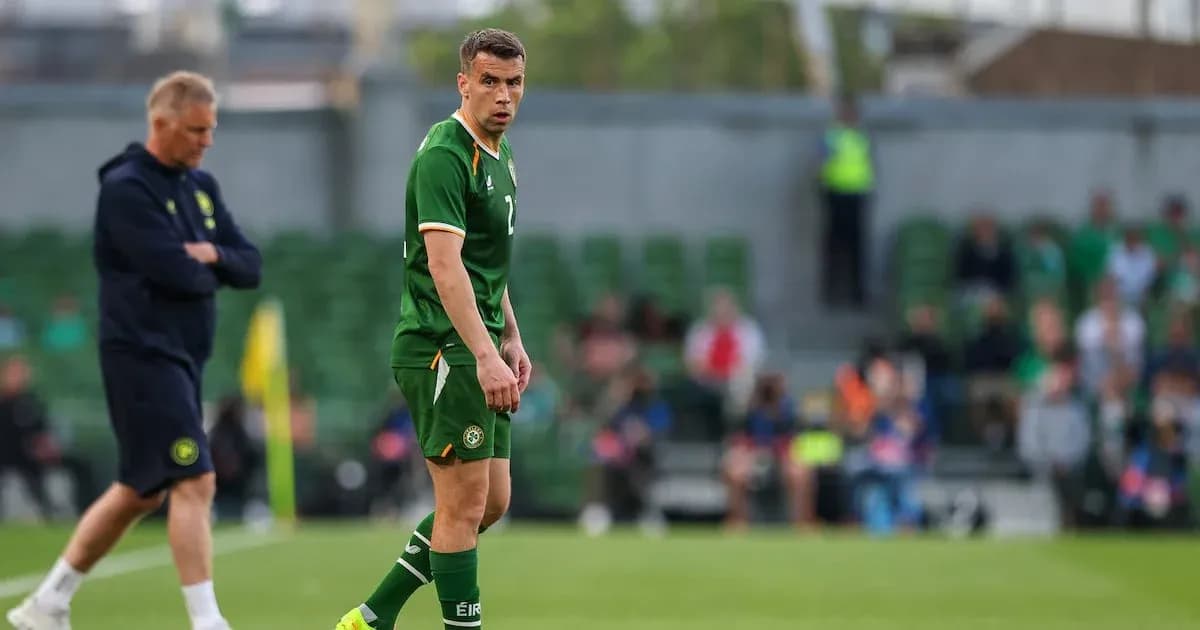
Séamus Coleman, speaking on Wednesday, had already voiced the dressing room’s unease at being pushed to the front line of a geopolitical storm.
“It should have been dealt with above us,” the Ireland captain said. “It is very uncomfortable.”
His words cut through the usual pre-match platitudes. Coleman was not calling the shots on policy, but he was calling out the vacuum. Players and coaches, he argued, should not be the ones fielding questions on whether Ireland should face Israel.
The pressure has now moved firmly upstairs, to the boardroom.
Neutral venue on the table – but no clarity yet
The FAI has not confirmed whether the directors, under independent chair Tony Keohane, will consider moving the home Nations League game scheduled for October 4th at the Aviva Stadium to a neutral venue. That possibility was reported on Friday by The Sun, but the association is not yet showing its hand.
“The agenda or invite hasn’t been sent out yet,” the spokesperson added.
So the options remain officially undefined: play as planned, move the game, or refuse to play at all. Outside the FAI’s headquarters, momentum is building behind the most drastic of those choices.
Push for a boycott gathers force
Within the FAI General Assembly, members backing a full boycott of both fixtures against Israel have already cleared the first procedural hurdle. They have secured the required support — at least 10 per cent of the GA’s 145-strong membership — to call an Emergency General Meeting.
The aim of that EGM is stark: pass a motion instructing that the matches should not go ahead.
If that motion passes and the FAI executive accepts it, Ireland will formally notify Uefa that it will not play the Nations League games against Israel, citing “both legal and moral grounds.”
The drive for the EGM is not coming from the fringes. It is led by the Professional Footballers’ Association of Ireland (PFAI), the Irish Football Supporters Partnership (IFSP), CK United, Cork City and Bohemians. Players, fans, and clubs are aligned in asking the governing body to take a stand.
A decision that reaches far beyond the fixture list
So the FAI walks into next week knowing this is about more than two dates on a fixture list. Whatever the board decides — to host, to move, or to refuse to play — will echo through Irish football, and into Uefa’s corridors.
The tennis balls have been cleared from the pitch. The question they posed has not.