Estevão's Race Against Time: Chelsea Starlet's Return to Palmeiras
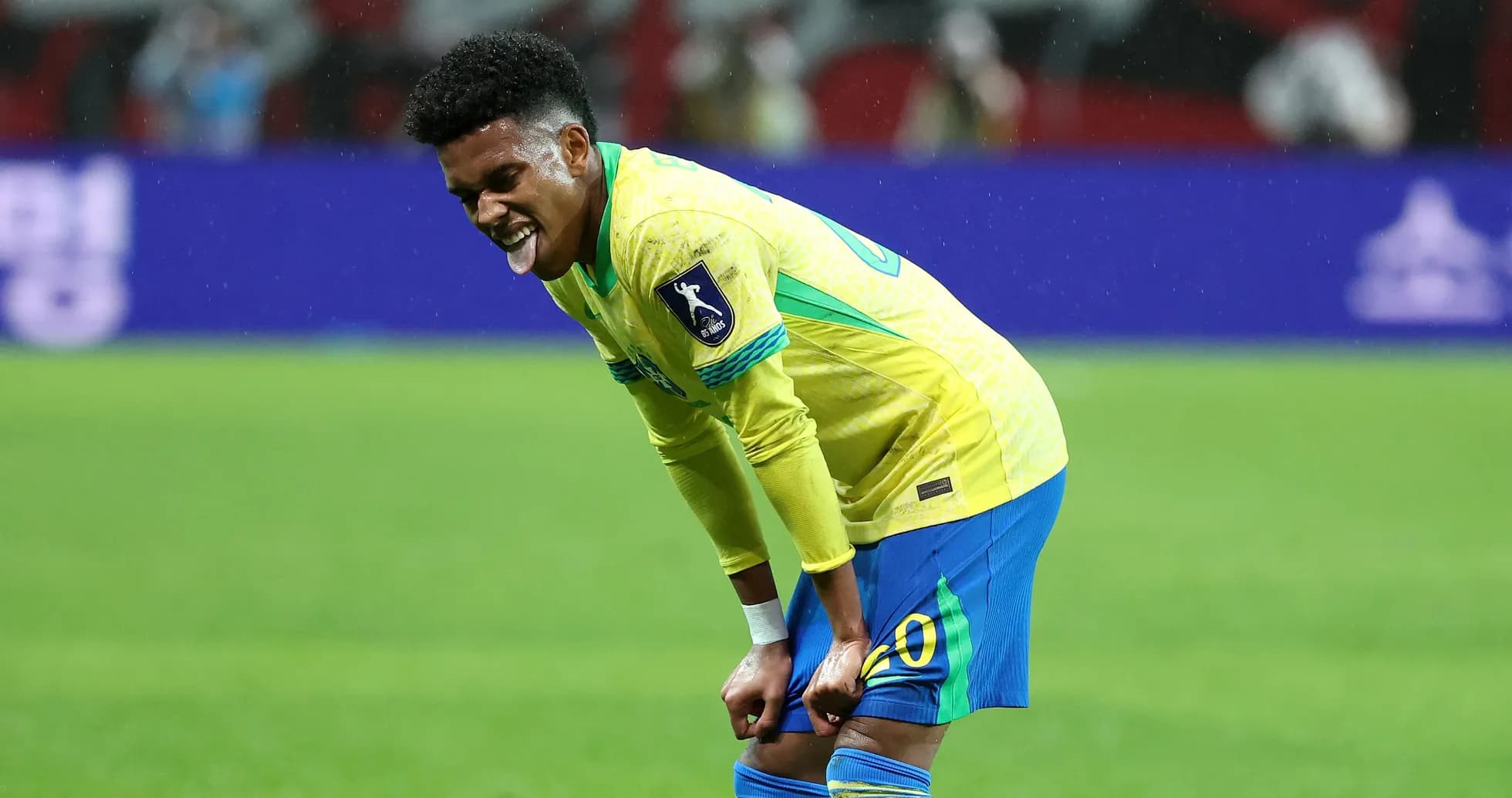
The date is burned into his season. April 18, a 1-0 defeat to Manchester United, and a sharp pull in the hamstring that stopped Estevão in full stride.
Since then, Brazil’s brightest new attacking light has been stuck on the treatment table, his momentum halted just as the World Cup looms into view.
Back to where it all began
To speed up his recovery, the teenager has gone home. According to ESPN, Estevão is spending this phase of his rehab in São Paulo, working at Palmeiras’ facilities, the club where he first announced himself as one of football’s next big things.
It is a familiar environment, familiar faces, familiar pitches. That matters to a 17-year-old trying to rebuild confidence in a damaged muscle. But this is no nostalgic return or loose, club-controlled arrangement.
Chelsea still call every shot.
The Premier League side have dispatched a specialist member of their medical staff to Brazil to oversee the entire process. Every drill, every sprint, every scan runs through Chelsea’s protocols. Palmeiras provide the setting; the London club provide the plan.
The aim is clear: get him back on the pitch quickly, but not recklessly.
Cruel timing for Brazil’s new focal point
The timing could hardly be worse. Under Carlo Ancelotti, Estevão has not just broken into the Brazil side; he has become a key part of the Selecão’s attack.
Since his senior debut in September 2024, he has scored five goals in 11 appearances. Not cameo numbers. Match-winning numbers. The kind of cold, clinical finishing Brazil have been desperate to restore to their forward line.
Before the injury, his place in the squad for this summer’s World Cup in North America was essentially a formality. Ancelotti has repeatedly highlighted the winger’s impact, his directness, his eye for goal. Estevão looked like a lock not just for the plane, but for the starting XI.
Now he is “running against time to be at the World Cup.”
Brazil open their campaign against Morocco on June 13. The window is shrinking. A hamstring tear does not care about tournament schedules, no matter how much a teenager dreams of the world stage.
Group C awaits – with or without him
Brazil have been drawn in Group C, alongside Morocco, Scotland and Haiti. On paper, it is a group they should control. In reality, tournaments rarely follow the script, and Ancelotti would rather face those early challenges with his sharpest weapon available.
Estevão was expected to give Brazil a different dimension in those group matches and beyond: a wide player who scores like a centre-forward, who attacks full-backs with no hesitation and finishes with a composure beyond his years.
If he does not make it, Brazil still have depth. But they lose the element of surprise that his rapid rise has brought, the sense that something can happen every time he gets the ball.
Chelsea feel the loss too
The injury has hurt Chelsea almost as much as Brazil.
Since his move from Palmeiras to Stamford Bridge last summer, Estevão has delivered the kind of debut season that justifies a heavy transfer outlay and a fierce battle with Europe’s elite for his signature. Eight goals in 36 appearances across all competitions have underlined both his talent and his adaptability to English football’s intensity.
In a Chelsea side that has lurched between promise and inconsistency, he has often been the spark. His absence in recent weeks has exposed just how quickly he became central to their attacking plans.
The club’s medical department is now working hand in glove with the Brazilian staff to protect his long-term future. If that means missing a World Cup at 17, they will accept it. A rushed return that risks recurring damage is not on the table.
A meteoric rise meets its first real test
Every fast rise hits a wall at some point. For Estevão, this hamstring tear is the first major obstacle in a career that has so far felt like a straight vertical climb.
From Palmeiras prodigy to Chelsea standout. From international debutant to Ancelotti favourite in a matter of months. From promise to production, with five goals in 11 caps for Brazil.
Now comes the hard part: patience.
The next few weeks at the Palmeiras Academy will be decisive. Each step up in intensity, each response from the muscle, will shape not just his chances of boarding that flight to North America, but the way club and country manage him in the years to come.
For now, the picture is simple. The World Cup is coming. Brazil’s first game is set. The group is drawn.
And somewhere in São Paulo, one teenager is sprinting, stretching, and hoping the clock will bend in his favour.