
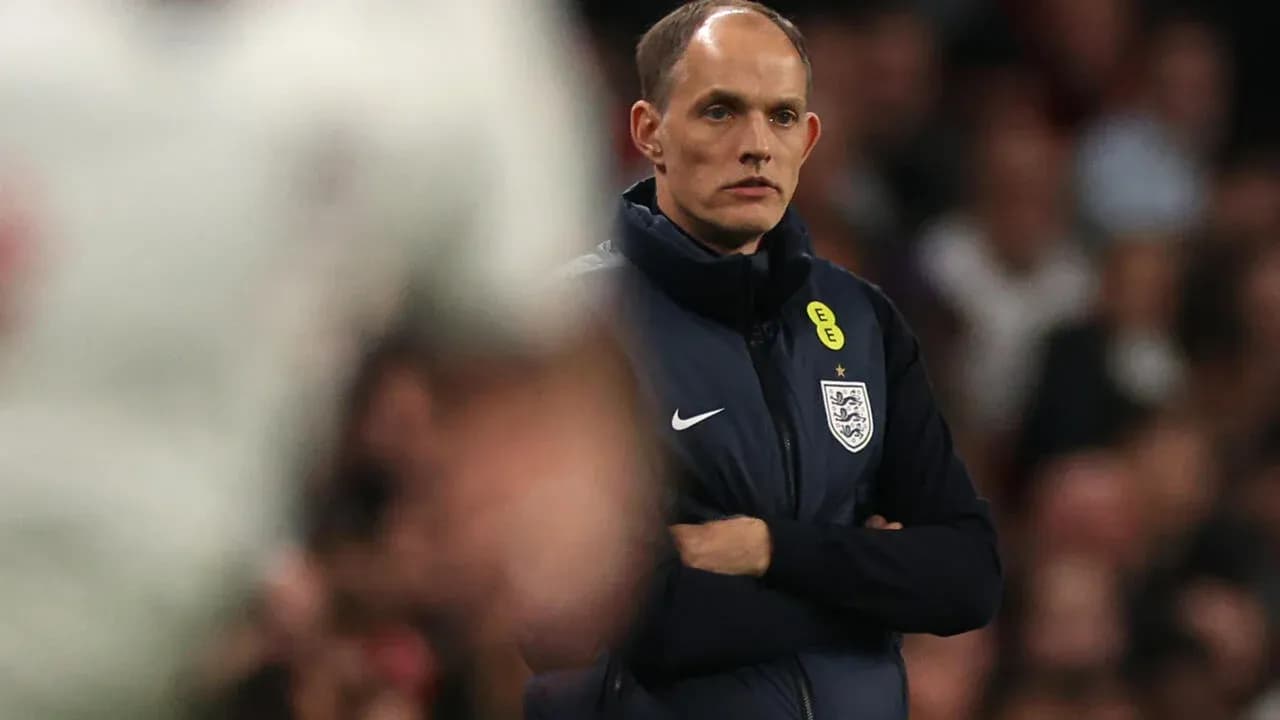
England's World Cup Woes: Doubts After Japan Loss
England leave Wembley with more doubts than answers, their World Cup dress rehearsal spoiled by a sharp, disciplined Japan and the uncomfortable realisation that, without Harry Kane, the script looks very different.
A fractured camp, a flat performance
Thomas Tuchel tried something bold for this international window. A 35-man squad. Two separate training camps. A deliberate attempt to stress-test his options before naming his World Cup group.
Instead, the whole exercise ended up exposing just how thin some of those options are.
The 1-1 draw with Uruguay on Friday, largely entrusted to a second-string side, failed to produce any irresistible contenders for late inclusion. This Japan game was supposed to be different: stronger team, stronger statement. But a wave of withdrawals shredded the plan.
Declan Rice and Bukayo Saka dropped out. John Stones followed. Kane watched from the stands, managing a minor injury. Jude Bellingham stayed on the bench. The spine Tuchel wanted simply wasn’t there.
What remained dominated the ball against Japan but did little with it. England passed, probed, recycled. The tempo rarely rose. The final third lacked bite, imagination, and any real sense of inevitability.
Japan, by contrast, needed only one clean incision.
Kaoru Mitoma’s first-half finish, precise and ruthless, settled the game and delivered Japan a landmark first win over England. It also punctured any illusion that this was merely a low-stakes friendly. For Tuchel, the warning lights were flashing.
Tuchel’s reality check
Tuchel did not hide behind the scoreline, but he did point to the calendar.
He spoke about players “heavily invested” in club and European football, about the grind of what he called the “physically toughest league” in the world. He reminded everyone that England had just faced two well-drilled, top-20 sides at full strength, while he was counting “seven, eight injuries who had to leave camp”.
“It’s not an excuse,” he insisted. “It’s just an explanation why things are not perfectly smooth and maybe perfectly on the highest level that we expect.”
That distinction matters. Tuchel knows expectations around this England team are enormous. Euro 2024 runners-up, packed with Champions League regulars, one of the bookmakers’ favourites to lift a first World Cup since 1966. On paper, they look built to go the distance.
On grass, eight weeks out from the tournament, there are still holes.
Kane and the void behind him
The biggest of them wears No. 9.
Harry Kane’s numbers this season for Bayern Munich are absurd: 48 goals in 40 matches. But the real story is what happens when he is not there.
Tuchel tried Dominic Solanke and Dominic Calvert-Lewin across the two friendlies. Both worked, both offered moments, neither came close to replicating Kane’s all-court presence – the link play, the gravity he exerts on a defence, the inevitability he brings to any half-chance.
“Bayern Munich in the absence of Harry Kane has not the same threat,” Tuchel said. “No team in the world has the same threat. It’s just normal.”
Normal or not, it leaves England exposed. Lose Kane in June and the entire attacking blueprint has to be rewritten on the fly.
Midfield auditions and a quiet winner
Curiously, one of the players who emerged from this window with his stock higher did not kick a ball.
Jude Bellingham watched both matches, but his absence only underlined how much England rely on his drive and invention between the lines. The debate over his rival for the No. 10 role briefly flickered into life, yet never truly caught fire.
Aston Villa’s Morgan Rogers showed touches of class against Japan – neat turns, the occasional dart into space – but they came in flashes, not waves. Phil Foden and Cole Palmer, both trusted match-winners at club level, could not stamp themselves on either game. Over two outings, neither made an unanswerable case to be a locked-in starter in the United States.
Deeper in midfield, the picture was a little clearer. Rice’s absence was obvious, but Elliot Anderson did enough to look like a viable partner when the Arsenal man returns. He used the ball sensibly, covered ground, and did not look overawed. In a camp short on emphatic breakthroughs, that counts as progress.
Defensive jitters and a left-back riddle
At the back, the auditions were far less reassuring.
Marc Guehi and Ezri Konsa both endured anxious spells against Japan. Positioning wobbled, passing lanes closed too slowly, and England’s high line never felt entirely secure. Yet, as things stand, they could both start against Croatia in Dallas on June 17.
The left-back situation remains a puzzle. No one has nailed it down, and with every game that passes, the sense grows that Tuchel may have to compromise there – either tactically or by shuffling a centre-back wide – once the tournament begins.
These are not minor details. At World Cups, weak links get found quickly.
Clarity, fear, and the countdown
For all the frustration, Tuchel struck a bullish tone about what he had gained.
He insisted this camp had given him “more clarity” on his squad, even if the results were underwhelming. The real anxiety, he admitted, will now come from watching club football over the next two months.
“It will be scary to watch TV on the weekend because from now on every muscle injury can mean that a player misses out,” he said.
That is the tightrope now. Two months to “digest” this window, as Tuchel put it. Two months to sift through the learnings, finalise the squad, and hope the medical reports stay clean.
“This camp will not define us,” he said. It cannot. Not if England are serious about “pursuing our dream from June”.
The dream remains intact. But so do the questions – about Kane’s understudies, about the balance behind Bellingham, about a defence still searching for authority.
The next time this team gathers, there will be no room for experiments. Only decisions.



