
Eddie Howe Faces Pressure After Tyne-Wear Derby Defeat
The boos came from the Gallowgate End, from the same steep bank of Tyneside where public executions once drew a crowd. Eddie Howe stood beneath it all, jaw locked, applauding the people who were turning on him. A manager cut open by a week of humiliation, staring at a season that is falling apart in his hands.
Another Newcastle boss dragged to the brink by Sunderland. Another Tyne-Wear derby twisting a knife that has finished others before him.
The next days, maybe weeks, will decide whether Howe is allowed to repair this or whether Newcastle’s Saudi ownership opts for a clean, cold break. Right now, he is fighting on several fronts: a squad that looks exhausted after passing the 50-game mark, a defence that cannot hold a lead, a team that crumbles when it should close out. Twenty-two points squandered from winning positions – the worst record in the league. That is not bad luck. That is fragility.
Alan Shearer did not sugar-coat it. “Pathetic, weak and lazy,” he called them. Few on Tyneside argued.
Howe, though, stood his ground. He insisted he wants to stay and rebuild.
“You never want to go through that (booing),” he said. “As the leader, I front up and absorb it and act like I normally would. I understand and accept the criticism.
“I am fully committed to the job. I am disappointed with my delivery this week. I mean, I always absorb the blame myself. I will protect my players to my last breath.
“It is very painful, most of all for our supporters. I think about them now. I have little to use as an excuse. We are desperately disappointed.”
Derby returns, chaos follows
The Tyne-Wear derby had not been staged at St James’ Park since 2016. It came back with all the subtlety of a brick through a window.
There were fights in the streets before kick-off, heads split, flares smoking, the Sunderland team coach arriving with its windscreen smashed. Pubs opened early, tempers opened earlier. For a fixture that once saw a Newcastle supporter punch a police horse in fury, the edge has never really left.
Inside, the tone was set by a mocking home banner: “Welcome to the region’s capital, you’ve been gone so long!” The build-up had been a week-long exchange of barbs. Sunderland fanzine A Love Supreme kept it simple: “I do not like Newcastle United Football Club.” The Roker Report reached for Sun Tzu and the Art of War, talking about “calmness on the banks of the Wear and anxiety all over Tyneside…”
Newcastle’s True Faith fired back, branding Sunderland a “tinpot lower league outfit,” a “deluded, bitter, small-club-mentality” side “rotting in irrelevance” and “statistically” lucky not to be in the bottom three. The numbers, they sneered, lied.
But it is points that count, not XG. And nerve. Sunderland had both.
On the pitch, Sunderland cracked first. Then Newcastle broke.
A derby that cuts deep
The game itself matched the mood: tense, scrappy, unforgiving. Sunderland, patched up and makeshift, blinked on nine minutes. With five key players missing and Luke O’Nien pressed into service at centre-back, they tried to play their way out of trouble in their own box. They paid for it.
O’Nien over-complicated a simple clearance, collected the ball, then sliced a pass straight into danger. Nick Woltemade pounced, picked it off and slid Anthony Gordon through on goal. Gordon shimmied left, opened his body and drilled Newcastle in front.
St James’ Park waited for the flood. It never came.
Sunderland steadied. They blocked, pressed, fouled when they had to. Regis Le Bris, clever and calm on the touchline, squeezed the middle of the pitch and refused to let Newcastle play through the gears. The home crowd, roaring at first, began to fidget.
By the 56th minute, their anxiety had company. Sunderland were level, and Newcastle’s defensive frailty was laid bare again.
Aaron Ramsdale flapped at a corner he should have claimed. The ball dropped, Trai Hume hooked it back across goal, Brian Brobbey bullied his way into the scramble and Chemsdine Talbi smashed in from eight yards. Simple, direct, ruthless.
The pressure finally told
Newcastle thought they had escaped when Malick Thiaw rose to head home a corner, only for Jacob Murphy to be pulled up for a foul on goalkeeper Melker Ellborg. The brief roar died in an instant. The tension returned, thicker than before.
Sunderland grew from it. Le Bris’ side, already buoyed by a 1-0 win at the Stadium of Light in December, sensed history repeating itself. They have now gone 11 league derbies unbeaten. Newcastle, staggeringly, have not beaten Sunderland in a league derby at St James’ Park since that 5-1 thrashing in October 2010 – a day when the Black Cats were missing half a team.
This fixture has always had the power to warp a manager’s fate. Ruud Gullit, Alan Pardew, Steve McClaren – all felt the weight of it. Howe knows the history. “Some games have bigger consequences than others,” he admitted.
This one could yet define him.
Controversy in the stands
As if the occasion needed another flashpoint, the match was halted when an allegation of racist abuse from the home crowd towards Lutsharel Geertruida was reported to officials. The Premier League moved quickly, launching an investigation and promising support for Geertruida and both clubs.
Howe was unequivocal. “We don’t condone racism of any form and the club will investigate,” he said.
Le Bris spoke to Geertruida after full-time. “He is ok but it is not acceptable. It is important to report and manage the situation properly,” he said. For all the fury and theatre of a derby, that line in the sand remains non-negotiable.
On the streets outside, Le Bris tried to keep perspective. “The fight was only on the pitch. We have to stay respectful. They have a good crowd, we have fantastic fans, the fight is only on the pitch.”
On this evidence, his players listened.
Brobbey delivers the killer blow
Brobbey had been a menace all afternoon. He ran channels, barged centre-backs, turned every high ball into a duel. Newcastle, legs heavy and minds frazzled, began to sag.
Then, in the 90th minute, came the moment that will live long on Wearside and linger painfully on Tyneside.
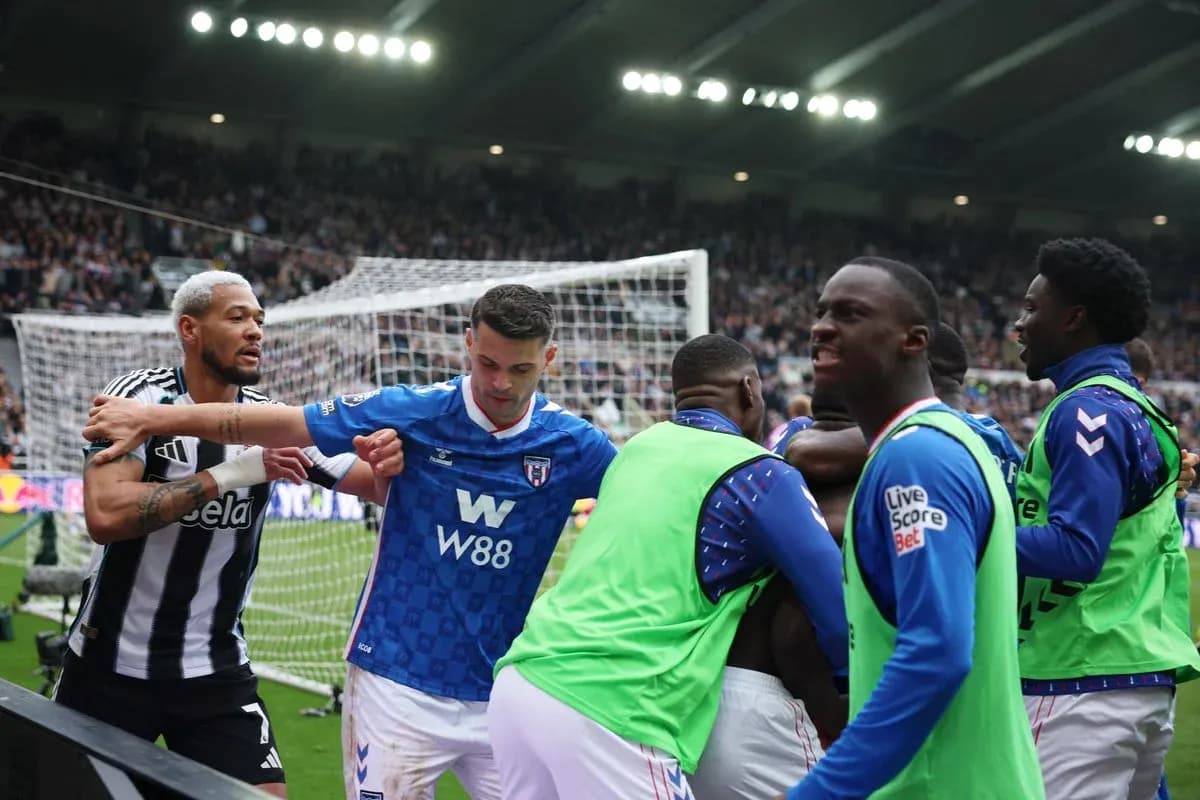
Black and white shirts fell away, bodies crumpling under the weight of one more Sunderland surge. Brobbey muscled his way through the chaos, stayed upright, and rammed in the winner in front of the Leazes End. High above him, the away end erupted, red and white limbs tumbling over seats, a decade of frustration spilling out in one wild celebration.
Le Bris, understated as ever, allowed himself a smile. “A big achievement. Two derbies won in the same year means a lot,” he said. That is an understatement. For Sunderland, this was not just a win; it was a statement on enemy soil, a tactical masterclass delivered with grit and clarity.
For Newcastle, it was another wound in a season that has veered from exhilarating to excruciating. The 7-2 collapse to Barcelona in midweek had already shredded confidence. This was supposed to be the response, the cleansing roar of a derby win to reset the mood and keep the Champions League dream flickering.
Instead, Sunderland snuffed that out too. Newcastle will not be dining at Europe’s top table next season. The numbers, the form, the table – all of it says the same thing.
As Howe walked off, still clapping, still trying to carry the weight for his players, the question hung over St James’ Park like the drizzle. Is this just a brutal chapter in his project, or the beginning of the end under owners who did not build their empire on patience?



