Dinamo Zagreb Defeats FCSB 4–1: Beljo Shines with Brace
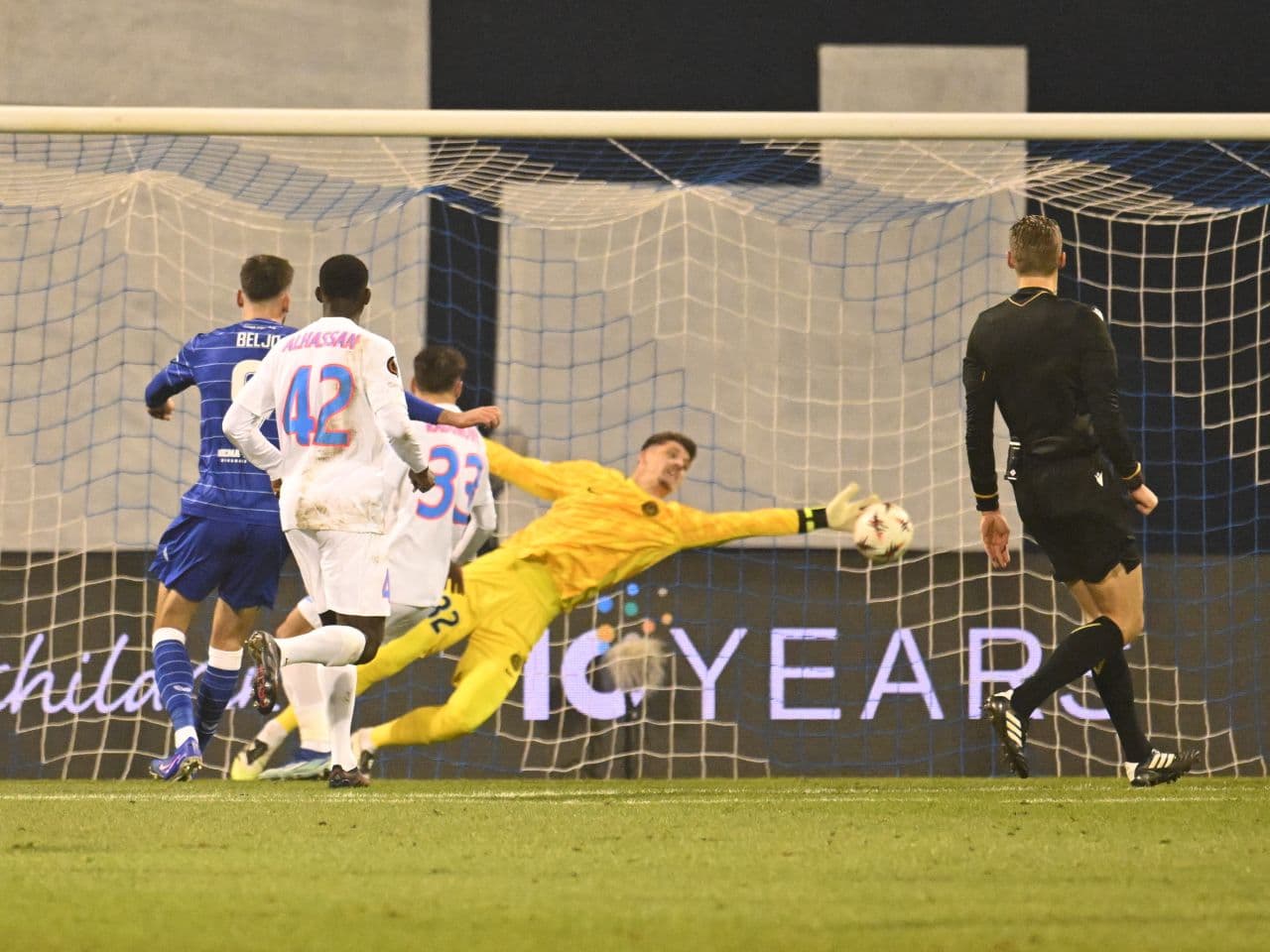
At Stadion Maksimir in Zagreb, Dinamo Zagreb produced a ruthless 4–1 win over FCSB in UEFA Europa League League Stage – Round 7, a result that lifts Mario Kovačević’s side firmly into the play-off positions. Early goals from Monsef Bakrar and Dion Drena Beljo set the tone, and although Daniel Bîrligea briefly dragged the Romanians back into the contest before the break, Beljo’s second-half strike and a late Sandro Kulenović finish sealed a comprehensive home victory. Dinamo climb to 10 points and a positive trajectory in the table, while FCSB remain stuck in the lower reaches with their fifth defeat in seven.
First-half analysis
Dinamo flew out of the blocks. On 7', M. Bakrar opened the scoring for the hosts, finishing after involvement from Niko Galešić to give Kovačević’s 4-1-4-1 the perfect start. Just four minutes later, on 11', the pressure told again: D. Beljo made it 2–0, capitalising on service from Arber Hoxha as Dinamo’s advanced midfield line overwhelmed FCSB’s double pivot.
FCSB’s frustration surfaced on 24' when Daniel Bîrligea was booked for a foul, but the striker responded in the best possible way. On 42', Bîrligea struck to pull it back to 2–1, finishing after a contribution from Juri Cisotti and giving Ilias Charalampous’ side a lifeline just before the interval. Dinamo’s own aggression was noted on 28', with Dejan Ljubičić cautioned for a foul, but the Croatian side reached half-time ahead, having made their early attacking flurries count.
Second half & tactical shifts
Charalampous reacted immediately at the restart with a triple change on 46'. Centre-back Joyskim Dawa made way for defender Valentin Crețu, suggesting a reshuffle in the back line. In midfield, Mihai Lixandru was replaced by the more attack-minded Octavian Popescu, while David Miculescu went off for forward Dennis Politic. The pattern pointed clearly towards a more adventurous 4-2-3-1, with extra creativity and direct threat behind Bîrligea.
Kovačević responded on 60', freshening his own midfield and attack. Dejan Ljubičić departed for Luka Stojković, keeping energy in the central band, while early scorer M. Bakrar was withdrawn for Fran Topić, a like-for-like attacking switch aimed at maintaining intensity rather than simply protecting the lead.
FCSB’s main threat, Bîrligea, left the pitch on 66', replaced by Denis Alibec, a move that preserved their attacking shape but changed the profile of the central striker. Yet it was Dinamo who struck next. On 71', D. Beljo restored the two-goal cushion at 3–1, finishing after involvement from Josip Mišić and effectively killing FCSB’s momentum.
Dinamo then managed the game with further rotation. On 72', Miha Zajc made way for Marko Soldo, adding fresh legs in midfield. FCSB’s final roll of the dice came on 77', when Juri Cisotti was replaced by Mamadou Thiam, another forward introduction in search of a late comeback.
Tensions simmered in the closing stages. On 84', Bruno Goda and Baba Alhassan were both booked for argument, reflecting the growing frustration in the FCSB ranks as the match slipped away. In the final minute of normal time, Kovačević made a double attacking switch that underlined Dinamo’s depth: two-goal hero D. Beljo was replaced by Sandro Kulenović, and creator A. Hoxha departed for Cardoso Varela on 89'.
The substitutes combined decisively. On 90', S. Kulenović added Dinamo’s fourth, finishing after involvement from centre-back Sergi Domínguez to cap a clinical performance and underline the gulf on the scoreboard.
Statistical deep dive
The numbers reveal a match where FCSB controlled 53% of the ball and completed more passes (465 to Dinamo’s 419), with a slightly higher pass accuracy of 81% against 78%. Yet Dinamo used their 47% share far more aggressively, turning transitions and territory into sustained pressure.
Dinamo attempted more than double the total shots of FCSB (16 to 7) and were markedly sharper in the penalty area, with 10 efforts inside the box compared to FCSB’s 3. The hosts hit the target 7 times versus the visitors’ 3. Expected goals underline the story: Dinamo’s xG of 2.35 reflects consistent chance creation, while FCSB’s meagre 0.24 shows how rarely they carved out high-quality opportunities. Both goalkeepers posted the same “goals_prevented” figure (-2), underlining that defensive structures and finishing, rather than shot-stopping heroics, shaped the scoreline.
In terms of discipline, Dinamo committed 17 fouls to FCSB’s 11 and collected two yellow cards, matched by the visitors’ two. The card timings — a first-half foul apiece and late bookings for argument — mirror a contest that was competitive early and increasingly fraught as FCSB’s hopes faded.
Standings & implications
The win lifts Dinamo Zagreb to 10 points from seven matches, with a goal difference now trimmed to -2 (12 scored, 14 conceded). Ranked 20th and holding a status of “Promotion – Europa League (Play Offs: 1/16-finals)”, they consolidate their place in the knockout picture and improve a recent form line that previously read WLLLD. FCSB, by contrast, remain 29th on 6 points with a -7 goal difference (8 for, 15 against) and a form sequence of LWLLL. With three away defeats in four and no draw in the campaign, their Europa League journey stalls well short of the play-off conversation.