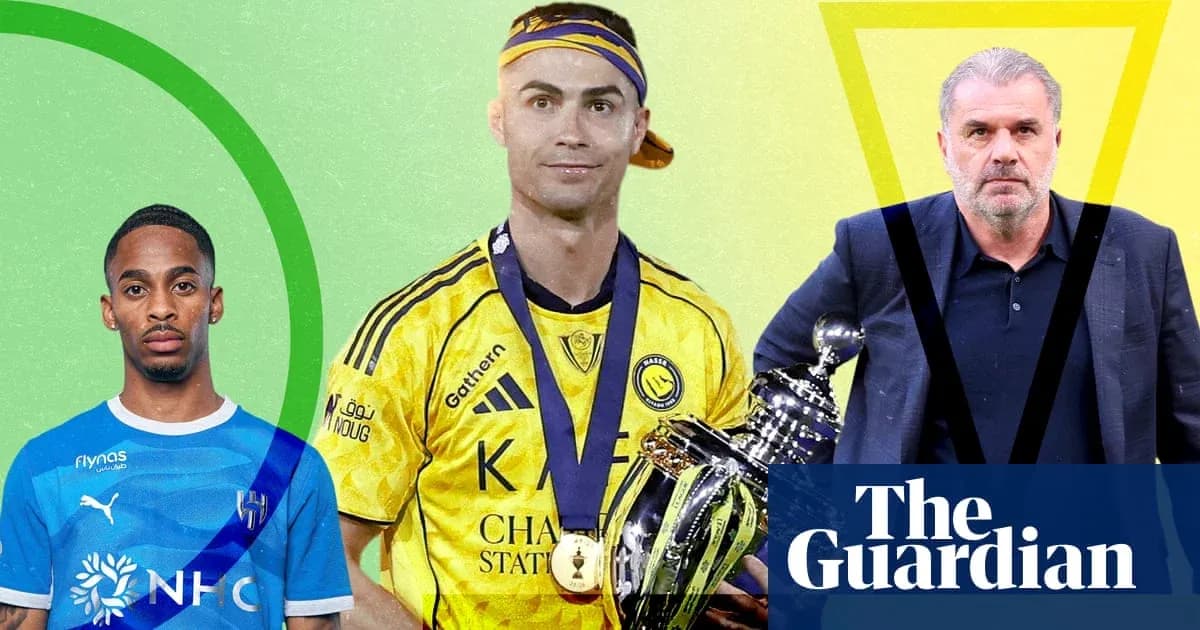
Cristiano Ronaldo Chases 1,000 Goals in Saudi Pro League
Cristiano Ronaldo strides into another Saudi Pro League season chasing a number that barely seems real. No Mohamed Salah, no new megastar unveiling, but a 41-year-old forward sitting 24 goals short of 1,000 in his career and already on 102 in 107 league games for Al-Nassr. If his body holds and the service keeps coming, that landmark is not a fantasy. It is a live storyline.
What it means for the league, though, is a different question.
From shopping spree to soul-searching
This is year four of the Saudi splurge. The summer of 2023 saw about $957m (£710m) thrown at the market, a figure that bought wall-to-wall global coverage, a raft of international TV deals and a sea of yellow CR7 shirts from Riyadh to Rio. The message back then was simple: Saudi Arabia had arrived.
Now the mood is more nuanced. The money is still there, but the brief has shifted. Less noise, more substance. Less about the billboard names, more about whether all this spending can drag the standard of Saudi football upwards, not just inflate club brands.
The national team’s early World Cup exit sharpened that debate. On paper, the results were not disastrous – draws against Uruguay and an eye-catching Cape Verde, plus a single defeat to eventual champions Spain – but the fallout went beyond scorelines. The key question cut to the heart of the project: has pouring money into the league actually made Saudi players better?
So far, the answer is uncomfortable.
The Pro League is not yet a pipeline to Europe. It barely supplies players abroad at all. Of the 26-man World Cup squad, only right-back Saud Abdulhamid, now at Lens, plays outside the country. That statistic alarms decision-makers. It also exposes a structural issue: local players, especially in creative roles, up front and in goal, often watch from the bench while imported stars dominate the minutes.
Saudi clubs have clearly improved as teams. Their results in Asian competitions show that. The national side has not felt the same lift.
Salah stays away, strategy moves on
That is the backdrop to a summer without Salah. For months, many inside and outside the region expected the Egyptian to swap Europe for the Red Sea, not the Black Sea and Trabzonspor. The pull of the biggest Arab football star of all time is obvious. Yet the Saudi push for him noticeably cooled.
Part of that is age. At 34, Salah no longer fits the preferred model. The recruitment strategy is tilting younger, towards players who can arrive in their prime and, crucially, leave for a fee. Icons are nice. Assets are better.
Which brings the spotlight to Crysencio Summerville.
Summerville, Hilal and a title that cannot slip again
The Dutch winger is the headline signing of the window so far, joining Al-Hilal for around €80m (£68m). At 24, he ticks every box the league now values: pace, upside, resale potential. If his spell in Riyadh goes to plan, Hilal will enjoy his peak years and still be able to send him back to Europe for serious money.
His decision has drawn the predictable accusations of choosing cash over ambition. Those critics have not paid much attention to Hilal’s history. Ambition is baked into the club. Nineteen league titles. Four Asian crowns. Last season they went unbeaten in the league and still finished second. That is not a story of comfort; it is a warning. At Hilal, perfection is the minimum.
The club’s sale by the Public Investment Fund in April has not stripped away their star power. Karim Benzema, Rúben Neves, Theo Hernández, Yassine Bounou, Kalidou Koulibaly and others remain. The pressure now sits squarely on Simone Inzaghi. The Italian must wrench the title back from the yellow half of Riyadh. Anything less will feel like failure.
Ronaldo’s kingdom, Postecoglou’s problem
That yellow half belongs to Al-Nassr and to Ronaldo, who hoisted the trophy in May. Their triumph was quickly followed by a twist: Jorge Jesus left to take the Portugal job. In his place comes Ange Postecoglou, the former Tottenham Hotspur manager, charged with keeping Nassr on top while managing a squad that glitters but is not limitless.
Postecoglou has Sadio Mané, Kingsley Coman and João Félix to work with, a front line most European managers would happily claim. But financial constraints have slowed new arrivals. The squad is still powerful, still loaded with experience and quality, but not endlessly refreshed.
For Nassr’s hierarchy, the domestic title is now the baseline. The missing piece is continental. A first Asian Champions League title would not just decorate Ronaldo’s late career; it would validate the project in a way no marketing campaign can.
Al-Ahli rocked, Al-Ittihad reset, a new “big five”
The Asian crown currently rests with Al-Ahli. Back-to-back continental titles, sealed in April, set them up for a season focused on home soil and a push for only their second SPL championship since 1984. The plan looked settled. Then the coach walked.
Days before the league’s start, Matthias Jaissle left for Newcastle United. Same PIF ownership, very different reaction. In Jeddah, the move landed badly. Supporters expected stability after continental success; instead, they watched their 36-year-old tactician depart for Tyneside.
His replacement, Marino Pusic, arrives with a solid CV and a recent stint as Arne Slot’s assistant, but without much fanfare. It feels like a pragmatic choice, not a statement one.
Jaissle’s exit also rippled across the city. Al-Ittihad, who endured a difficult campaign last season, had just taken their own gamble: hiring 38-year-old German coach Jens Wissing, another former defender whose playing days were cut short by injury and who, like Jaissle, has RB Salzburg on his résumé. For Ittihad, the job is stark. They must drag themselves back into the title conversation or risk being left behind in a league that no longer waits for sleeping giants.
Then there is Al-Qadsiah, the quietest of the contenders but no less ambitious. Backed by Aramco, they finished fourth last term. Brendan Rodgers’ brief is clear: improve on that and deliver a first trophy since 1984. Do that, and Qadsiah’s status changes overnight.
Put them all together and the picture sharpens. Saudi Arabia now has a genuine “big five”: Al-Hilal, Al-Nassr, Al-Ahli, Al-Ittihad and Al-Qadsiah. The arms race at the top is real.
The real test, though, may not be who lifts the trophy in May. It may be whether these clubs, armed with money and global attention, can resist the urge to chase the next fading superstar and instead trust their own. More minutes for Saudi players. More responsibility in key positions. More Abdulhamids heading to Europe, not fewer.
Ronaldo’s march towards 1,000 goals will dominate the headlines. The real story of this season might be whether the league finally starts producing the players who do not need a private jet to be seen.