Chelsea's New Era: Clearlake Takes Full Control After Boehly's Exit
Todd Boehly’s Chelsea era ended the way it had drifted on for months: quietly, from the sidelines, with the real power already elsewhere.
Four years after fronting the £2.5bn BlueCo takeover from Roman Abramovich, the American and his fellow investor Mark Walter have been bought out. They leave as diminished figures, their influence long since stripped away. The immediate reality at Stamford Bridge? Almost nothing changes.
Clearlake’s club now – and it has been for a while
Clearlake Capital, the US private equity firm founded by Behdad Eghbali and José E Feliciano, has been running Chelsea in all but name for some time. Boehly, Walter and Swiss billionaire Hansjörg Wyss held equal portions of a 38.5% stake, but their relevance faded quickly after 2022.
Eghbali has been calling the shots well before Wednesday night’s confirmation that Clearlake now has full control. The split has been brewing for two years, ever since tensions inside the ownership group spilled into public view.
Boehly’s relationship with Clearlake frayed. He wanted clarity, even floated the idea of a full takeover, with people close to him insisting he had investors lined up. Clearlake rolled its eyes and looked at a different solution: buying him out, or pushing him upstairs into a largely ceremonial role by removing him as chair and tightening governance.
No great affection on either side. No sudden breakthrough either. A truce followed, Clearlake stayed on its course and, gradually, supporters turned their anger away from the easy target in the directors’ box and towards the firm actually running the club.
Eghbali became the lightning rod. Feliciano, more discreet and recently a new investor in the San Diego Padres, stayed in the background. Eghbali did not. He was seen regularly and, as Chelsea stumbled through the post-Abramovich years, he heard his name in abusive chants from the stands.
From frontman to cautionary tale
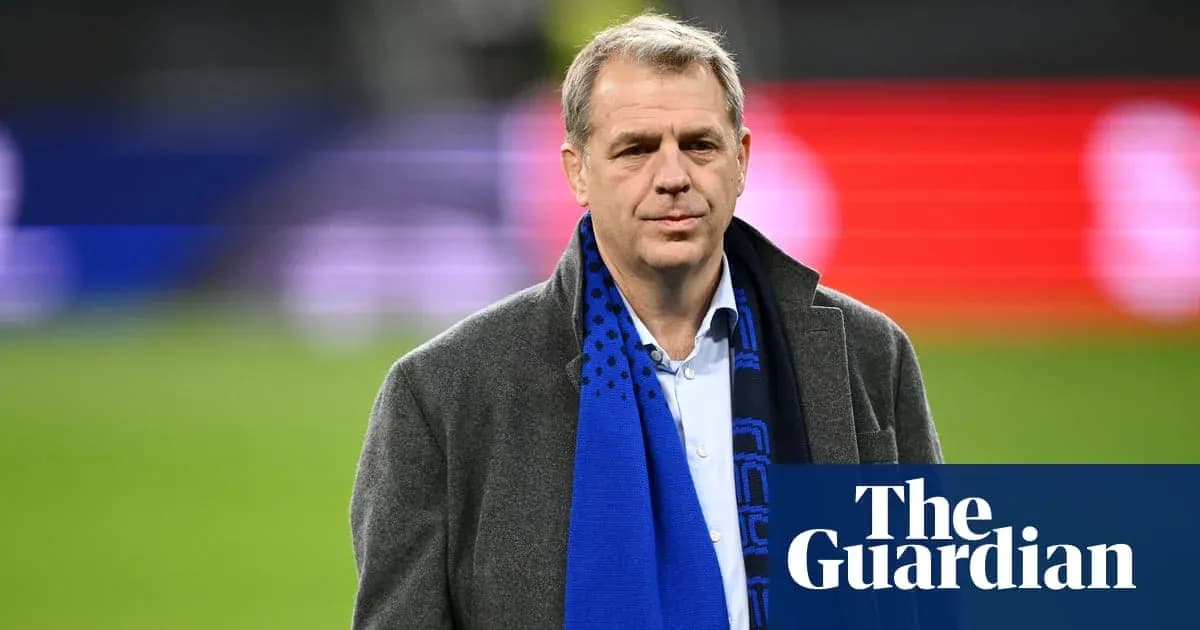
There was a time when this felt like Boehly’s project. He was the public face of the takeover, the man in the suit and scarf, the one who stepped into the football vacuum and declared himself interim sporting director after key figures departed with Abramovich.
How hard could it be? As it turned out, very.
Agents liked him personally, but doubted his grasp of the sport. They were not alone. Chelsea tore through roughly £300m on a scattergun collection of signings. Raheem Sterling arrived on a £325,000-a-week contract that quickly became a warning sign of the new regime’s excesses. The club struggled to shake off the financial and footballing hangover.
The chaos deepened when Thomas Tuchel was sacked early in the 2022‑23 season and replaced by Graham Potter. The strategy behind the upheaval was unclear. The message to the dressing room and the fanbase was worse.
Then came the Cucurella episode. Boehly later admitted he signed Marc Cucurella from Brighton after hearing Manchester City wanted the Spain left-back. Copying a rival’s shopping list is not a sustainable recruitment model, and Chelsea paid the price.
Boehly’s missteps stretched beyond transfers. His suggestion at a business conference that the Premier League should stage an All-Star game made him a punchline across English football. His prediction that Chelsea would beat Real Madrid 3-0 before a Champions League quarter-final in 2023 aged exactly as expected.
He became the caricature: the overconfident American owner who thought he could outsmart a sport he barely knew. The face of Chelsea’s excess, even as his actual power waned.
Clearlake tightens its grip
Behind the noise, the internal plan shifted. Those close to Boehly insist he never intended to stay so involved and always meant to hand over to specialists. Whether by design or necessity, Chelsea’s football structure was ripped up and rebuilt.
The club moved from one interim sporting director to a sprawling permanent set-up: Paul Winstanley, Laurence Stewart, Sam Jewell, Joe Shields and Dave Fallows all brought in. The recruitment focus turned to long, incentivised contracts and young, resale-friendly talent.
Eghbali drove that vision. The ride has been rough. Under this ownership, Chelsea have reached the Champions League only once. Managers have been hired and fired in quick succession. But inside Clearlake there is a belief that the worst mistakes have been recognised, that last summer marked a turning point.
The business was sharper. Chelsea appointed a serious head coach in Xabi Alonso and invested in more established quality. The operation looked less like a vanity project, more like a plan.
Through all of that, Boehly receded into the background. Talk of buyouts cooled until this summer, when another financial domino fell.
Exit signs and what comes next
The spark was Walter. Facing financial pressures in the US, he began liquidating assets, including his stake in the LA Lakers. Once that went, the writing was on the wall for his Chelsea position too.
Clearlake moved. Boehly and Walter, it is said, walk away with a modest profit on their Chelsea investment. Jonathan Goldstein, a close ally of Boehly, has also left the board. Wyss remains involved, now via a Clearlake vehicle rather than the original consortium structure.
And yet the fundamentals at the club barely shift. Day-to-day operations stay with the same people. The leadership is unchanged. The strategy, for better or worse, continues down the same track.
The one major question that does loom larger is the stadium.
Chelsea’s future home has been hanging over the project from the start. The Guardian reported in September 2024 that the club were in talks about leaving Stamford Bridge for Earls Court. The Earls Court Development Committee has its own approved plans for the site, but those have stalled. Chelsea’s interest has not.
The club are still weighing up whether a move to Earls Court is the cleanest solution, or whether they can somehow make a complex redevelopment of Stamford Bridge work. Either route would reshape Chelsea for decades.
Whatever they decide, Boehly will not be in the room. In their parting statement, Eghbali and Feliciano said he “will always be a part of the Chelsea story and family”.
Given how quickly his influence evaporated, that felt generous. The next chapters at Chelsea will be written by Clearlake alone.