Celtic Struggles Continue as O'Neill Faces Tough Questions
Celtic and O'Neill look short of answers as Ferencvaros expose frailties
For Celtic supporters, doubting Martin O'Neill has long felt like heresy. The manager who steadied chaos last season, who dragged a faltering side over the line in a title race, has earned a deep reservoir of trust.
That trust is being stretched.
Days after a mauling at Ibrox, Celtic walked into their Europa League opener needing a reaction and walked out with another bruising defeat, three more goals shipped and a performance that felt alarmingly familiar.
The basics went missing again. Midfielders switched off, defenders drifted, passes went backwards or astray. The tempo sagged. The work-rate dipped. The fundamentals of pass, move and press – the things this club once did on instinct under Ange Postecoglou – looked like foreign concepts.
At 3-1 down to Ferencvaros, Celtic tried to rouse themselves. Shots flew from distance, more in hope than expectation. There was no sustained press, no coordinated surge, no sense of a team hunting in packs. Just isolated efforts from a side that never really looked like it believed.
Once, Celtic under Postecoglou played with speed and swagger, dragging defenders into horrible positions and suffocating teams with relentless running and risk. This was the pale copy, the bootleg version with the colour drained out.
Old scars reopened
Scottish football can turn on a week, sometimes a single game. The second Old Firm instalment of the season arrives on Sunday at Celtic Park, and on paper the occasion should offer O'Neill and his players a chance to respond to the humiliation at Ibrox.
The mood tells a different story. Five goals conceded against LASK. A grim afternoon in Govan. Now this Europa League collapse.
At points on Thursday, the football felt like a throwback to darker European nights: Cluj and Copenhagen in 2019 and 2020, when Bayo and Bolingoli were on the scene; Sparta Prague in 2020 with Klimala, Ajeti, Duffy and Laxalt in the line-up. Legia Warsaw. Salzburg. Maribor. The same lethargy. The same anxiety. The same soundtrack of boos.
The energy in the stands drained as quickly as it did on the pitch. Celtic looked like a team with no answers, and their manager did not sound like a man overflowing with them either.
Afterwards, O'Neill spoke of frustration, failure and psychological damage. He admitted the weight of nights like this and vowed to “get ourselves together” for Rangers, but his delivery was flat, weary almost. He listed shortcomings but offered little spark, his words as heavy as his team’s legs.
This is the same O'Neill who has solved problems before, who returned to a club in disarray last season and rebuilt order and belief. His personality gave Celtic bite again. They were rarely flawless, but they became brutal to beat. In the run-in, nobody managed it.
That spirit feels distant now.
Soft goals, softer mentality
Celtic actually began with some purpose against Ferencvaros. They saw plenty of the ball, they probed, they looked engaged. Then they conceded a soft goal, and the fragility returned.
A flash of quality brought them level, a reminder that there is still talent in this squad, but the good moments never stuck. Safe passes replaced daring ones. The edge dulled. Emotion flickered but never caught fire.
The second Ferencvaros goal, just before half-time, was the kind of concession that defines poor teams. First, hesitation over a loose ball. Then weak resistance to the cross. Finally, chaos in the box – players caught under it, out of position, unsure who should deal with what. Celtic went in 2-1 down despite having 62.5% of the ball.
Possession without purpose. Control without conviction.
Camilo Duran, preferred through the middle ahead of Kasper Hogh, had just eight touches in that opening half. In his favoured role, he barely influenced the game. The forward who arrived in Glasgow buzzing, full of life and enthusiasm, now looks like a faded version of himself.
Hogh’s story is even more jarring. The striker who scored freely for Bodo Glimt – goals against Man City (two), Atletico Madrid, Inter Milan, Sporting, Porto, Jagiellonia and Olympiacos (three) – now cuts the figure of an awkward No 9, heavy first touch, little service, no rhythm. One goal in eight Celtic appearances is a brutal return for an £11m signing.
O'Neill has not unlocked him yet. Not close.
Even Callum McGregor, the heartbeat and metronome of so many Celtic sides, looks adrift. If the captain is searching for his bearings, you can imagine how the rest feel. O'Neill has the experience and tactical nous to halt this slide, but right now he does not look or sound like a man brimming with solutions.
Arzani’s strike twists the knife
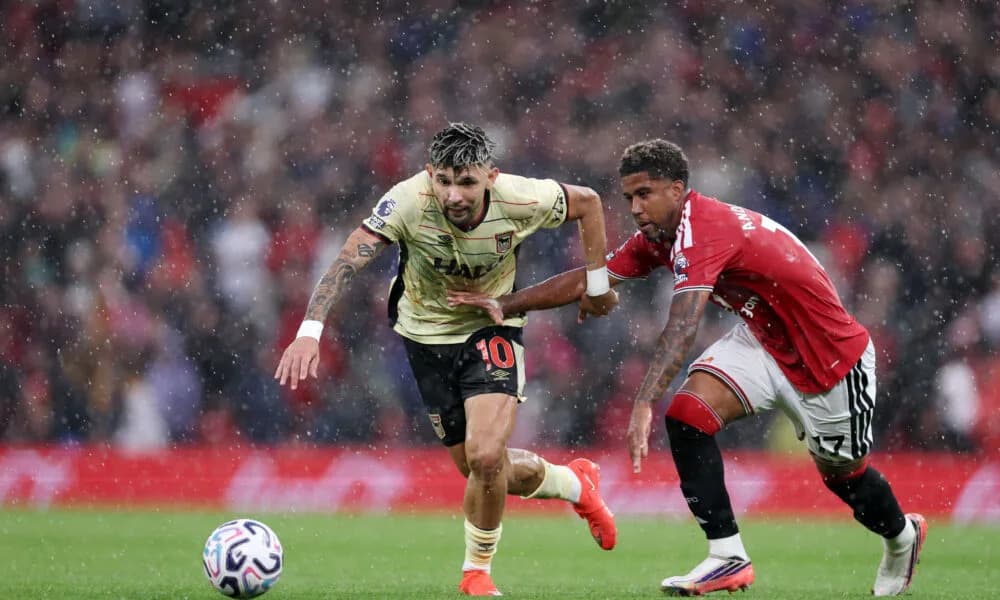
Given the way Celtic’s luck is running, it almost felt inevitable that Daniel Arzani would score. A former Celtic player whose time at the club passed in a blur of frustration, he reappeared here as the executioner.
The goal was a humiliation. Celtic were carved open on the counter, their shape ripped apart. Colby Donovan had over-committed in attack and then sprinted desperately back, chasing shadows. Arzani found oceans of space on the left, took a breath, picked his spot and whipped a superb finish into the top corner.
There was more structure in the Keystone Cops. Ferencvaros did not need to be spectacular to expose Celtic; they only needed to be organised and ruthless.
By the end, it was not just a defeat. It was a diagnosis.
A wounded giant before Rangers
O'Neill now faces a brutal turnaround. He needs solutions everywhere he looks – in structure, in mentality, in selection. His team are short on ideas, short on conviction, short on composure. They lack physical presence and psychological steel. They lack creativity and ruthlessness. They do not look ready for a fight.
The manager himself appears drained of inspiration. His career is full of comebacks from awkward, even dire situations. You almost instinctively expect him to find a way again.
This time, the list of problems is long.
McGregor has already admitted the team is “a little bit broken”. Across the city, Rangers will fancy their chances of inflicting more damage on Sunday. They will know the dangers of poking a wounded animal, but they will also sense an opportunity.
Celtic Park will demand a response. The question is whether this team – and this manager, in this moment – can still summon one when it matters most.