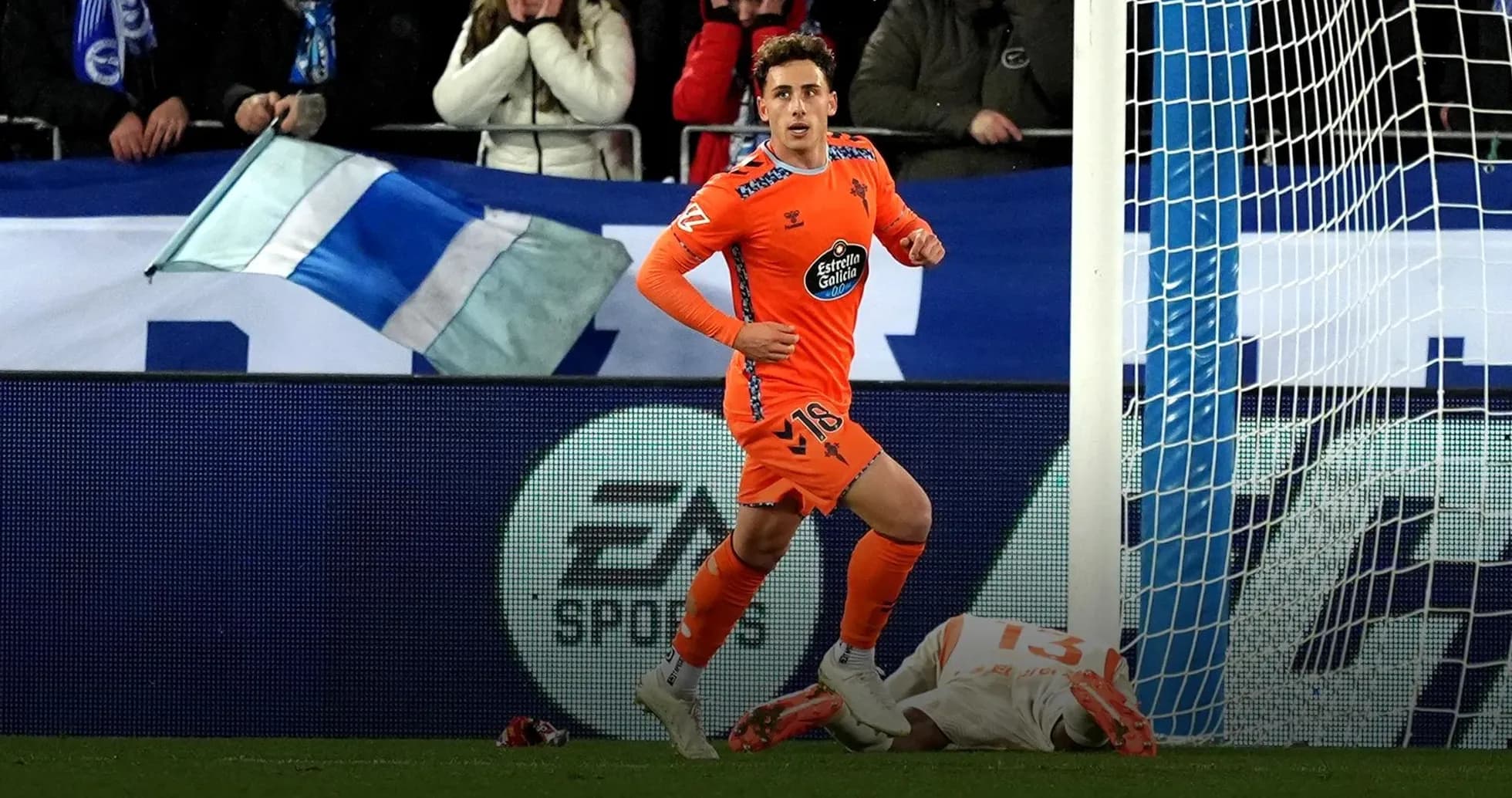
Celta's Home Defeat Against Alaves: A Statistical Breakdown
The final whistle at Estadio Abanca Balaídos left a strange mix of disbelief and inevitability in the Vigo air. Celta, the sixth‑placed side with European ambitions, had turned a 3-1 half-time lead into a 3-4 defeat against an Alaves team fighting to stay clear of the drop. On paper, it was a clash between one of La Liga’s more balanced outfits and a fragile visitor with the third‑worst goal difference in the league. On the grass, it became a brutal reminder of both sides’ statistical DNA.
Celta came into Matchday 29 with 41 points, a +6 goal difference and one of the division’s more controlled profiles: 41 goals scored, 35 conceded, 1.4 goals per game for and 1.2 against. The story, though, has always split home and away. Away from Vigo they have been efficient and hard to beat (6 wins, 6 draws, only 2 defeats), but at Balaídos the numbers are far more volatile: 4 wins, 5 draws, 6 losses, with 23 scored and 21 conceded in 15 home fixtures. This was a home side that tends to open up, and a game that always threatened to become a shootout.
Alaves, by contrast, arrived as a side built on grind rather than fluency. Sixteenth with 31 points and a -11 goal difference, they had scored just 30 times in 29 matches, conceding 41. The split again was stark: more secure at home (17 scored, 16 conceded) but vulnerable away, where 13 goals for and 25 against in 15 outings painted the picture of a team that often buckles under sustained pressure. Yet their biggest away win of the season – a 3-4 thriller – hinted that if the match became chaotic, Quique Sánchez Flores’s side could exploit the disorder. Balaídos duly obliged.
The butterfly effect: absences and structural gambles
Both coaches were forced into calculated risks by the absences list. Claudio Giráldez had to do without M. Alonso and C. Starfelt (both rested), the suspended I. Moriba, the injured M. Roman and M. Vecino. That is a significant chunk of defensive and midfield experience removed in one sweep. Without Starfelt’s aerial presence and Vecino’s positional discipline, Celta doubled down on what has defined their season: a 3-4-3 that prioritises progression and numbers between the lines over pure security.
The back three of J. Aidoo, J. Rodríguez and C. Domínguez was mobile but light on natural leadership. In front of them, H. Sotelo and O. Mingueza were asked to dictate from central areas, with J. El Abdellaoui and A. Núñez stretching the width. It is a structure that can suffocate opponents when Celta are on the ball, but one that leaves huge responsibility on timing and concentration in defensive transitions – precisely where this match slipped away.
Alaves had their own issues. F. Garcés (suspended), C. Protesoni (injury) and Yusi (yellow-card accumulation) trimmed Sánchez Flores’s options, particularly in rotation and defensive depth. Yet the starting XI in a 4-4-2 was close to his statistical core: a back four featuring V. Parada at left-back, a midfield line with A. Pérez and P. Ibáñez providing legs, and the front pairing of T. Martínez and L. Boyé.
Disciplinary trends shaped the risk calculus for both benches. Celta’s yellow cards this season spike in the 46-60 and 76-90 minute windows (21.82% in each), with another notable surge between 61-75 (20%). This is a team that often finishes games on a disciplinary tightrope. Alaves are even more volatile late on: 20.83% of their yellows come in the 76-90 range, with substantial shares from 31-45 (16.67%) and 91-105 (16.67%). In a match that turned wild after the break, both sides were statistically primed for late fouls and defensive stress.
Narrative matchups: the hunter, the shield, and the engine room
At the sharp end, this was always going to be a showcase for Borja Iglesias and Lucas Boyé, two forwards with similar league ratings (both at 6.74) but different ecosystems around them.
For Celta, Borja Iglesias is the reference point of a fluid front three. With 11 league goals and 2 assists in 26 appearances, he has been among the highest‑ranked scorers in Spain this season. His shot profile – 34 attempts, 22 on target – underlines a penalty‑box striker who works efficiently rather than wildly. His 17 key passes and 21 fouls drawn show a player who can link and buy territory, not just finish. Importantly, his penalty record is flawless to date: 3 scored from 3, reinforcing his status as Celta’s pressure‑moment specialist.
He was flanked here by F. Jutglà and H. Álvarez, two forwards tasked with stretching Alaves’s back line and attacking the half‑spaces around N. Tenaglia and V. Parada. On paper, this front three was tailor‑made to exploit an Alaves side conceding 1.7 goals per game away from home and with only 1 away clean sheet all campaign.
On the other side, L. Boyé came in as Alaves’s all‑action focal point. Nine league goals and 1 assist in 23 appearances, backed by 42 shots (18 on target), tell only part of the story. Boyé’s 346 duels – with 129 won – and 72 dribbles attempted (36 successful) mark him out as a forward who drags defences into uncomfortable zones. Defensively, he has also blocked 5 opponent attempts and made 7 interceptions, a pressing forward who can trigger counters. His penalty record is also flawless so far, with 2 scored from 2.
The “shield” on Celta’s side was supposed to be the collective rather than an individual. With 8 clean sheets this season (3 at home, 5 away), they have shown they can shut games down, but the absence of Starfelt and Vecino stripped away two of the usual organisers. Alaves’s shield was more clearly defined: V. Parada, the left‑back who leads their yellow‑card chart with 7 bookings and 1 yellow-red. He has blocked 5 opposition shots, committed 25 fouls and made 22 tackles and 5 interceptions in the league, embodying Sánchez Flores’s willingness to accept risk on that flank to stop crosses and one‑v‑ones.
In midfield, the engine‑room duel was nuanced rather than star‑driven. Celta’s double pivot of Sotelo and Mingueza had to dictate tempo and protect transitions, while Alaves relied on the balance of A. Blanco and P. Ibáñez. Without a league‑leading assister in either squad, creativity was distributed: C. Alenà’s ability to link lines for Alaves against the wing‑back thrust of Núñez and El Abdellaoui for Celta. The battle was less about a single playmaker and more about which unit could compress space between the lines.
Depth, too, played its part. From the Celta bench, Iago Aspas remains a game‑changing name even if his statistical profile is not in this data set; W. Swedberg and F. Cervi offer different types of verticality and control. For Alaves, J. Guridi and D. Suárez provide fresh legs and passing security, while I. Diabaté and A. Rebbach can attack tired defences in wide areas. In a match that swung after the interval, those substitute vectors – “[IN] came on for [OUT]” – would have been decisive in sustaining or dismantling momentum.
Statistical prognosis: why chaos favoured Alaves
Strip away the drama of a 3-4 scoreline and the numbers still explain the arc. Celta are a side whose home matches average 2.9 total goals to date (23 for, 21 against in 15 games). Alaves’s away fixtures sit at a similar chaos threshold: 38 goals in 15 trips, or 2.5 per game, with a heavy skew towards conceding. Put them together and you get a fixture almost pre‑programmed to tilt into a goal‑trading contest.
The critical tactical intersection lay in the second half. Celta’s yellow‑card spikes after the break mirror their tendency to lose control phases, while Alaves’s away profile shows they can capitalise in broken games – their biggest away win of the season before this was that 3-4 scoreline. With Celta’s back three lacking its most experienced organiser and Alaves able to lean on Boyé’s duels and the late running of Martínez and Pérez, the visitors were structurally better equipped to exploit transitions once the match lost its early script.
From a broader La Liga lens, this result does not dismantle Celta’s identity as a top‑six side with European credentials, but it underlines their home volatility and the cost of defensive absences in a system that lives on the edge. For Alaves, it is the template for survival: embrace the chaos, lean on Boyé’s all‑court game, and trust that in the league’s messier fixtures, their resilience can dismantle more polished opponents.
The deciding factor was not a single player but a phase: the post‑interval window where Celta historically pick up cards and lose structure, and where Alaves, so often fragile away, finally dictated the terms of a wild, season‑defining comeback.