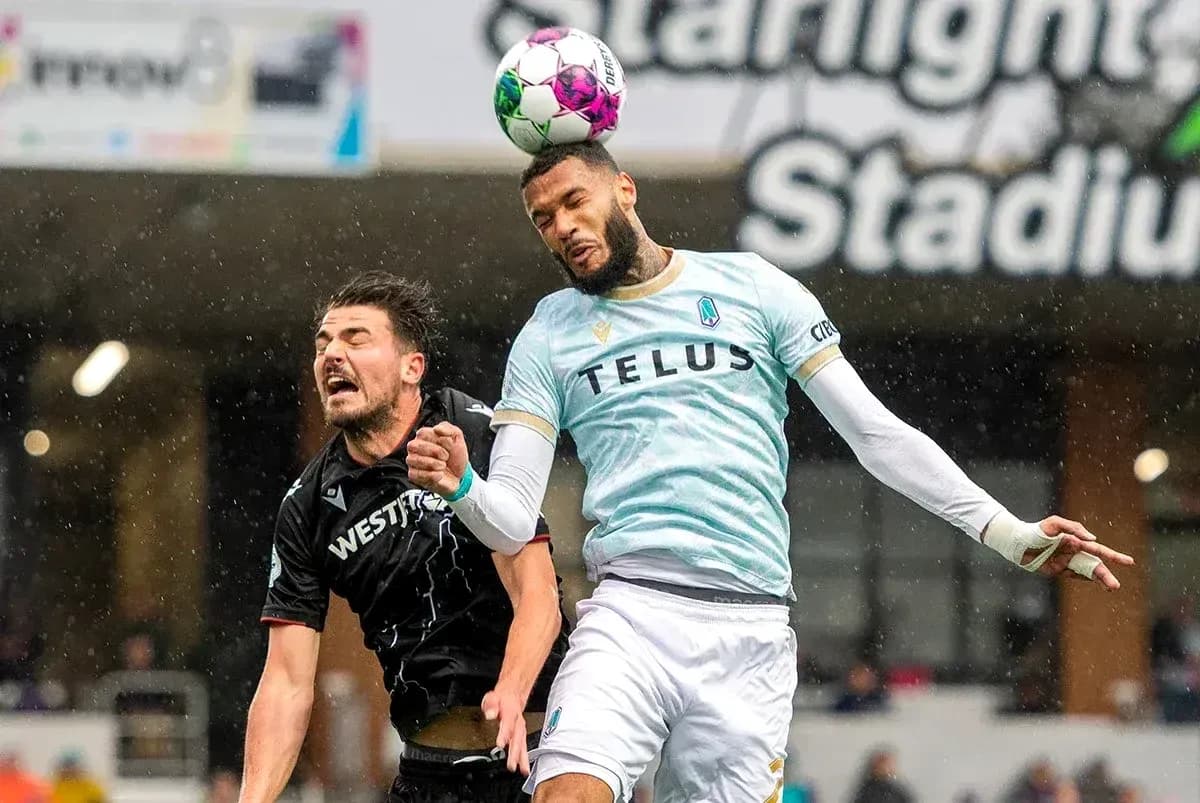
Cavalry FC vs Pacific FC: Early Clash in Canadian Premier League 2026
On 5 April 2026, Starlight Stadium hosts one of the Canadian Premier League’s most compelling early fixtures as Pacific FC welcome Cavalry FC to Vancouver Island. The league table is still a blank canvas – both sides sit on 0 points with no games played – but the rankings already hint at expectations: Cavalry are listed 2nd with a pathway description towards the semi-finals, while Pacific are 3rd, projected towards the quarter-finals. On paper, Cavalry are again cast as a title contender; on the pitch, Pacific are desperate to prove that gap is smaller than the table suggests.
This is not just a curtain-raiser. It is a continuation of one of the league’s most intense modern rivalries, and an early litmus test of who is ready to dictate the narrative in 2026.
Recent history: edge to Cavalry, but Starlight is no gimme
The last five head-to-head meetings form a compact, revealing snapshot of how this matchup has evolved:
- 5 October 2025 at Starlight Stadium: Pacific FC 3-3 Cavalry FC
- 4 August 2025 at Starlight Stadium: Pacific FC 1-0 Cavalry FC
- 22 June 2025 at ATCO Field: Cavalry FC 1-0 Pacific FC
- 17 May 2025 at ATCO Field: Cavalry FC 4-0 Pacific FC
- 5 October 2024 at Starlight Stadium: Pacific FC 1-4 Cavalry FC
Across this closed set of five games, Cavalry have the upper hand with 3 wins, 1 draw and 1 loss. The goal difference is firmly in their favour: 13 scored, 5 conceded, an 8-goal cushion that underlines how ruthless they can be when the game opens up.
Yet the picture changes once you zoom into Starlight Stadium. The three most recent meetings on the island read:
- 3-3 thriller in October 2025
- 1-0 Pacific win in August 2025
- 1-4 Cavalry statement win in October 2024
That sequence tells its own story. Pacific have shown they can both shut Cavalry down (1-0) and trade punches in a shootout (3-3). Cavalry, for their part, have already produced one emphatic away performance here with that 4-1 in 2024. The venue does not guarantee control; it guarantees volatility.
Clean statistical slate, but clear tactical identities
Across all phases in 2026, both clubs are statistical ghosts so far:
- 0 matches played
- 0 wins, 0 draws, 0 losses
- 0 goals for, 0 goals against
There is no current campaign data to lean on for pressing intensity, defensive resilience or scoring patterns. That shifts the focus firmly onto known identity and recent head-to-head tendencies.
From those five meetings, a few tactical themes stand out:
1. Cavalry’s vertical aggression
Cavalry’s best results in this set – the 4-0 and 4-1 wins – came in games where they were able to stretch the pitch and turn midfield turnovers into direct, punishing attacks. When they get runners beyond the last line and win second balls high up the field, Pacific have struggled to manage the waves of pressure.
Even in the 3-3 at Starlight in 2025, Cavalry’s capacity to keep scoring away from home was obvious. They do not need long phases of possession to hurt you; they need broken play and space to attack.
2. Pacific’s control-versus-chaos dilemma
Pacific’s one clear-cut win in this set – 1-0 at Starlight in August 2025 – points towards a different kind of game plan: compact shape, controlled tempo, and a willingness to make it a narrow, territorial battle rather than a transition shootout.
When Pacific have allowed the game to become stretched, Cavalry’s superior efficiency in the final third has told. When Pacific have been brave enough to slow the tempo, compress space between the lines and pick their moments to press, the matchup has looked far more even.
3. The Starlight factor
The island crowd has seen every possible script in this fixture: a Cavalry rout, a Pacific clean-sheet win, and a wild six-goal draw. For Pacific, the challenge is mental as much as tactical: can they impose the 1-0 type of rhythm rather than reliving the chaos of 3-3 or the collapse of 1-4?
For Cavalry, the message is the opposite: make it chaotic. The more transitions, the more broken structure, the more this looks like their kind of game.
Tactical battles to watch
Pacific’s build-up vs Cavalry’s press
With no 2026 data to quantify passing accuracy or build-up success, the last five games still give a clear cue: when Pacific try to construct from the back under Cavalry’s press, the first and second passes are critical. Cavalry will likely set pressing traps in Pacific’s half, especially early, looking to force errors and create high-value chances.
If Pacific can consistently play through that first wave and find their midfield pivots facing forward, they can flip the script and push Cavalry back. If they cannot, the risk of conceding territory – and eventually goals – grows quickly.
Pacific’s defensive block height
Pacific have two main choices out of possession:
- Hold a mid-to-low block, keep numbers behind the ball, and trust that their front line can make the most of fewer but cleaner attacks.
- Push higher, try to disrupt Cavalry’s build-up early, and accept the risk of space in behind.
The 1-0 win at Starlight in 2025 suggests a more conservative, compact approach has worked before. Given Cavalry’s ability to rack up multi-goal performances in this rivalry, there is a strong argument for Pacific to start with control and only open the game up later.
Set pieces as a swing factor
With both teams starting on 0 goals this campaign, dead balls could be decisive. Historically, Cavalry have been one of the league’s most dangerous sides from corners and wide free-kicks, and their 4-0 and 4-1 wins in this five-game set hint at a team that can pile on goals once the dam breaks.
Pacific, at home, will want to be more proactive: rehearsed routines, clever blocks, and crowd-fuelled momentum on every corner. In a game where open-play metrics are still unknown for 2026, a single well-executed set piece can tilt the balance.
Psychological stakes: early marker in a long race
Even with both sides on 0 points, the table context matters. Cavalry’s 2nd-place listing and semi-final description underline the expectation that they should be in the title conversation again. Pacific, ranked 3rd and tagged towards the quarter-finals, are seen as a step behind – a strong side, but not yet the standard.
Winning here would allow Pacific to send a clear message: Starlight is a fortress again, and the gap to Cavalry is closing. For Cavalry, an away win on opening weekend would reinforce the idea that they remain the benchmark and that their dominance in this five-game head-to-head window was no accident.
Verdict
With no fresh statistical form to lean on, the safest compass is the recent rivalry. Cavalry have outscored Pacific 13-5 across these last five meetings and have proven they can win big both home and away. Pacific, however, have shown at Starlight that when they dictate tempo and keep the scoreline tight, they can edge Cavalry out.
Expect Pacific to start cautiously, prioritising structure and ball security, while Cavalry probe for transition moments and set-piece opportunities. The longer it stays level, the more it favours the hosts’ controlled approach; the more it opens up, the more it tilts towards the visitors.
On balance, Cavalry’s edge in this closed five-game sample and their status near the top of the projected standings suggest they may just have enough to leave the island with something. A tight, high-quality contest feels likely, with a narrow Cavalry advantage or a score draw the most logical outcomes in what should be one of the early showpieces of the 2026 Canadian Premier League calendar.