Cagliari's Tactical Triumph Over Atalanta in Serie A
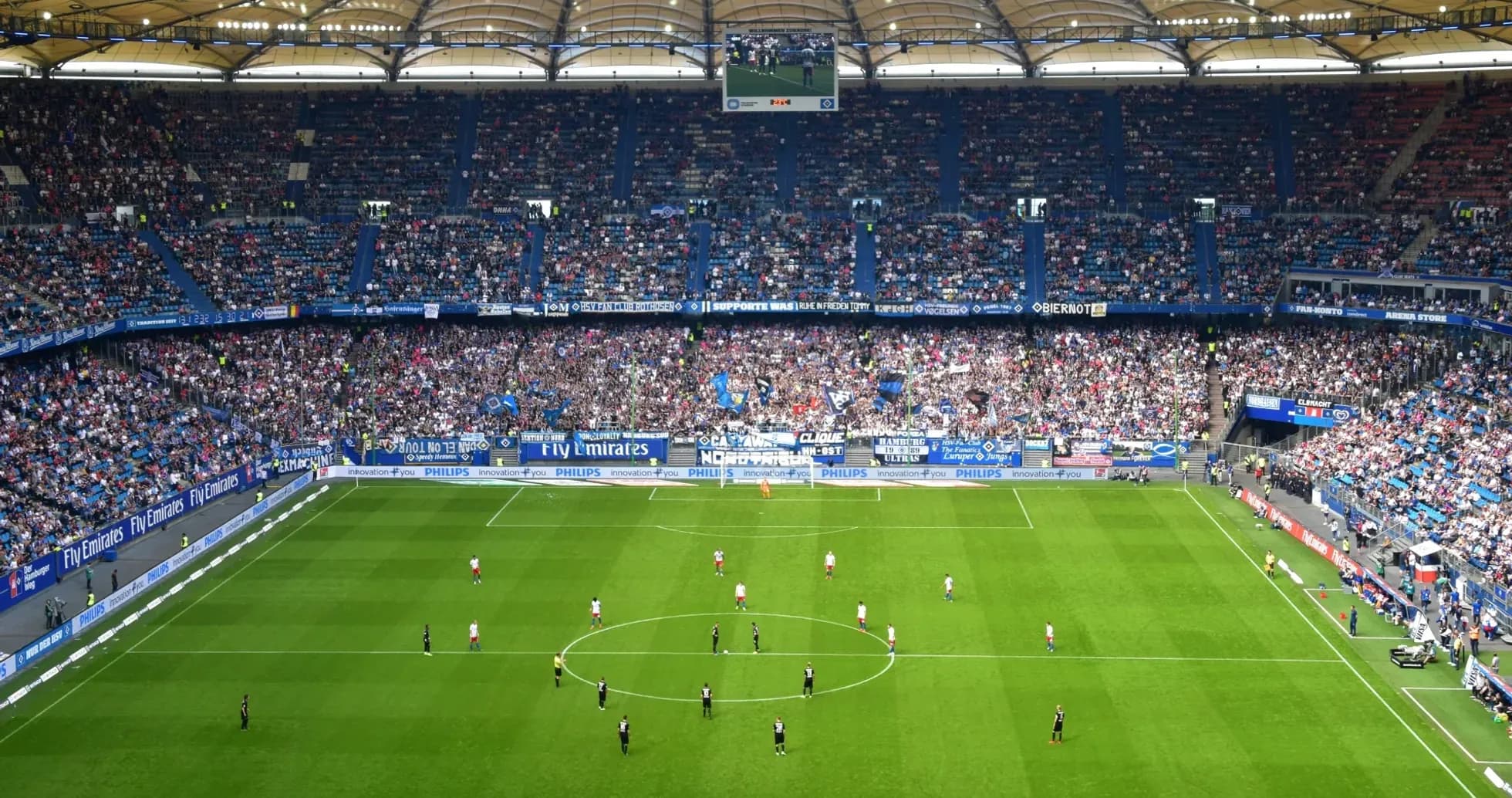
The Unipol Domus had the feel of a survival trench rather than a mid-table stage as Cagliari and Atalanta walked out for this Serie A Round 34 clash. By full time, the scoreboard read 3–2 to Cagliari, a result that cut against the grain of the season’s hierarchy: the hosts sitting 16th with 36 points, Atalanta 7th on 54. Following this result, the league table tells of a relegation fighter punching above its weight against a European chaser, and the tactical story on the pitch matched that inversion.
Cagliari’s seasonal DNA is that of a side living on the edge. Overall they have scored 36 and conceded 49, a goal difference of -13 that underlines how thin their margin has been. At home, though, they are more balanced: 20 goals for and 20 against from 17 matches, averaging 1.2 both scored and conceded. Atalanta, by contrast, have been one of Serie A’s most controlled sides. Overall they have 47 goals for and 32 against, a goal difference of +15, with an away profile of 22 scored and 18 conceded across 17 games, averaging 1.3 for and 1.1 against on their travels.
Into that context stepped two coaches with very different starting blueprints. Fabio Pisacane rolled out a 5-3-2 that was far more proactive than the numbers suggest. E. Caprile sat behind a back five of A. Obert, J. Rodriguez, Y. Mina, J. Pedro and M. Adopo. In front, a compact midfield triangle of M. Folorunsho, A. Deiola and G. Gaetano was tasked with compressing Atalanta’s central lanes, while S. Esposito and P. Mendy formed a mobile, pressing front two.
Raffaele Palladino answered with Atalanta’s now-familiar 3-4-2-1. M. Carnesecchi was protected by a back three of S. Kolasinac, B. Djimsiti and G. Scalvini. The wing-backs, R. Bellanova on the right and D. Zappacosta on the left, were instructed to pin Cagliari’s wide defenders back, while M. De Roon and M. Pasalic formed the central axis. Ahead of them, C. De Ketelaere and G. Raspadori floated behind focal point G. Scamacca.
First Half
The first half, which finished 2–2, revealed both the strengths and the structural voids of each team. Cagliari’s five-man line was not a passive block; Obert, in particular, stepped aggressively into duels, mirroring the combative season that has seen him collect 9 yellow cards and 1 yellow-red. His willingness to defend on the front foot, supported by Mina’s aerial presence, allowed Pisacane to keep a relatively high line for a side used to suffering. That, in turn, kept Esposito and Mendy within striking distance of transitions rather than isolated 40 metres from help.
Atalanta’s issue lay in the spaces around De Roon. Over the season he has been their metronome and shield, with 1,733 passes at 85% accuracy and 73 tackles, but Cagliari’s narrow front two and the third-man runs from Folorunsho and Gaetano repeatedly forced him into lateral movements rather than vertical control. With Pasalic more inclined to arrive in the box than sit, the half-spaces behind Bellanova and Zappacosta became vulnerable whenever possession was lost.
Injury absences added another layer to the tactical picture. Cagliari were without M. Felici and R. Idrissi (both knee injuries), as well as L. Mazzitelli and L. Pavoletti. The latter’s absence removed a classic target-man option, nudging Pisacane towards a more fluid, ground-based front line. It put more creative and finishing responsibility on Esposito, whose season numbers – 6 goals and 5 assists, 59 key passes – already mark him as Cagliari’s primary playmaker. His role here was hybrid: nominally a forward, functionally a roaming 10, dropping into midfield to overload De Roon and then spinning into the channels.
Atalanta, for their part, were missing L. Bernasconi, trimming depth in the defensive unit but not altering the starting structure. The bench, though, held significant firepower: N. Krstovic, with 10 league goals and 4 assists, and L. Samardzic offered Palladino the possibility of switching from a Scamacca-led focal game to a more mobile, combination-heavy attack.
Discipline
Discipline was always likely to be a sub-plot. Heading into this game, Cagliari’s yellow-card distribution showed a pronounced late-game surge, with 27.63% of their cautions arriving between 76–90 minutes and a further 10.53% between 91–105. Their only red cards in Serie A this season also clustered late, with 100.00% shown in the 76–90 range. Atalanta’s profile was similar if less extreme: 23.08% of their yellows between 76–90, and their two reds split between the opening 0–15 and the closing 76–90. In a match that was level at half-time and decided in the second half, the risk of a late disciplinary twist hung over every duel, especially with Obert and De Roon – two of the league’s most card-prone figures – patrolling central zones.
Key Individual Duel
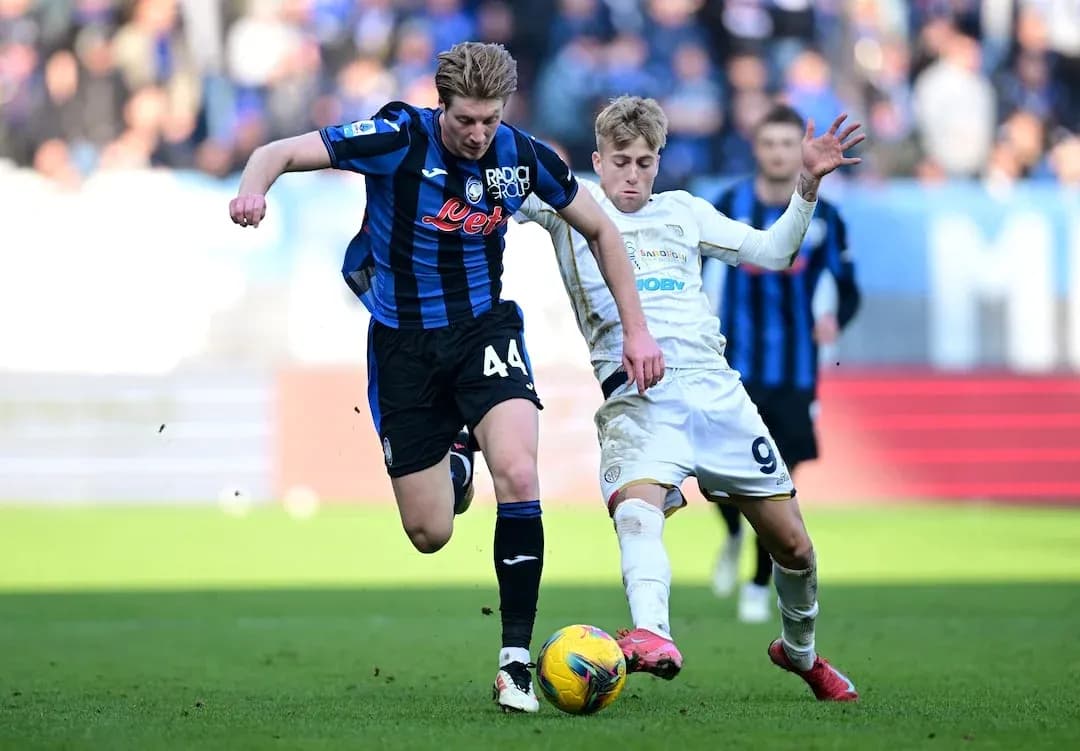
The key individual duel, the “Hunter vs Shield” axis, pitted Atalanta’s centre-forward threat against Cagliari’s defence. Scamacca, who has 10 league goals from 22 appearances and 49 shots, is a classic penalty-box predator, but the wider Atalanta attacking ecosystem also orbits around De Ketelaere. With 5 assists and 56 key passes, the Belgian is the side’s creative hinge, constantly seeking to receive between the lines and slip runners beyond. Against a Cagliari defence that has conceded 49 overall – 20 at home – the expectation was that Atalanta’s 1.4 goals-per-game attack would carve out enough chances.
Instead, Cagliari’s “Shield” was collective rather than individual. Mina’s positioning, Obert’s aggressive stepping, and the compactness of Deiola and Folorunsho in front reduced the spaces that De Ketelaere usually exploits. The back five could fan out to deal with the width of Bellanova and Zappacosta without completely losing central density, and Caprile’s command of his area helped neutralise crosses aimed at Scamacca.
Engine Room
In the “Engine Room”, the duel between Esposito and De Ketelaere as creators, and between Deiola and De Roon as enforcers, shaped the rhythm. De Ketelaere’s season-long 78% pass accuracy and 48 successful dribbles make him one of Serie A’s most dangerous ball carriers, but here he often found himself receiving under pressure, with Gaetano and Folorunsho collapsing around him. Esposito, by contrast, found more freedom to dictate counters, his 74% pass accuracy and 59 key passes mirrored in the way he linked quickly with Mendy and the wing-backs stepping out from the back five.
From a statistical prognosis perspective, Atalanta’s profile still looks the more sustainable in the long run. They boast 12 clean sheets overall, including 6 on their travels, and have failed to score in only 2 away matches. Their away averages of 1.3 goals for and 1.1 against, combined with a deep bench featuring Krstovic and Samardzic, suggest a side usually capable of controlling xG both ways. Cagliari, by contrast, have only 7 clean sheets overall and have failed to score 12 times, with an overall goals-against average of 1.4 that reflects sustained defensive stress.
Yet football is played in 90-minute slices, not spreadsheets. Following this result, Cagliari’s 3–2 win reads as a high-variance outcome against the underlying numbers, but tactically it was anything but random. Pisacane’s decision to lean into a back five that could spring forward, to empower Esposito as a roaming conductor, and to accept the disciplinary risk of an aggressive Obert-led line, allowed Cagliari to bend Atalanta’s usually stable structure until it broke. In a season defined by fine margins for both clubs, this was a night when the underdog’s tactical courage outweighed the favourite’s statistical solidity.