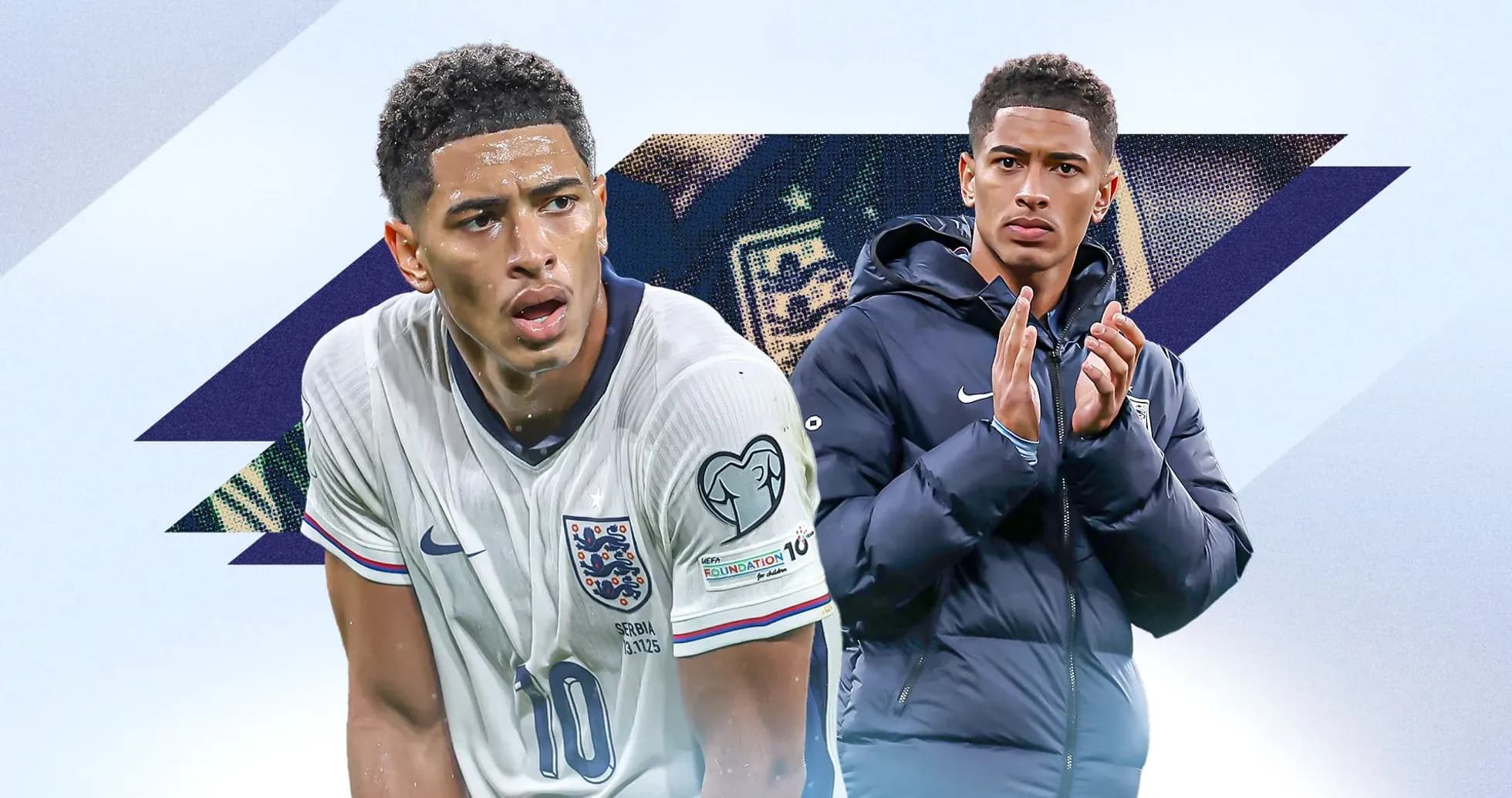
Bellingham vs Rogers: Tuchel's England Dilemma
Thomas Tuchel has not tiptoed into the England job. He has walked in, ripped up the old hierarchies and told his squad, plainly, that reputations don’t start games. Performances do.
No one feels that more sharply than Jude Bellingham.
Rogers kicks the door open
While Bellingham has been in and out of camps, nursing injuries and recovering from surgery, Morgan Rogers has quietly – and then not so quietly – turned opportunity into leverage.
The Aston Villa attacking midfielder arrived off the back of a superb club season and simply carried that rhythm into England duty. Tuchel used qualifying to tinker and test, and in that experimental landscape Rogers became a reliable creative outlet. The goals have not flowed for him in torrents, but that misses the point. Rogers plays as a classic No.10, a pure conduit between midfield and attack, and in Tuchel’s eyes he has done enough to earn a genuine shot at the shirt behind Harry Kane.
Tuchel spelled it out back in November, when asked about the battle between the two.
He talked about ending the old England habit of squeezing big names into awkward roles just to get them on the pitch. This was about putting players in their best positions and letting competition decide. Right now, that competition sits squarely between Bellingham and Rogers for the central creative role.
On form, on recent evidence in both a Villa and an England shirt, Rogers has a strong claim. Bellingham, suddenly, is the one who must convince the manager he can offer more.
The edge that cuts both ways
What complicates Bellingham’s case has little to do with talent. It is everything around it.
He has always played with a swagger, a visible sense of his own ability. That edge can lift a stadium. It can also spill over. It did in June’s 3-1 defeat to Senegal, when his furious reaction to a VAR call against England drew as much attention as the game itself.
Tuchel, speaking to TalkSport after that friendly at the City Ground, didn’t shy away from the incident. He framed Bellingham’s volatility as a tool England might need – if it is pointed in the right direction.
He wants that fire aimed at opponents, at the goal, at the standard England set for themselves. Not at team-mates. Not at referees. Not at anyone in white.
Then came the line that has followed Tuchel ever since. Talking about how Bellingham’s on-pitch persona can split opinion, he invoked his own mother watching at home. He described the contrast between the charming, well-educated young man he knows and the flashes of rage and hunger that can, as he put it, appear “a bit repulsive” to some viewers.
It was meant as an insight. It landed as a headline.
A relationship under the microscope
Bellingham did not pull on an England shirt again until November, as he worked his way back from surgery. When he finally returned, the cameras didn’t just track his touches. They tracked his body language.
Tuchel left him on the bench for the first game of that international break against Serbia. Three days later, Bellingham was back in the starting XI against Albania, restored to the role he believes is his natural home. Yet with six minutes left of England’s final qualifier, his number went up. His reaction – an apparent flash of anger as he came off – was instantly dissected.
Tuchel’s response was as cold as it was clear. That was the decision. The player had to accept it. A friend was waiting on the touchline. Respect the change. Move on.
Around them, the noise grew. Former England striker Ian Wright stepped in to defend Bellingham and to challenge the tone of some of the criticism. Wright argued that a confident, outspoken Black superstar unsettles certain corners of the English media and fanbase, especially one performing at Bellingham’s level and refusing to shrink himself to fit a more palatable mould.
He pointed to the contrast with the universal affection for N’Golo Kante, the archetype of the quiet, humble Black midfielder, and suggested that Bellingham’s visibility, voice and influence frighten some people. For Wright, the debate around Bellingham’s character has become a wearying, familiar exercise.
World-class talent, patchy impact
Strip away the noise, and one truth remains: England are a better team when Bellingham plays at his peak.
The problem is that those peaks have appeared less frequently of late. Injuries, tactical shifts and the evolving shape of Tuchel’s England have left him searching for the explosive, game-grabbing performances that once felt routine.
That leaves Tuchel staring at a very modern dilemma before England’s opener in Dallas. Does he trust one of the most gifted midfielders on the planet, knowing his emotions can ignite a game or derail it? Or does he back Rogers, the in-form, orthodox No.10 whose international résumé is thin but whose recent trajectory is impossible to ignore?
Tuchel has tried to provoke a response from Bellingham, to light a competitive fire under him. Instead, his own clumsy phrasing and the surrounding commentary have often drowned out serious analysis of what Bellingham is actually producing on the pitch.
He will wear the No.10 shirt this summer. That much is confirmed. What is not guaranteed is that he will start in the No.10 role when England walk out to face Croatia.
Either way, Bellingham will not drift through this World Cup unnoticed. He will dominate the conversation – through match-winning brilliance, or through flashes of petulance that feed the narrative around him.
Which version turns up may end up defining not just his tournament, but England’s.