Bayern Munich Wins Supercup: Beckenbauer Trophy Goes to Munich
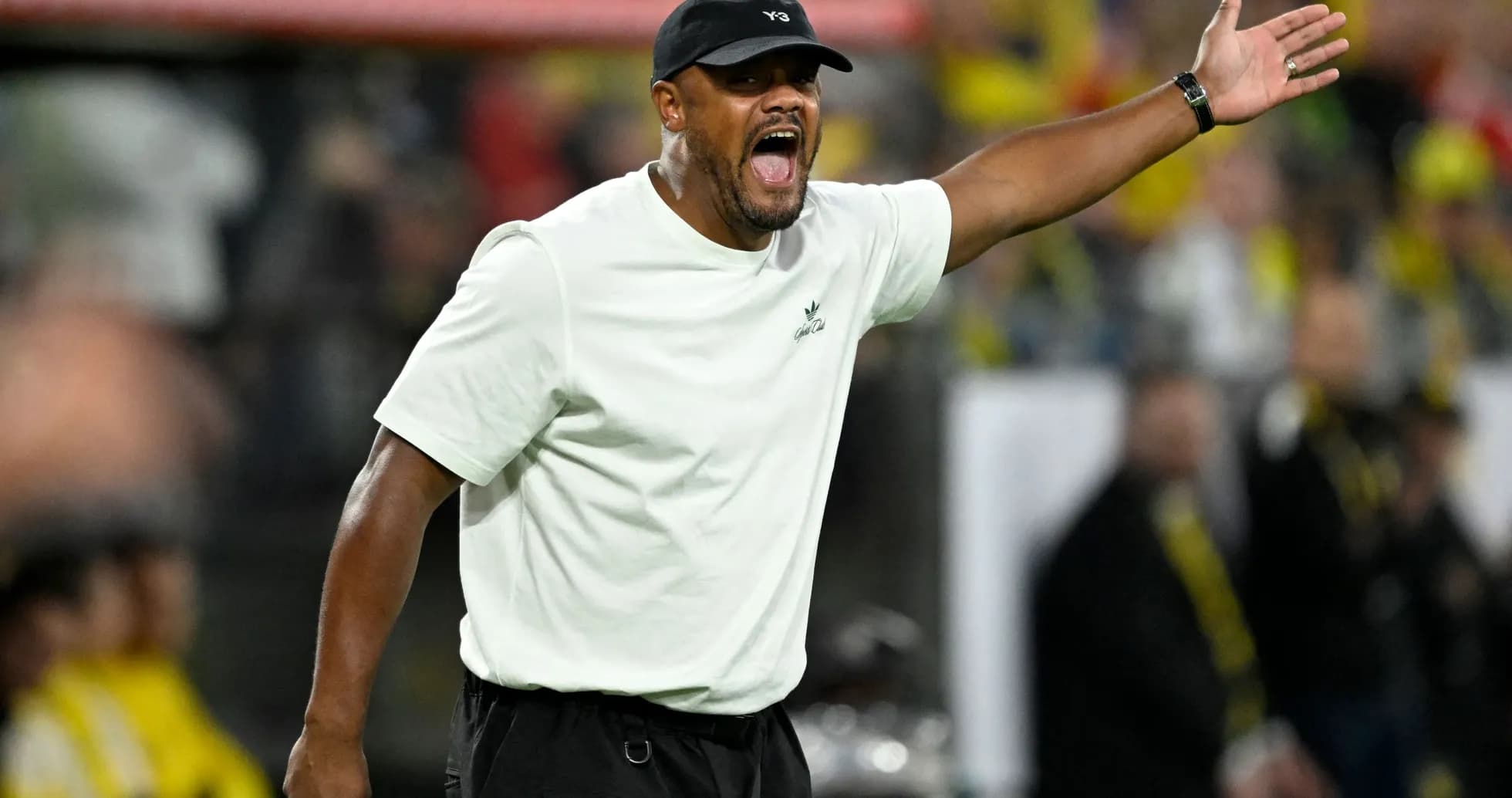
Bayern Munich have the season’s first piece of silverware in their hands and, just as importantly, another psychological edge over Borussia Dortmund. A 2-1 win at Signal Iduna Park gave Vincent Kompany his first trophy as Bayern coach and left BVB with familiar questions after another near-miss on home soil.
Nathaniel Brown and Michael Olise did the damage before the break. Fabio Silva’s response came too late to change the outcome, but not too late to alter the conversation around his future.
Behind the scoreline, though, the evening told some deeper stories.
Neuer: still world-class, still a risk
Manuel Neuer has built a career on walking the tightrope. He steps out, he plays, he provokes pressure to break it. It’s part of why he redefined goalkeeping.
But the margin for error is shrinking.
The Supercup offered another snapshot of the dilemma Bayern now live with. On the line, Neuer remains elite. With the ball, the anxiety is growing.
After 15 minutes, he fizzed a loose pass towards Min-jae Kim, inviting Dortmund in. Kim bailed him out with sharp anticipation, snuffing out a chance that should never have existed. It felt like a replay of April’s mistake against Real Madrid, when a misplaced pass to Arda Güler gifted the Spaniards a Champions League quarter-final lead.
Late on, Neuer went back to the edge again. Under pressure from a Kim backpass, he tried to let Jobe Bellingham run past him with a feint behind his standing leg. It misfired. Bellingham pounced, the equaliser suddenly there for the taking. Neuer had to throw himself into a desperate, brilliant intervention to rescue the situation he had created.
This is the contradiction now: he still produces saves very few keepers on the planet can make. Early in the second half he showcased that side, reacting superbly to a close-range effort from new signing Konstantinos Karetsas. Bayern’s back line exhaled. The old Neuer was still there.
But the conversation around his future has shifted. The 38-year-old has hinted this could be his final season. Bayern already have Jonas Urbig lined up as heir apparent, and the plan is clear: more minutes for the 23-year-old, a gradual handover, Neuer for the biggest nights.
The question is whether those “biggest nights” can still absorb the risk on the ball that comes with them. How many more of these tightrope walks can Bayern tolerate before Urbig is trusted not just in the Bundesliga, but in knockout games and title deciders?
Brown’s surprise role, Bayern’s growing depth
Bayern bought Nathaniel Brown as a left-back. He left Dortmund with a Supercup winner’s medal and a highlight reel as a No. 10.
With Jamal Musiala out due to neurological issues that have already forced him off in recent friendlies, and new signing Ismael Saibari not yet ready to start, most expected youngster Tom Bischof to operate behind Harry Kane. Kompany had other ideas.
Brown, just a few weeks into his Bayern career, was pushed into the central pocket, operating between the lines. It was a bold call, but not a random one. Kompany sees overlaps between his full-back role and Bayern’s interpretation of a No. 10, spaces where Brown’s timing and feel for tight zones can shine.
It worked. Not flawlessly, but decisively.
The 23-year-old still has to absorb Bayern’s automatisms in such an advanced role, and there were moments when combinations didn’t quite click. Yet he read the game well enough, found the right gaps often enough, and crowned his performance with the opening goal that set Bayern on their way.
For a player signed as a defender, that’s a statement. For Bayern’s squad planners, it’s gold.
Brown joins a growing group of multi-role operators in Munich. Konrad Laimer can play on either defensive flank and anywhere across the midfield line, from holding role to attacking eight or even as an emergency 10. Josip Stanisic can switch sides at full-back and drop into central defence. Now Brown adds the ability to cover left-back, holding midfield and the playmaking slot behind the striker.
In a season that will again stretch Bayern across domestic and European fronts, that kind of flexibility is not just a luxury. It might decide how far they go.
Kovac’s inverted wing-backs: promise and price
On the opposite bench, Niko Kovac used the Supercup to lean into an idea he has been flirting with all summer: inverted wing-backs.
He started left-footer Daniel Svensson on the right and right-footer Julian Ryerson on the left, looking to mimic the inside-cutting threat top sides get from their wingers.
The logic was clear. With “wrong-footed” wing-backs, Dortmund could threaten by driving inside to shoot or slip passes into central runners, rather than simply hugging the touchline and crossing from out wide. For spells in the first half, the concept flickered into life.
Ryerson, cutting in from the left on his stronger right foot, bent a deep cross towards the far post that Ramy Bensebaini glanced into the net, only for the flag to go up for a marginal offside. The move showed the potential: varied angles, unpredictable delivery, Bayern’s defence briefly stretched.
But the drawbacks were just as obvious.
When Bensebaini drilled a low ball across from the left, Svensson had drifted inside from the opposite flank and found himself near the penalty spot. The chance was there. The problem? It fell to his weaker right foot. The Swede misjudged the timing completely and swung at air. A right-footer like Ryerson in that same pocket almost certainly produces more.
Kovac saw enough. At half-time, he flipped his full-backs back to their natural sides. The impact was immediate. Dortmund pushed Bayern deeper, found more drive down the wings, and started to pin the visitors back.
The 2-1 goal came from exactly the kind of move that had been missing earlier: Svensson, now back on the left, surged to the byline and cut the ball back smartly for Fabio Silva to finish from close range.
The tweak had given Dortmund one set of tools, but taken away another. With inverted wing-backs, they gained inside threat but lost natural width and comfort on the ball in crucial zones. Once they reverted, the tempo lifted, the patterns looked more familiar, and Bayern had to suffer.
Kovac has a decision to make. Does he persist with the experiment in big games, accepting the trade-offs, or does the second half against Bayern push him back towards a more orthodox structure?
Fabio Silva changes the conversation
Up front, the focus before kick-off had been on Serhou Guirassy. The transfer noise around him has faded in recent weeks, and the expectation is that he stays for at least another season. On this evidence, Dortmund will need a sharper version of him.
Guirassy worked, pressed, tried to link play, but the game passed him by. He never found a truly dangerous moment, a reflection as much of Dortmund’s bluntness in the final third as of his own performance.
After a little over an hour, Kovac turned to Fabio Silva. The change altered the tone of Dortmund’s attacks.
Silva, whose first season in black and yellow had been dotted with brief flashes rather than sustained impact, immediately brought sharper movement around the box. For his goal, he dropped a touch deeper to lose his marker, then attacked the space at the perfect moment to meet Svensson’s cutback and finish with icy composure.
One touch to set, one to score. No fuss, no waste.
That single action may yet carry weight beyond the Supercup. Several clubs, with Real Betis leading the chase, are pushing to sign the 24-year-old. Silva is not locked into staying, and Dortmund’s hierarchy are open to a sale if the offer is right.
The dilemma now is timing. With the summer window entering its final stretch, BVB must weigh a clean exit fee against the risk of losing a player who might finally be ready to explode in year two. His cameo against Bayern nudged the scales towards keeping him.
Bayern left Dortmund with a trophy and a familiar sense of authority. Dortmund walked away with a tactical puzzle, a live debate over their forwards, and a clear reminder: if they want to move past “nearly” this season, they cannot afford to spend many more big nights chasing from behind.