Bayern Munich's Flaws and Future: Insights from Tom Bischof
Tom Bischof had barely caught his breath when he started dissecting Bayern Munich’s flaws on live television.
"It's always bad when you concede so many goals and face so many chances," the 20-year-old told Sky after the 1–0 win in Wolfsburg, sounding more like an analyst than a youngster fighting for minutes. He spoke about basics gone missing, counter-pressing that didn’t bite, distances that didn’t need to be run. It was blunt, detailed, and, for a player still on the fringes, unusually bold.
He went further. From the sidelines during his recent spell out with a torn muscle fibre and two full games on the bench, he said he had watched Bayern’s pressing game fall apart. "When we press quickly, we score plenty of goals; unfortunately, we've been conceding a lot lately." In other words: the structure’s off, and he’s not the one responsible.
For a first season at Bayern, that’s a lot to put out in public.
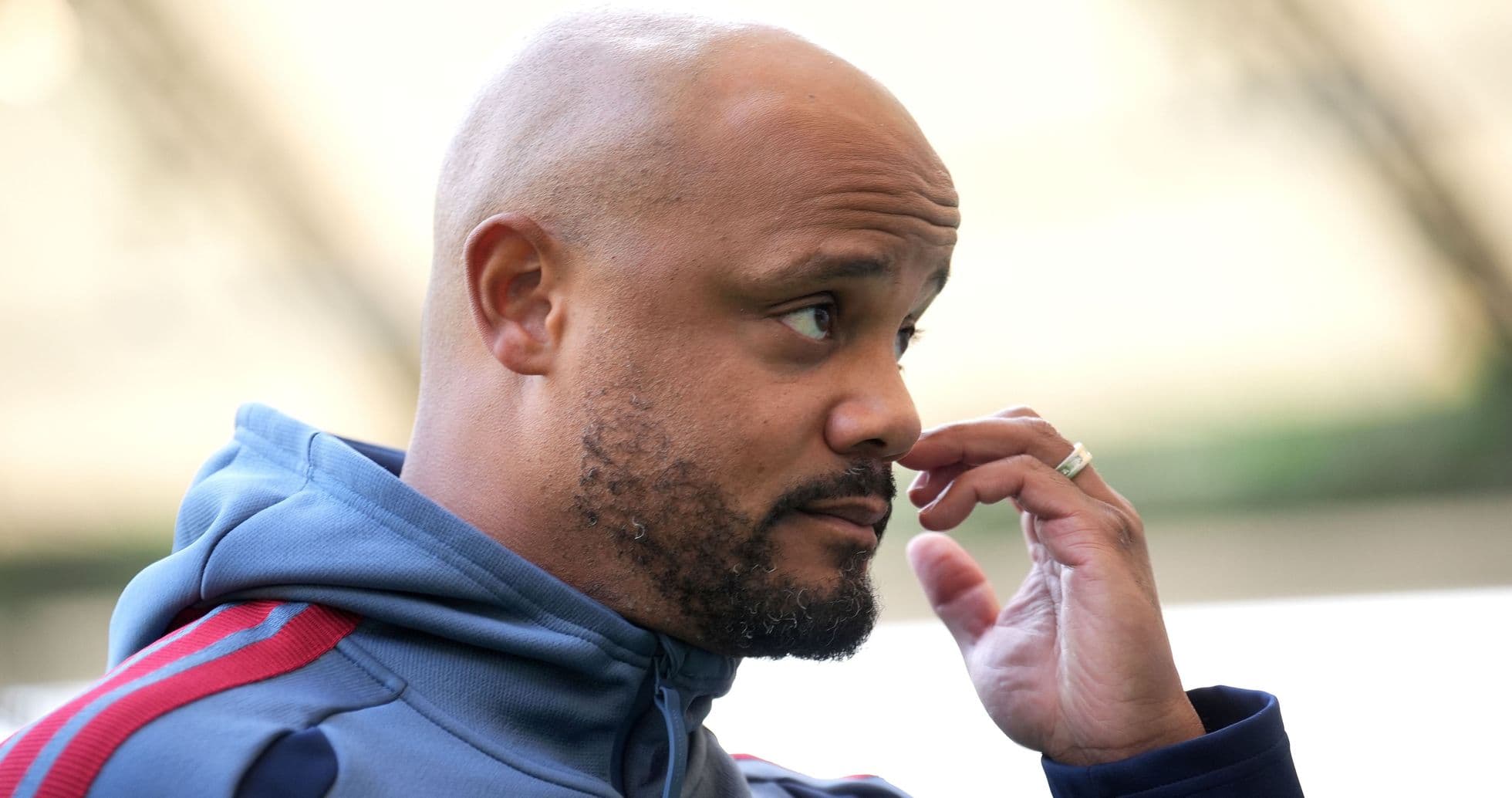
Kompany’s grin
So the question landed at Vincent Kompany’s feet with a certain charge: was Bischof right?
The coach just grinned.
"No, of course not," he replied. No anger, no lecture, no public dressing-down, just a clear line. "He is a young player and made a mistake in that interview."
Coming from Kompany, that was striking. He usually treats public criticism of his own players as forbidden territory. Yet he chose this moment to push back. Not to crush the youngster, but to nudge him back into line and, at the same time, reframe the debate.
"The problem isn't a lack of willingness to counter-press; you can't win games that way," he explained. For him, the issue lay elsewhere: Bayern’s urge to decide everything early. "You don't always have to decide games in the first ten or 15 minutes. That doesn't always work. We started well for ten minutes, then lost our patience. You can go into counter-pressing once, twice or three times, but at some point your legs start to give way."
Kompany pointed to the second half as the model. Bayern kept the ball, controlled the rhythm, and with that, the need for constant counter-pressing evaporated. "I think we did much better in the second half, and that was down to our behaviour when in possession."
No escalation, no feud. Just a small correction, wrapped in a smile.
"Tom is a great lad. But it's straight after the match and I had a bit more perspective," Kompany added. One sentence, and the subject was closed.
This is where his strength at Säbener Straße has really begun to show. Tactically, his work is obvious. But it’s his ability to find the right tone in awkward moments that separates him from many of his predecessors. Picture Julian Nagelsmann or Thomas Tuchel being confronted so directly with a player’s critique of their style. The sparks would probably have flown. Not necessarily because of the content, but because they don’t radiate Kompany’s calm coherence.
On Saturday night, that calm felt like Bayern’s anchor.
Champions still feeling the bruise
The setting was tricky. A sold-out Volkswagen Arena. A Bayern side that had already wrapped up the Bundesliga title and was still nursing the bruise of a Champions League exit to Paris Saint-Germain three days earlier. A Wolfsburg team fighting for survival in 16th, with nothing to lose.
The script almost wrote itself: flat champions, desperate hosts.
Yet the way VfL rattled the side widely regarded as Europe’s second-best team still raised eyebrows. "They could have scored five goals; that wasn't good at all from us," Bischof admitted about the first half. "The first ten minutes were still okay; we saw how we could create chances, but then we simply didn't carry on like that."
After that brief bright start, Bayern’s game frayed. Wolfsburg carved out chances, found space, and repeatedly appeared in front of the Munich goal. Only one man kept the champions level: their goalkeeper.
The outstanding Urbig read everything, stood tall, and smothered danger whenever Wolfsburg’s attacks broke through. Bischof, who had just criticised the team’s defensive work, switched to praise when it came to his keeper. "The way Manu (Neuer, ed.) always steps up when he gets the chance is brilliant," he said.
At the other end, Bayern were strangely blunt. The clearest opening fell, predictably, to Harry Kane. From the penalty spot in the 36th minute, with the stadium holding its breath, the Englishman slipped at the crucial moment and dragged the ball wide. Just the second miss of his Bundesliga career from 25 attempts.
Unusual. But not unthinkable in a week like this.
"With Harry, you're usually certain he'll score, but even he's allowed to miss every now and then," Bischof remarked. A sentence that summed up Bayern’s evening: not disastrous, but far from their ruthless best.
A familiar pattern, a different outcome
The drift of the first half felt familiar. Since sealing the title on 19 April, Bayern had already played two chaotic, goal-heavy league games: a 4–3 at Mainz 05 and a 3–3 against Heidenheim. In both, they sleepwalked through the opening period and needed a second-half surge to salvage something.
In Wolfsburg, the pattern repeated. The twist? This time there was no PSG clash looming, no heavy rotation. Kompany sent out his spine from the start: Kane, Michael Olise, Joshua Kimmich. The three most important outfield players all in the XI, unlike in those previous league outings.
Yet cohesion remained elusive. The dressing room mood at the break could best be described as sour. Sloppy at the back, blunt going forward, Bayern looked like a team stuck between obligation and exhaustion.
Then the reaction came. Again.
"I also paid tribute to the team for their reaction," Kompany said later. "It's not easy to come out and practically turn everything around. We did that again today in the second half."
His opposite number, Dieter Hecking, saw it the same way. "What his counterpart has achieved with Bayern this season is on another level," he said. He pointed out that Bayern’s performance level, week after week, demanded recognition. "Even today, it's not a given that, after such a defeat (against PSG, ed.), they would keep the pressure on us so high and give it their all to still win this match. That's worthy of a compliment."
Olise, again and again
After the break, Bayern finally looked like champions. They pinned Wolfsburg back, squeezed the pitch, and gave the home side almost no air to breathe. Chances came, then came again. The pressure built. It felt like a question of time.
The answer arrived in the 56th minute, in a way that has started to feel almost scripted.
Olise collected the ball on the right, drifted inside, opened his body and whipped a left-footed shot across goal into the far corner. The ball flew, curved, then settled in the net with a kind of inevitability that only truly elite players can produce.
Predictable and extraordinary in the same moment.
Kompany had spoken about that very move at the end of April, after Olise had produced an almost identical goal in Mainz. "Michael has set the bar so high for himself that I would have been disappointed if it hadn't gone in – and that's absurd. It shouldn't be normal, but he's got us used to it," he said then.
In Wolfsburg, Olise repeated the trick. Same movement, same finish, same outcome: Bayern with something to celebrate 72 hours after a painful European exit.
A season that still wants more
The win in Wolfsburg doesn’t change the shape of Bayern’s season, but it sharpens the edges.
Next Saturday, they will lift their 35th Bundesliga title in front of their own fans after the final-day meeting with 1. FC Köln. A week later, they head to Berlin for the DFB-Pokal final against VfB Stuttgart. The domestic double sits right in front of them.
Before the game in Wolfsburg, sporting director Max Eberl had drawn the line clearly. Anything less than a double, he said, would leave the season feeling incomplete, even with one trophy already secured.
"The way we play, we're German champions, we reached the Champions League semi-finals and held our own against the best team in Europe. We're also in our first cup final in years, and we want to win it," he told Sky, calling it "a very, very good season so far."
He also pointed to something more intangible. "Another soft fact is this: how many people rave about how much fun it is to watch Bayern games. They've never been Bayern fans, but they enjoy watching us because it's football just as you'd want it to be. You don't get a trophy for that, but it counts too."
The double would put a hard edge on those soft facts. Between a young midfielder speaking his mind, a coach defusing tension with a grin, and a winger who keeps bending the ball into the top corner as if it’s the easiest thing in the world, Bayern have built a season full of moments.
Now they have two games left to decide what all those moments will ultimately be worth.