Bayern Munich Triumphs Over Dortmund in Supercup
Bayern Munich walked out of Signal Iduna Park with the first trophy of the 2026/27 season and something more valuable: early confirmation that their squad depth might be a weapon. A 2-1 win over Borussia Dortmund in the Franz Beckenbauer Supercup sounded tight. For 45 minutes, it wasn’t.
Nathaniel Brown and Michael Olise put Bayern 2-0 up before the break, a scoreline that reflected the control Vincent Kompany’s side exerted. Fabio Silva’s late reply gave Dortmund a lifeline, not a comeback.
Behind the scoreline, though, the night told a few deeper stories.
Neuer: still world class, still a risk
Manuel Neuer has built a career on walking the tightrope. On Saturday, he wobbled on it again.
His passing and sweeping have long been part of Bayern’s identity. They still are. But the errors that once felt like rare side effects now appear more regularly – and Dortmund saw both sides of him in one evening.
After 15 minutes, Neuer played a casual pass towards Min-jae Kim and almost handed BVB the opener. The ball never should have gone there in that way. Kim bailed him out with sharp anticipation, cleaning up before any yellow shirt could pounce.
Late on, the tension spiked again. Kim rolled the ball back, Neuer tried to be clever and let Jobe Bellingham run into empty space with a feint behind his standing leg. It went badly wrong. Suddenly Bellingham was on top of him, the stadium roaring at the prospect of a dramatic equaliser. Neuer had to throw himself at the ball to smother the danger he had created.
He saved himself. But he never needed to be in trouble in the first place.
This comes on top of the glaring mistake in Madrid in April, the pass straight to Arda Güler that set the tone for Bayern’s Champions League exit. One moment doesn’t define a goalkeeper of Neuer’s stature. A pattern might.
Bayern know the timeline. Neuer has again hinted this could be his final season. They also know they have a successor in-house. Jonas Urbig, 23, is being eased in, with more minutes expected than last year while Neuer still takes the biggest games.
The question is creeping closer: at what point do the on-ball risks outweigh the leadership and aura in those very biggest matches?
For now, Neuer still has one trump card that very few goalkeepers on the planet can match: his reflexes. Early in the second half, Konstantinos Karetsas looked certain to drag Dortmund back into the game with an awkward, close-range effort. Neuer reacted in a flash, throwing out a hand and producing the kind of save that has defined his career. That stop, not just Brown’s goal, underpinned this trophy.
The line work remains elite. The work with his feet now comes with a warning label.
Nathaniel Brown, surprise No. 10 and Bayern’s new wildcard
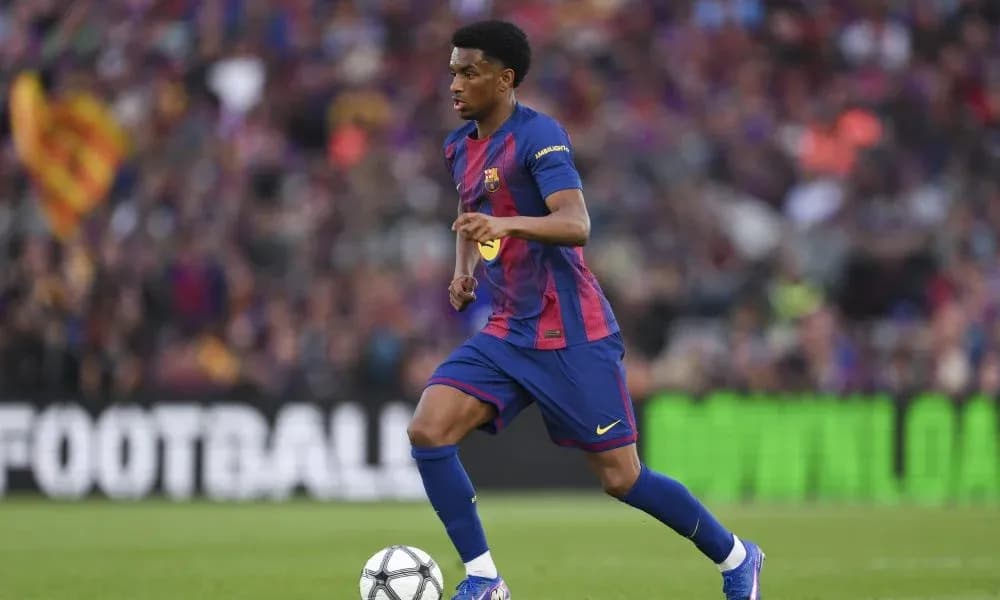
Bayern signed Nathaniel Brown as a left-back. In Dortmund, he walked off with a medal as a match-winning No. 10.
With Jamal Musiala unavailable due to his neurological issues and new arrival Ismael Saibari not yet ready to start, many expected Tom Bischof to slot in behind Harry Kane. Kompany went in a different direction. Brown, nominally a defender, was pushed into the central playmaker role.
It didn’t look experimental for long.
Brown occupied the pockets between the lines with the same timing he usually shows when stepping into midfield from the flank. He is used to operating in tight spaces, and it showed. Not every combination came off – it would have been a shock if they had, given he has only been at Bayern a few weeks – but he constantly offered himself, linked play and, crucially, broke the deadlock.
His opener, struck in the 28th minute, was more than just a well-taken goal. It was a statement that his signing gives Bayern a new layer of tactical flexibility. A left-back who can also operate as a No. 6 and now, convincingly, as a No. 10 is the kind of piece that makes a long season feel less daunting.
Kompany’s view is clear. He sees parallels between the zones his full-backs occupy and those of a central creator. Brown, he believes, reads those areas “unbelievably” well. Against Dortmund, that belief paid off.
And Brown is not alone. Konrad Laimer can play on both defensive flanks and across the midfield axis as a 6, 8 or even 10. Josip Stanisic can switch sides and slot in at centre-back. Bayern’s full-backs are no longer just full-backs. They are puzzle pieces that can be moved almost anywhere.
For a club that wants to compete on every front, that matters more than one August trophy.
Kovac’s inverted wing-back gamble: promise and price
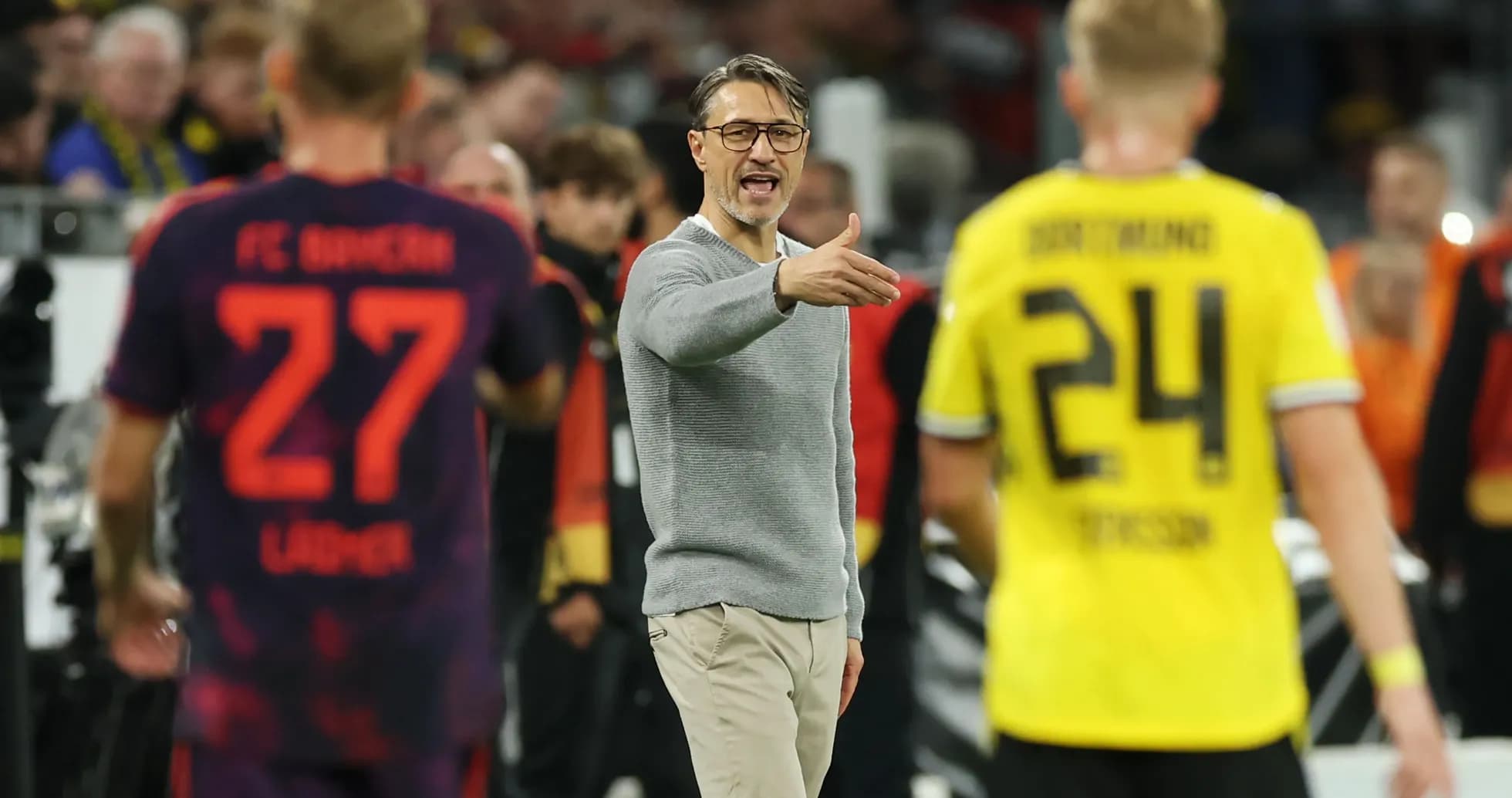
On the Dortmund bench, Niko Kovac tried something different and got a mixed verdict in real time.
He started with Daniel Svensson, a left-footer, on the right, and Julian Ryerson, a right-footer, on the left. The idea was clear: wing-backs who can drive inside, not just hug the touchline and cross from the outside. It’s a trend borrowed from the game’s biggest sides, where wide players cut in to create or shoot rather than simply serve.
At first, the tweak produced moments. Ryerson, drifting into the left half-space, bent a dangerous cross with his stronger right foot towards the far post. Ramy Bensebaini met it with the faintest of touches, flicking the ball into the net. The stadium exploded – then fell flat. The offside flag was up. Marginal, but correct.
The structure, though, came with clear drawbacks.
One of them appeared before the break. Bensebaini drove in a low ball from the left and picked out Svensson, who had drifted inside from the right. The Swede received it in a position that forced him onto his weaker right foot. The chance begged for a clean strike. Svensson swung and hit nothing. The move died. You couldn’t help thinking Ryerson, with his right foot, would have buried it.
At half-time, Kovac tore the plan up and put the wing-backs back on their natural sides. His explanation was blunt: they had to change something. The effect was immediate. Dortmund pushed Bayern back more consistently, found more joy down the flanks and finally started to get in behind.
The goal that made it 2-1 summed up what they gained. Svensson, now on the left, attacked the byline and cut the ball back intelligently for Fabio Silva, who finished with authority from close range. That kind of classic wide overload is harder to produce when both wing-backs are constantly looking to come inside.
Kovac’s tweak gave Dortmund another attacking angle. It also took away some of their most natural weapons. On this evidence, it’s a tool, not a default setting.
Fabio Silva’s reminder – and a transfer dilemma
Up front, the spotlight before kick-off sat on Serhou Guirassy. By full-time, it had shifted to Fabio Silva.
Guirassy’s name has faded from the rumour mill lately, and right now he looks set to stay at Dortmund for another season. His performance against Bayern, though, echoed the more difficult stretches of last year. He ran, he pressed, he battled – and he stayed largely on the fringes of the game. No real threat, no big moment.
After just over an hour, Kovac made the call. Guirassy off, Silva on.
The change injected exactly what Dortmund had been missing in the box. Silva dropped into clever pockets, linked play and, crucially, took his chance when it came. For his goal, he peeled away just enough to lose his marker, then pounced on Svensson’s cut-back and lashed in from close range. One touch, one finish, no hesitation.
It was the kind of penalty-box ruthlessness that always attracts attention. And attention is something Silva already has.
Several clubs are tracking the 24-year-old, with Betis Sevilla recently mentioned as particularly keen. Silva himself is reportedly not fixed on staying at Borussia, and Dortmund’s hierarchy would consider a sale if the right offer lands on the table – even just a year after his arrival.
That decision now looks more complicated.
On one hand, his impact off the bench in the Supercup strengthens the case for giving him a bigger role in his second season. On the other, the clock is ticking on the summer window. If Dortmund cash in now, can they realistically find a replacement with similar upside and readiness this late?
Bayern left with the cup and a sense of direction. Dortmund left with a defeat, a handful of tactical clues – and a centre-forward question that might define the rest of their summer.