Barcelona's Financial Recovery Under Laporta
When Josep Maria Bartomeu finally walked away from the presidency in October 2020, Barcelona were not just bruised. They were broken. A club that had paraded trebles and league titles under his watch suddenly found itself staring at the edge of bankruptcy, its image shredded on and off the pitch.
Yes, Bartomeu could point to four La Liga crowns and the 2014-15 treble. But the balance sheet told a different story. He still insists the Covid-19 pandemic alone wrecked Barca’s finances. No fans at Camp Nou, no ticketing, no museum tours, no retail, no football schools – and, as he told EFE, a cash-flow crisis that “was solved by borrowing”, just like “the vast majority of clubs in Europe”.
The difference was that very few clubs were as exposed as Barcelona. That was on him.
Between July 2015, when he secured re-election riding the wave of that treble, and his resignation in October 2020, Barca spent just over €1 billion (£895m/$1.2bn) on 29 signings. Not a single one could be called an unqualified success. Several were spectacular failures.
The deals for Ousmane Dembele, Philippe Coutinho and Antoine Griezmann didn’t just disappoint on the pitch; they detonated the wage structure. La Liga had urged clubs not to let salaries exceed 70% of revenue. Bartomeu brushed it off. “We are above what is recommended but the important thing is to be sustainable,” he said. “We can afford it.”
They couldn’t. Not once the pandemic hit.
When coronavirus shut stadiums, Barca were left with an ageing, overpaid squad that nobody wanted to buy. By the time Joan Laporta returned as president in March 2021, the club’s greatest icon had become collateral damage. Lionel Messi, the highest earner by a mile, walked away for nothing when his contract expired that summer.
“I did what I had to do,” Laporta told El Pais. Messi was “nearing the end of his career” and the club needed to build a new team. He wanted to do it with Messi. He tried. It collapsed under the weight of the numbers.
Even then, it became obvious that losing Messi was only the beginning. The financial hole was deeper than most outsiders realised. Laporta faced a brutal fork in the road.
“Laporta basically had two options,” explains Marc Menchen Alba, CEO of Barcelona-based 2Playbook. One was austerity: slash the wage bill, sell assets, accept two or three years wandering the footballing wilderness with a weakened squad. The other? Chase money aggressively, fast, by selling off future assets to fuel an immediate return to winning.
Laporta went for the high wire.
In the summer of 2022, Barcelona pulled their most dramatic “lever”. They raised €582m (£495m/$591m) by selling 25% of their La Liga TV rights for the next 25 years to investment firm Sixth Street. It was the centrepiece of a series of financial operations designed to keep the club competitive.
In essence, Barca mortgaged tomorrow to survive today. Laporta gambled that short-term success would kickstart a long-term recovery. “I remember thinking at the time, this is a bold move,” Menchen says. He didn’t like it. He thought safer routes existed.
Early on, the bet looked inspired. Those levers allowed Barcelona to spend. Robert Lewandowski arrived from Bayern Munich for €45m. Raphinha and Jules Kounde followed for a combined €108m. By the end of that 2022-23 season, Barca were champions of Spain again, lifting La Liga for the first time in four years.
But the bill for that risk kept arriving every summer. “Laporta’s high-risk move led to Barca suffering nearly every summer,” Menchen points out. Every window came with the same question: could they even register their new signings?
The summer of 2024 was especially fraught. Supporters’ patience snapped, with the Dani Olmo saga crystallising their anger. The fan group Som un Clam issued a blistering statement, declaring the situation “inadmissible” and the reputational damage “irreparable”. They accused the board of “continuous lies” and “false promises that are never fulfilled”.
They went further. In their eyes, the levers had “decapitalised” key club assets in just four years, selling off strategic pieces of the future to plug holes left by “chaotic and improvised management”. There was still, they argued, no solid financial plan, no coherent medium- or long-term strategy.
Som un Clam demanded an end to improvisation and what they called irresponsible asset sales that “mortgage the model of collective ownership that makes us unique”. They called for a change of course, a return to transparency, planning and the values that made Barca “more than a club”. Above all, they demanded the resignation of Laporta and his board, and urged fans to mobilise.
All this against the backdrop of a seemingly endless Camp Nou redevelopment, and a club that felt permanently on the brink.
And yet, Laporta survived. Eighteen months on from the peak of the fury, the picture looks very different.
Barcelona have quietly changed gear. Last season, they made only one major signing: goalkeeper Joan Garcia, snapped up from Espanyol for his €25m release clause. It was opportunistic, not reckless.
At the same time, they cashed in. A string of departures – many of them La Masia graduates – brought in almost twice Garcia’s fee. Those academy products are pure profit on the books, and Barca leaned into that advantage.
“You can see with the likes of Lamine Yamal and Pau Cubarsi just how important La Masia is to Barcelona,” Menchen says. The academy doesn’t just feed the first team with players who already understand the club’s style; it creates assets. Valuable ones.
Previously, Barca often lost those youngsters for nothing, stuck between trying to find room in a stacked first team and watching them walk away. Now, the club is selling 18- and 19-year-olds that most fans barely know for €5m or €10m. Those numbers matter when you’re trying to hit strict budget targets.
Real Madrid have taken the same path with La Fabrica, which helped fund big-money moves such as Yan Diomande. Both giants now invest €20-30m a year in their academies, and both are finally reaping the rewards.
This summer, Barca have spent heavily again, producing a sizeable net outlay. But they’ve also pulled off some crucial exits. Paris Saint-Germain paid €48.5m (£43m/$59m) for Ferran Torres. Lewandowski left on a free, removing a huge salary from the books. Liverpool agreed to cover all of Ronald Araujo’s wages during his loan at Anfield. The wage bill, once a runaway train, has slowed.
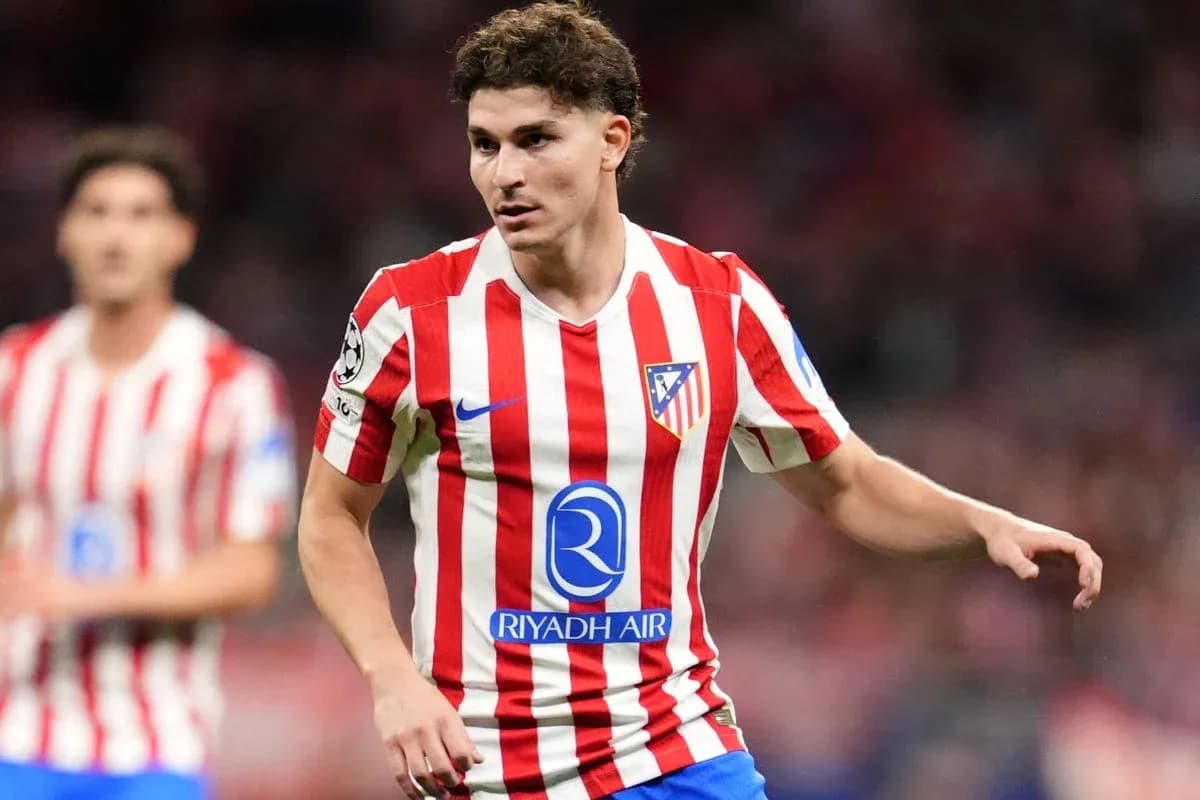
Which brings the focus to the next big question: can Barcelona still afford a striker of Julian Alvarez’s calibre to replace Lewandowski?
Right now, Menchen is sceptical. The numbers remain tight. Yet he points to one possible solution: another major academy sale. “You always have to remember that this is a cash-flow business,” he explains. Sell someone like Marc Casado for €30m and you can effectively cover Alvarez’s cost for this season, because transfer fees are amortised over the length of a contract.
That’s the new Barca equation. La Masia as lifeline, not just identity.
There’s more coming down the track. The completion of the new Camp Nou will transform matchday revenue. A fully open museum, boosted by the return of mass tourism to Barcelona, will again become a financial engine. Put that together with the academy sales and trimmed wage bill, and Menchen believes Barca could have “complete financial freedom” next summer for the first time since before Covid.
Are the financial nightmares over? “They are for now,” he says. One concern lingers: the roughly €40m a year Barca still pay to Sixth Street for those Liga rights. It doesn’t sound enormous for a club that can generate around €1 billion annually. But at the elite level, the margins are razor-thin. That €40m could be the difference in a transfer battle with Real Madrid.
Even so, Menchen sees “the beginning of the end” of Barca’s most serious problems. Laporta’s bet was high-risk, the kind of move only a president can make. With three of the last four La Liga titles in the bag, he will feel vindicated.
Menchen still believes some of Laporta’s spending could and should have been avoided, which might have spared Barca from selling off future TV rights. That debate will linger. The long-term consequences of those levers remain unknown.
But one thing has changed. Barcelona are no longer a club that must keep pulling them just to breathe. After years of “weird and crazy” management, the levers are finally still.
The next chapter will be written not in boardrooms, but on the pitch – and in the academy corridors where the club’s future now quietly takes shape.