Barcelona's €25m Gamble: Why Espí Joined Real Madrid
Barcelona went looking for goals this summer. They had 39 of them to replace – the combined haul of Robert Lewandowski and Ferran Torres last season – and they wanted a decisive No 9 to bridge that gap.
They had one on the table. They let him walk to Madrid.
A striker on the table, a clause on the wall
Inside the Camp Nou offices, Carlos Espí’s name was not a mystery. The former Valencia forward, then at Levante, had been thoroughly checked. Deco liked what he saw: a good player, room to grow, a profile that fit.
Then came the number that changed everything: €25 million.
That was the release clause. To get Espí, Barcelona had to pay it in full. No discounts, no creative structure. A straight financial hit for a player Hansi Flick did not see as an immediate starter.
Journalist Siqui Rodríguez summed up the club’s stance on the programme "Què T'hi Jugues": Espí was offered, they rated him, and they still said no. The key reason? They refused to put €25m on a player who, at least in the short term, would not lead the line from minute one.
It was not a footballing rejection. It was a financial one.
Plan A collapses, Plan B shrinks
The decision came after Barcelona’s main attacking plan fell apart. The club had set its sights high: Julián Álvarez was the big dream, backed up by another reliable striker to cover the Lewandowski–Ferran output.
Atlético Madrid killed that fantasy quickly. The Argentine was simply not leaving.
With the market short on pure No 9s and prices climbing, Flick and Deco pulled back. Instead of forcing a deal, they turned inward. The solution, at least until January, would be patchwork.
Raphinha, a winger by trade, has been pushed into a central striker role. Gordon, Adeyemi and Dani Olmo have all been earmarked as possible options through the middle when needed. It is a rotation of false nines and flexible forwards, not a classic penalty-box killer.
The one real “punt” at centre-forward came from a very different shelf.
The €1.5m bet: Hamza Abdelkarim
Barcelona’s actual gamble up front is named Hamza Abdelkarim. The price tag tells its own story.
€1.5m.
Rodríguez laid it out clearly: the club see Hamza as young, promising and capable of becoming a decisive striker in time. At that figure, they consider the risk acceptable. If he develops, they win big. If he does not, the financial damage is minimal.
Sixteen times cheaper than Espí. That is the scale of the calculation.
For Barcelona’s hierarchy, a €1.5m swing on potential makes sense. A €25m outlay on a non-starter feels like walking a financial tightrope with no safety net.
The choice was made. And Madrid were watching.
Real Madrid strike while Barça hesitate
Real Madrid did not overthink it.
After Gonzalo left for the Premier League, the European champions needed another striker. They wanted depth, impact off the bench, someone who could change games late on.
Espí fit the bill. The operation was fast, almost silent. One moment he was an option at Barcelona; the next he was signing for their greatest rivals.
He arrived from Levante and barely had time to unpack before being thrown into action. First two games, he came off the bench, feeling his way into the shirt, into the stadium, into the expectation.
Then came Espanyol.
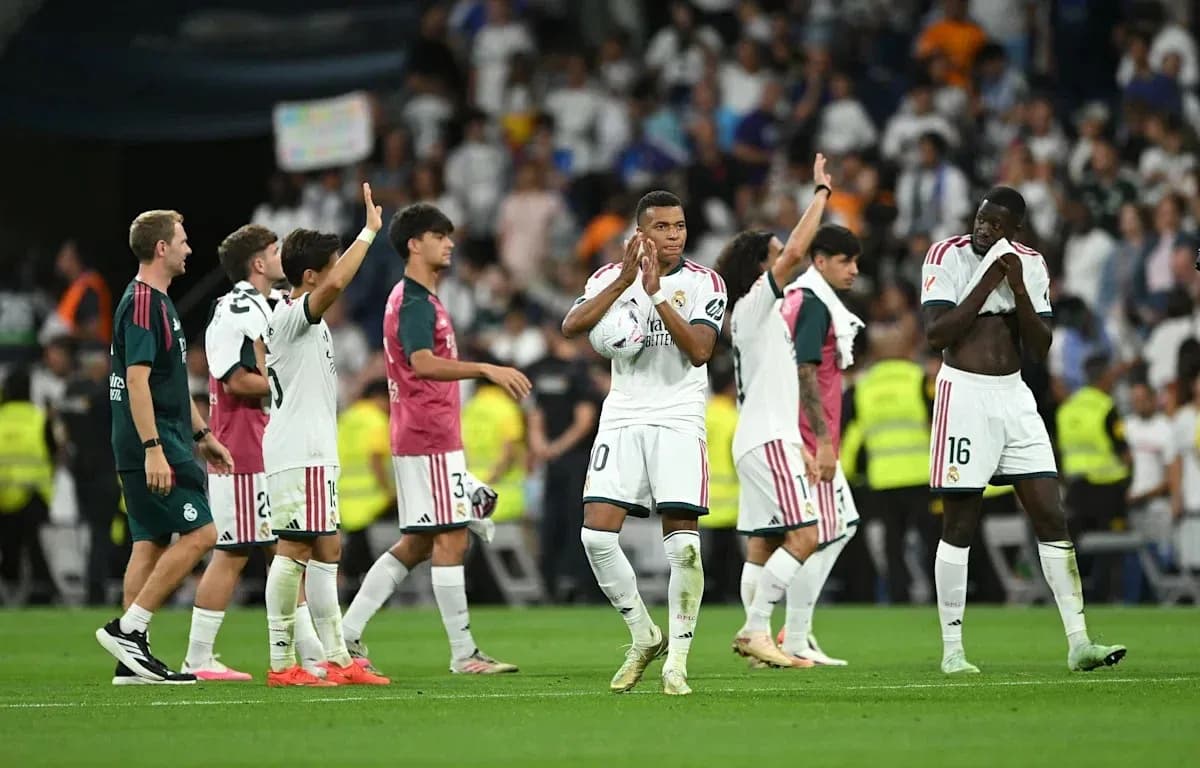
Ten minutes after coming on, Espí struck. A 90th-minute winner. The kind of moment that instantly changes how a transfer is viewed, that turns a signing from “prospect” into “weapon”.
Madrid had moved decisively. Barcelona had chosen caution.
A gamble refused, a gamble embraced
Strip away the colours and the rivalry, and this story is about risk.
Barcelona looked at Espí and saw a €25m bet on a player who would not start ahead of Lewandowski in the short term. They weighed that against their financial constraints, against their need to stay within limits, and they walked away.
They put their chips on Hamza Abdelkarim instead, at a fraction of the price, and trusted Flick to squeeze goals from a fluid front line until winter.
Real Madrid saw the same player, the same clause, the same uncertainty about guaranteed minutes. They paid anyway – and were rewarded instantly with a last-minute winner.
One club decided the gamble was too big. The other decided the payoff was worth the risk.
Months from now, when the season’s story is written and the goals are counted, will Barcelona still believe they backed the right hand?